Master Bibliography: Gazetteers, Food Science Papers & Media Index
The Complete Archival Sourcebook of Local Chronicles, DB42 Technical Standards, Cereal-Chemistry Literature, and Documentary Filmography
Closing all 88 chapters of The Reganmian Canon, this master bibliography catalogs verified primary sources from 1850 Hankou poetry and municipal gazetteers to Hubei DBS42 food safety standards, peer-reviewed alkaline-noodle and sesame rheology research, literature, and cinema.
Editorial Methodology: Evidence at the Intersection of Street Lore and Lab Bench
Street food history is famously susceptible to romanticized folklore and kitchen mythology. Throughout all twelve volumes and eighty-eight chapters of The Reganmian Canon (reganmian.com), our editorial board has enforced a strict dual standard: historical narratives cross-check oral stallkeeper lineages against Qing-dynasty verse, municipal gazetteers, and official Intangible Cultural Heritage registries—presenting parallel origin accounts (Li Bao’s serendipity alongside Cai Mingwei’s technical codification) with transparent nuance; scientific claims rest squarely upon statutory Chinese food standards (GB and DBS42) and peer-reviewed cereal chemistry and rheology literature.
As the eighty-eighth and concluding entry of the Canon, this Master Bibliography organizes our primary and secondary reference corpus for scholars, chefs, journalists, and curious readers worldwide.
‘Gather bronze from the archives, gather vernacular from the alleys; verify lineages in the gazetteers, test emulsions in the laboratory—eighty-eight chapters sealed in tribute to the River City.’ — Colophon to The Reganmian Canon
I. Classical Verse, Local Gazetteers & Heritage Registries
- Qing-Dynasty Poetry & Early Urban Ethnography
- Ye Diaoyuan (
叶调元, 1850). Hankou Zhuzhici (《汉口竹枝词》, Hankou Bamboo-Branch Lyrics), Daoguang 30th Year woodblock edition; annotated critical edition by Xu Mingting et al., Hankou Zhuzhici Jiaozhu, Hubei People’s Publishing House. (Preserves the earliest dated literary attestation of ‘Guozao’—celebrating morning breakfast in bustling Hankou.)
- Ye Diaoyuan (
- Official Municipal & District Gazetteers
- Wuhan Local Chronicles Compilation Committee (
武汉地方志编纂委员会). Wuhan Shizhi: Shangye Zhi (《武汉市志·商业志》, Commercial Chronicles) & Shehui Zhi (《社会志》, Social Folkways), Wuhan University Press, 1990s. (Primary institutional record covering Republican-era Hankou noodle workshops, the 1955 state-private partnership restructuring of Cai Lin Ji, grain-ration pricing, and post-1980s private stall revival.) - Qiaokou District Chronicles Committee. Qiaokou Quzhi (
《硚口区志》), Wuhan Publishing House. (Documents the wharf geography of Changdi Street, Manchun Road, and Hanzheng Street where Reganmian took shape.)
- Wuhan Local Chronicles Compilation Committee (
- Intangible Cultural Heritage Proclamations
- Wuhan Municipal People’s Government (2006). First Batch of Wuhan Municipal Intangible Cultural Heritage Representative List — inscribing Cai Lin Ji Reganmian Craftsmanship.
- Hubei Provincial People’s Government (June 2011). Third Batch of Hubei Provincial Intangible Cultural Heritage Representative Projects (Traditional Craftsmanship category: Cai Lin Ji Reganmian Making Technique, recognizing provincial representative inheritor Wang Yongzhong and traditional workflow standards).
II. Statutory Food Safety Standards & Technical Codes
| Code / Identifier | Official Document Title | Issuing Authority | Core Technical Benchmarks Cited in the Canon |
|---|---|---|---|
| DBS42/005 | Food Safety Local Standard: Wuhan Reganmian (Convenient Type) (2015, 2021, 2022 eds.) | Hubei Provincial Health Commission (with Dahankou & Huazhong Ag. Univ.) | Mandates non-fried drying for alkaline blocks, weak-alkaline pH bounds, microbial limits, and ≥50% pure sesame content in paste packets (Vols. II, VI, VII) |
| Wuhan Municipal Code (2024) | Wuhan Reganmian Production Management Specification (《武汉热干面生产管理规范》) |
Wuhan Municipal Administration for Market Regulation | Classifies Reganmian into 6 statutory types (raw-dry, raw-wet, semi-cooked, quick-frozen, convenient-dry, convenient-wet) and sets ≤10°C / ≤-18°C cold-chain rules |
| GB 2760 | National Food Safety Standard for Uses of Food Additives | National Health Commission of China | Governs food-grade sodium carbonate ($\text{Na}_2\text{CO}_3$) and potassium carbonate ($\text{K}_2\text{CO}_3$) in wheat noodles; enforces zero-tolerance ban on borax |
| GB 2715 & LS/T 3220 | National Standard for Grains & Grain Industry Standard Sesame Paste | NHC & National Food and Strategic Reserves Admin. | Regulates wheat flour safety, aflatoxin B1 ceilings ($\le 20,\mu\text{g/kg}$), and stone-ground vs. blended sesame paste grading |
| Nutrient Reference | China Food Composition Tables (Standard Edition, 6th Ed.) | National Institute for Nutrition and Health, China CDC (ed. Yang Yuexin) | Empirical macronutrient, sodium, and calcium (1,170 mg/100g in pure sesame paste) data (Vols. VI, XII) |
III. Peer-Reviewed Cereal Chemistry, Preservation & Rheology Research
Transforming a street noodle with a 24-hour summer shelf life into a globally exported culinary icon required decades of cereal-chemistry innovation. Key scholarly streams synthesized across Volumes II, VI, VII, and XII include:
- Fresh-Wet Reganmian Hurdle Preservation (Wuhan Polytechnic University /
武汉轻工大学): Research led by Prof. Wang Xuedong’s team at the Key Laboratory of Deep Processing of Bulk Grains and Oils (Ministry of Education) pioneered synergistic hurdle technology—combining food-grade organic acid water-activity modulation, modified-atmosphere packaging (MAP), and gentle pasteurization—extending fresh wet Reganmian shelf life from ~3 days to commercial cold-chain and ambient retail windows in partnership with heritage brands like Cai Lin Ji. - Alkaline Salt Crosslinking & Wet-Noodle Microstructure (Henan University of Technology /
河南工业大学): Studies by Liu Boye, Chen Fusheng, Chen Jie, Liang Ying, and Wang Jinshui (e.g., Application of Alkaline Salts in Preservation and Quality Control of Fresh Wet Noodles) demonstrate how sodium and potassium carbonate reinforce gluten disulfide (-S-S-) networks, ionize endogenous wheat apigenin flavonoids into golden hues, and retard microbial spoilage. - Cooked-Noodle Storage Kinetics & Retrogradation (Chinese Academy of Agricultural Sciences /
中国农业科学院): Work by Zhang Wan, Wei Yimin, Wei Shuai, and Guo Boli in the Journal of the Chinese Cereals and Oils Association (《中国粮油学报》, Quality Changes and Shelf-Life of Fresh Cooked Noodles During Storage) models starch retrogradation and textural firming in parboiled noodles. - Industrial Drying & Multi-Grain Glycemic Modification (Hubei Academy of Agricultural Sciences /
湖北省农业科学院): Papers by Mei Xin, Shi Jianbin, Cai Sha, and Sui Yong in Food Science (《食品科学》) and Food and Fermentation Industries analyze non-fried drying curves, vital wheat gluten reinforcement, and fiber-enriched low-GI Reganmian formulations. - Sesame Paste Colloidal Rheology: Dynamic oscillatory rheometry ($G’$, $G”$, shear-thinning pseudoplasticity, and water-induced phase inversion) explaining why traditional Wuhan anhydrous oil-thinning (youxiejiang) outperforms cold-water dilution on hot alkaline strands.
IV. Literary Works, Documentaries & Cinema Filmography
- Modern Chinese Literature & Urban Essays
- Chi Li (
池莉). Cold or Hot, It’s Good to Be Alive (《冷也好热也好活着就好》), Troubled Life (《烦恼人生》), and Life Show (《生活秀》) — vivid realist portraits of Hankou alleyways waking to steaming bamboo strainers. - Yi Zhongtian (
易中天). Reading Cities (《读城记》, Shanghai Literature & Art Publishing House) — incisive cultural essay comparing Wuhan’s forthright wharf spirit to its unpretentious morning Reganmian. - Fang Fang (
方方). Feng Shui / Ten Thousand Arrows Piercing the Heart (《万箭穿心》) — poignant Hanzheng Street working-class narrative steeped in Guozao texture.
- Chi Li (
- Landmark Culinary Documentaries
- A Bite of China Season 2, Episode 7: ‘Three Meals’ (
《舌尖上的中国2·三餐》) — CCTV-9, premiered April 2014, Chief Director Chen Xiaoqing (陈晓卿). High-speed macro cinematography immortalizing Wuhan’s dawn Guozao rush and commuter bowl-tossing choreography. - Breakfast in China Season 1, Episode 35: ‘Wuhan, Hubei: Reganmian’ (
《早餐中国》第35集) — Straits TV & Tencent Video, premiered 2019, Chief Director Wang Shengzhi (王圣志). Intimate five-minute portrait of neighborhood husband-and-wife stallkeepers and lifelong regulars.
- A Bite of China Season 2, Episode 7: ‘Three Meals’ (
- Contemporary Chinese Cinema
- Feng Shui (
《万箭穿心》, 2012, dir. Wang Jing) — Yan Bingyan’s unforgettable portrayal of a Hankou porter mother anchored by gritty morning noodle scenes. - The Wild Goose Lake (
《南方车站的聚会》, 2019, dir. Diao Yinan, Cannes Official Competition) — Neon-drenched Wuhan noir featuring Hu Ge and Gwei Lun-mei sharing midnight Reganmian in a humid roadside stall. - Lighting Up the Stars (
《人生大事》, 2022, dir. Liu Jiangjiang) — Heartwarming Wuhan-dialect drama where everyday bowls of morning Reganmian stitch together grief, family, and neighborhood grace.
- Feng Shui (
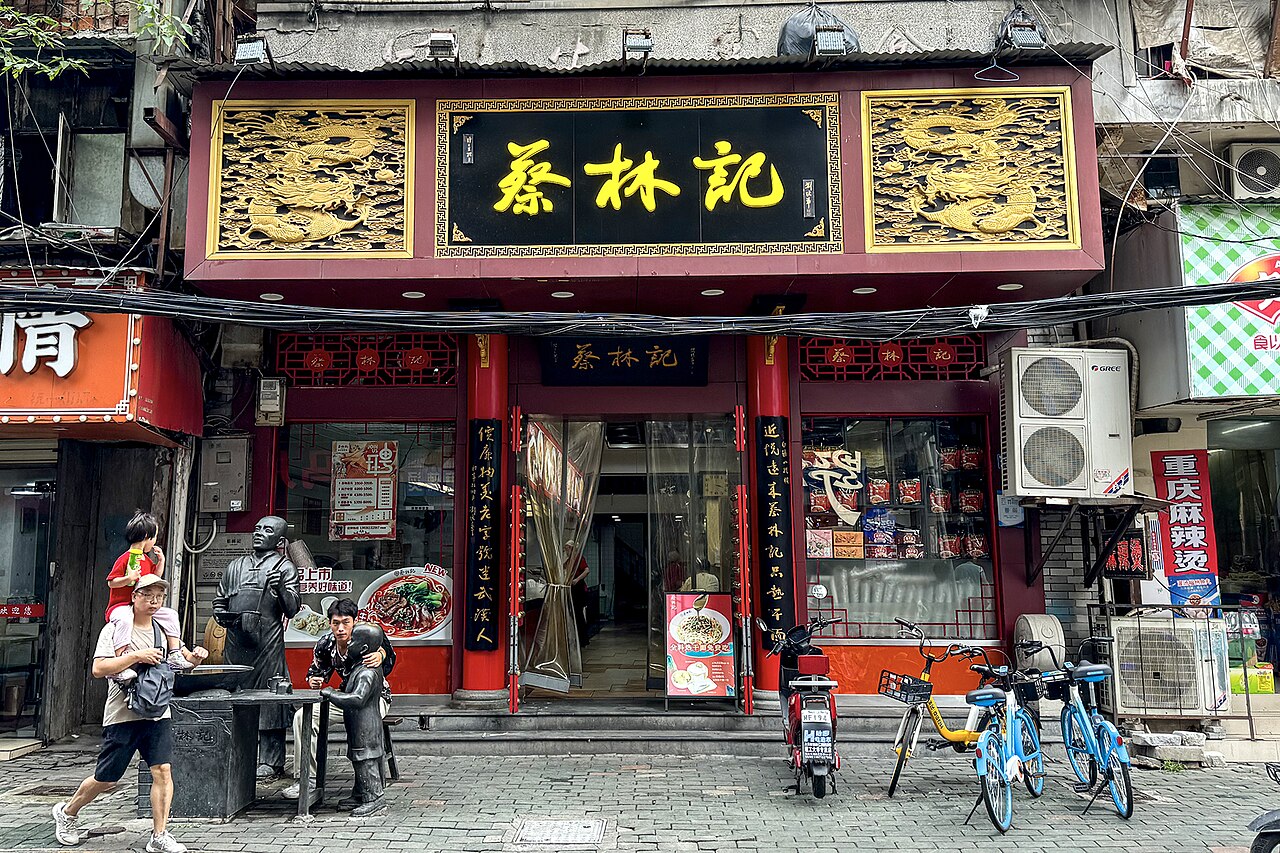
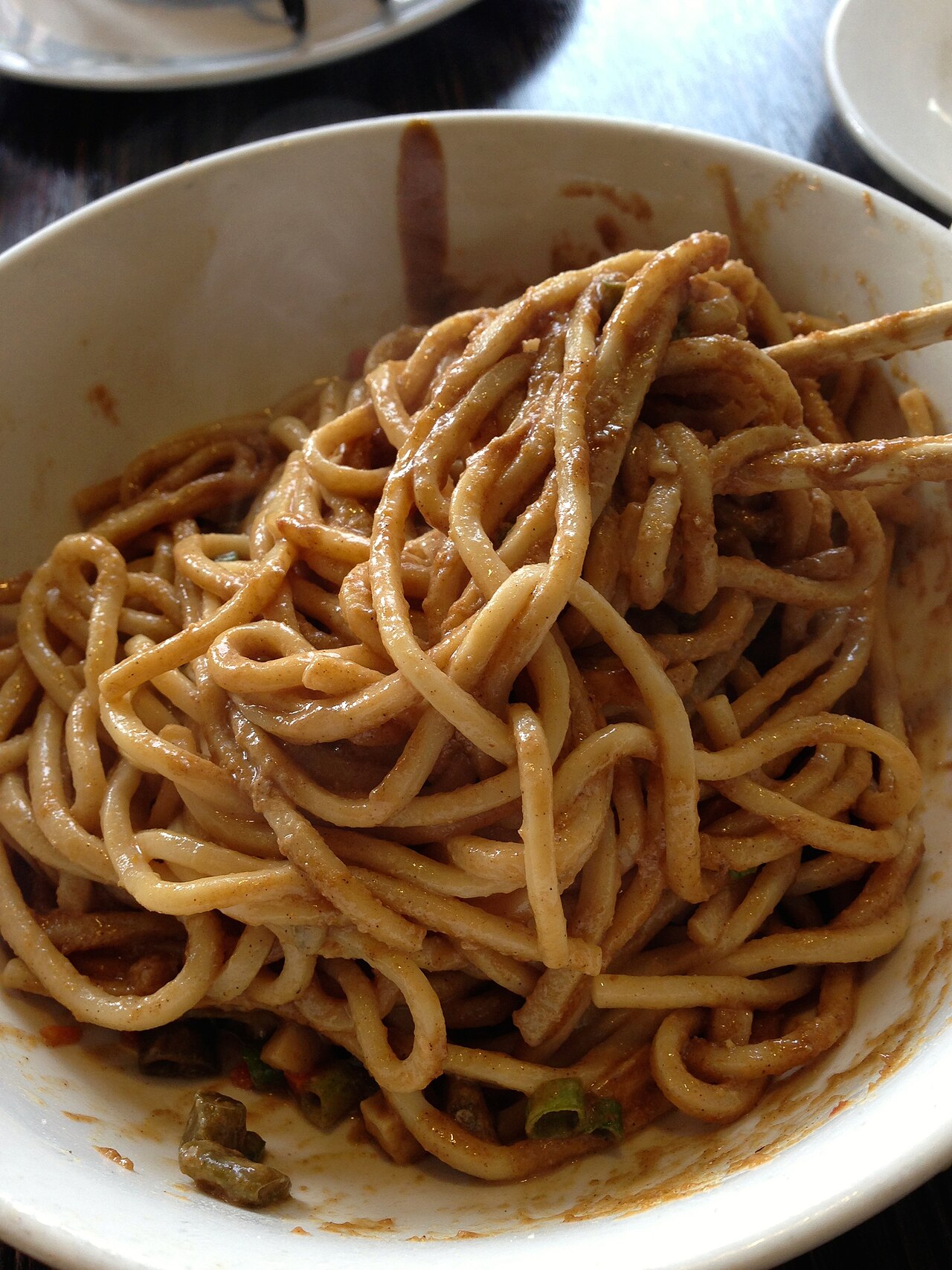
- Wuhan Local Chronicles Compilation Committee, Wuhan Municipal Chronicles: Commerce & Society Volumes (Wuhan University Press)
- Hubei Provincial Health Commission, Food Safety Local Standard DBS42/005: Wuhan Reganmian (Convenient Type)
- Journal of the Chinese Cereals and Oils Association & Food Science Peer-Reviewed Noodle Research
❓ Frequently Asked Questions
What are the primary historical sources for researching Wuhan’s Guozao and Reganmian origins?
Primary textual inquiry begins with Ye Diaoyuan’s 1850 'Hankou Bamboo-Branch Lyrics' (first attesting the term Guozao), followed by the Commercial and Social volumes of the 'Wuhan Municipal Chronicles,' the 'Qiaokou District Gazetteer,' and Hubei’s June 2011 Third Batch Provincial Intangible Cultural Heritage dossier for Cai Lin Ji.
Which official regulatory documents define Wuhan Reganmian’s legal quality benchmarks?
Packaged convenient Reganmian is governed by Hubei Provincial Food Safety Local Standard DBS42/005 (mandating non-fried alkaline blocks and ≥50% pure sesame content in paste packs), complemented by the 2024 'Wuhan Reganmian Production Management Code' classifying six fresh, parboiled, frozen, and packaged categories.
Which Chinese universities lead peer-reviewed food-science research on Reganmian?
Wuhan Polytechnic University (Key Laboratory of Deep Processing of Bulk Grains and Oils, led by Prof. Wang Xuedong’s team) anchors fresh-wet Reganmian hurdle preservation, alongside cereal-chemistry teams at the Hubei Academy of Agricultural Sciences, Chinese Academy of Agricultural Sciences (CAAS), and Henan University of Technology.
✦ Cross-Referenced Chapters
Origin Legends: Li Bao & Cai Mingwei Textual Inquiry
Investigating the two foundational 1930s Hankou accounts—street peddler Li Bao on Changdi Street and Cai Mingwei’s Cai Lin Ji.
Intangible Cultural Heritage Dossier & Lineage
Official Hubei provincial heritage classifications, master inheritor lineages, and traditional craft preservation standards.
Historical Gazettes, Bamboo-Branch Lyrics & Old Press
Archival excerpts from Qing/Republican Hankou poetry, local gazetteers, and early newspaper accounts of sesame alkaline noodles.
Food Chemistry: Alkaline Gluten Crosslinking & Sesame Phase Inversion
How sodium carbonate strengthens disulfide gluten bonds and tints flavonoids yellow, plus the rheology of sesame paste emulsion.
Official Technical Standards: Hubei DB42 Specifications Decoded
Key physicochemical, moisture, alkalinity, and sesame purity benchmarks codified in Hubei’s official regional standards.
In Writers’ Ink: Chi Li, Yi Zhongtian & Wuhan Literary Prose
Literary close-readings of how celebrated Wuhan novelists and essayists immortalized morning steam and sesame aroma.
Documentary Lenses: A Bite of China & Breakfast in China
Episode guides, cinematography highlights, and memorable narration from landmark culinary documentaries.