Intangible Cultural Heritage Dossier & Lineage
From Municipal Registry VIII-9 to Provincial Treasure: Codifying a Living Street Craft
An authoritative archival record of Wuhan Reganmian's inscription onto the Wuhan Municipal (2006) and Hubei Provincial (2011) Intangible Cultural Heritage lists, detailing the eight protected craft steps and four generations of master inheritors.
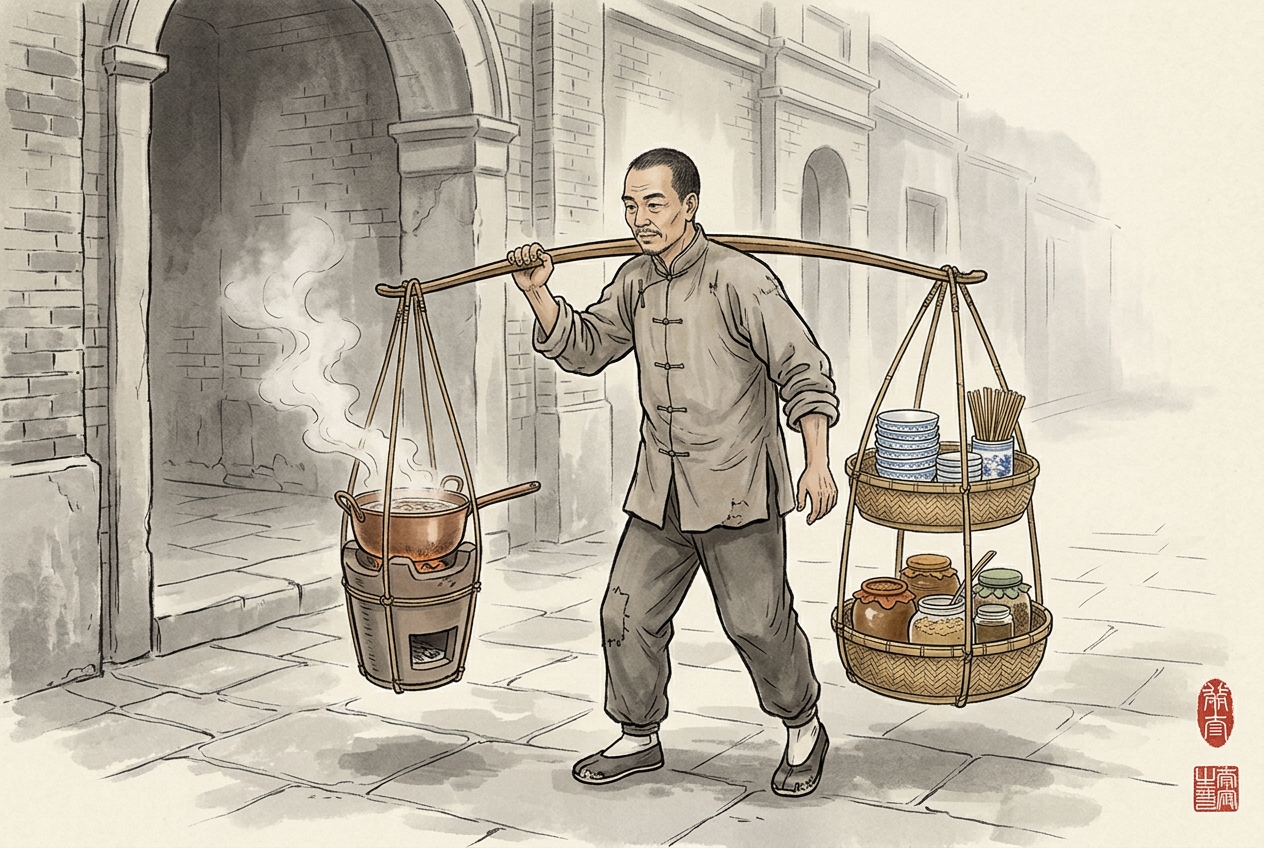
Elevating Sidewalk Craft into Cultural Law
For centuries in imperial China, street-food vendors occupied the margins of official historiography; their skills survived solely in calloused hands and whispered kitchen proverbs. That hierarchy shifted dramatically in the early twenty-first century as China established its multi-tier Intangible Cultural Heritage (Feiyi / ICH) protection system following UNESCO’s 2003 Convention.
In Wuhan, no culinary tradition commanded deeper civic devotion than Reganmian. Between 2006 and 2011, the traditional craft of making Hot Dry Noodles—formally nominated under its historic flagship bearer as “Cai Lin Ji Reganmian Making Craft”—was enshrined in municipal and provincial heritage law, transforming a 1930s dockworker staple into an officially safeguarded treasure of Hubei civilization.
“Skill endures through human hands, flavor through the ages; six seconds in rolling water hold a century of devotion.” — Couplet at the Jiqing Street Reganmian Heritage Hall
The Official Archival Record
Government gazettes in Wuhan and Hubei document a rigorous two-stage canonization process:
1. First Batch Wuhan Municipal ICH (2006)
During Wuhan’s inaugural citywide heritage census in 2006, culinary historians, food scientists, and folklorists audited historical shop ledgers, interviewed veteran artisans, and conducted blind sensory evaluations. “Cai Lin Ji Reganmian Making Craft” was inscribed onto the First Batch of Wuhan Municipal Intangible Cultural Heritage, classified under Category VIII (Traditional Handicrafts) with serial code VIII-9.
2. Third Batch Hubei Provincial ICH (June 2011)
Five years later, in June 2011, the People’s Government of Hubei Province issued Document E-Zheng-Fa [2011] No. 41, elevating the craft to the Third Batch of Hubei Provincial Intangible Cultural Heritage Representative Projects. The provincial review board cited the dish as “an exemplary synthesis of Jianghan Plain wheat-and-sesame agriculture with modern Yangtze wharf urbanism, possessing irreplaceable historical, folkloric, and food-science value.”
Complementing urban shop preservation, Caizha Subdistrict in Huangpi District—birthplace of founder Cai Mingwei—established rural heritage memorials celebrating its status as the “Ancestral Hometown of Reganmian,” linking village terroir to metropolitan craft.
The Eight Protected Procedures of the Heritage Canon
Unlike industrial instant noodles, the provincial ICH dossier legally defines eight non-negotiable artisanal procedures that must be preserved in live transmission:
- Alkaline Dough Formulation (Huomian): High-gluten Jianghan Plain wheat flour (wet gluten ≥30%) kneaded with precise seasonal ratios of dietary sodium carbonate (jian) and salt until smooth, dense, and bubble-free.
- Round-Strand Extrusion & Cutting (Qiemian): Multi-pass sheeting to align gluten networks before cutting into uniform 1.6–1.8 mm cylindrical strands optimized for rapid heat transfer and sauce adhesion.
- 80% Parboiling (Chuzhu): Plunging raw strands into a wide cauldron of briskly boiling water until 75–80% gelatinized—leaving a tiny, al dente white pinpoint (baixin) at the center of each strand.
- Wind-Cooling & Oil-Tossing (Danmian): Draining onto wide bamboo trays, blasting with cool airflow to halt carryover cooking, and tossing high with long bamboo chopsticks while drizzling aromatic sesame oil so a microscopic lipid film seals every strand.
- Low-Temperature Stone Milling (Yanjiang): Gentle roasting of plump Hubei sesame seeds followed by slow stone-wheel grinding below 60°C (preserving volatile pyrazines and sesamol; Cai Lin Ji’s heritage line notably champions a signature aromatic black-sesame paste alongside traditional white-sesame paste).
- Oil-Phase Emulsification (Xiejiang): Thinning dense stone-milled paste exclusively with small-mill sesame oil and refined vegetable oil—never plain tap water—until it ribbons smoothly off a ladle.
- Ten-Spice Lushui Reduction (Aolu): Slow-simmering star anise, cassia bark, black cardamom, clove, fennel, and aged tangerine peel with soy sauce and rock sugar to form the umami base, paired with freshly crushed raw garlic water.
- Six-Second Blanch & Triple Shake (Tangmian): Submerging a single portion in a conical bamboo basket into boiling water for six seconds, executing three sharp wrist shakes to expel free water, and layering condiments within ten seconds.
Four-Generation Master Inheritor Genealogy
Because mid-century collectivization separated historic shop trademarks from private family kitchens, Reganmian’s living heritage flows down two complementary lineages:
| Generation | Institutional Heritage Stream (Cai Lin Ji System) | Family & Disciple Stream (Cai Clan Lineage) | Historical Role & Heritage Contribution |
|---|---|---|---|
| 1st Gen (Founders) | Cai Mingwei (1912–1977) & Cai Mingjing | Cai Mingwei (Caizha, Huangpi patriarch) | Invented danmian parboiling & sesame emulsion; founded Cai Lin Ji (1945) |
| 2nd Gen (Custodians) | State-era master teams → Wang Yongzhong (Provincial ICH Representative Inheritor) | Cai Hanwen (1935–2017, Cai Mingwei’s eldest son; penned ‘Reganmian’ in 1950) | Wang codified ICH technical manuals & black-sesame craft; Cai preserved family yellow-paste formula |
| 3rd Gen ( Disseminators) | Cai Lin Ji ICH R&D workshop & senior master chefs | Li Yajuan (Changqing Maixiangyuan), Zeng Mazi heirs & public disciples | Scaled authentic manual craft into modern central kitchens and hundreds of neighborhood shops |
| 4th Gen (Torchbearers) | Wuhan vocational culinary students & young artisans | Next-gen noodle masters & overseas Wuhan shopkeepers | Campus ICH curricula, Jiqing Street living museum, and global culinary ambassadorship |
Living Transmission: Beyond Museum Glass
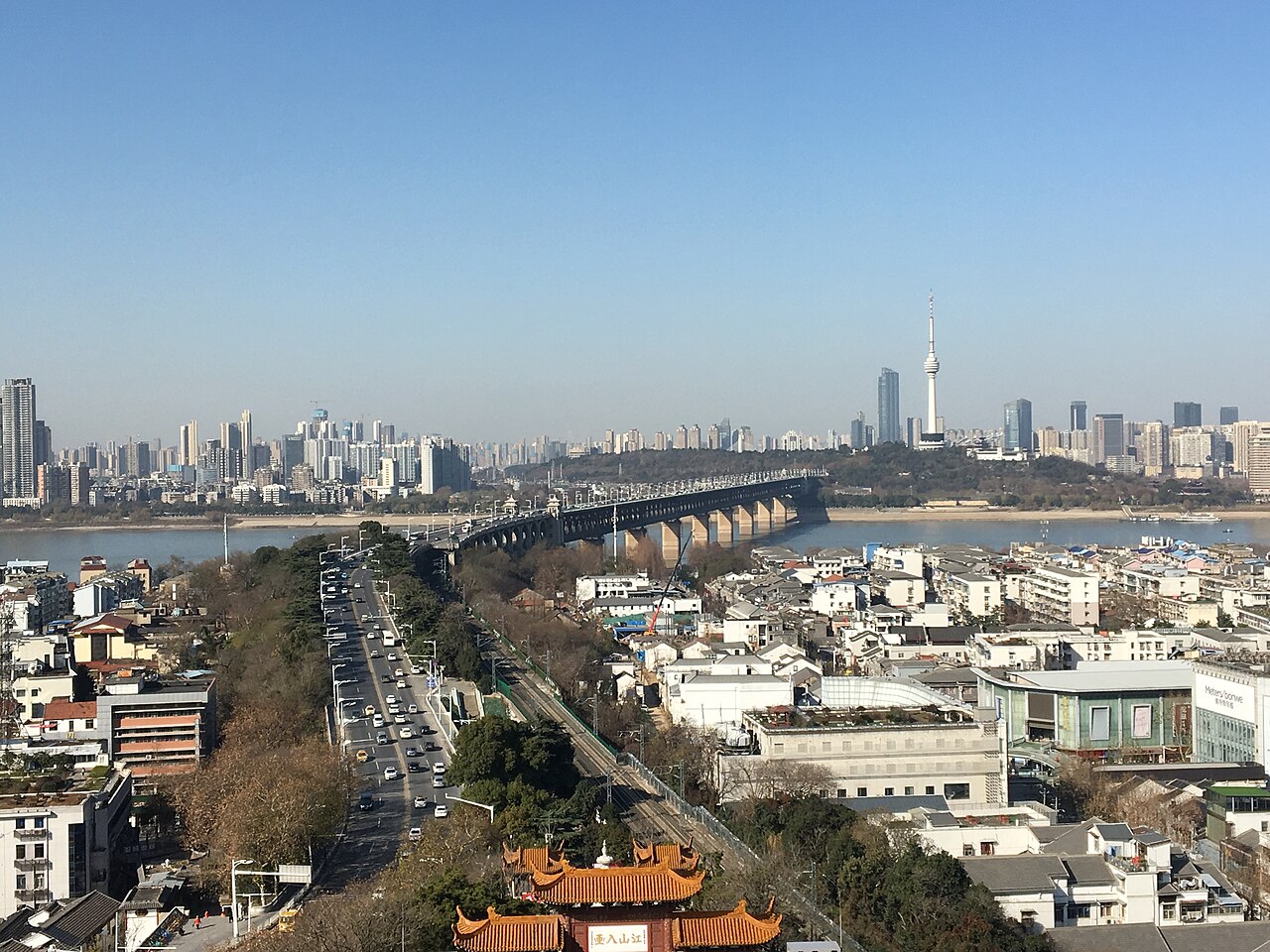
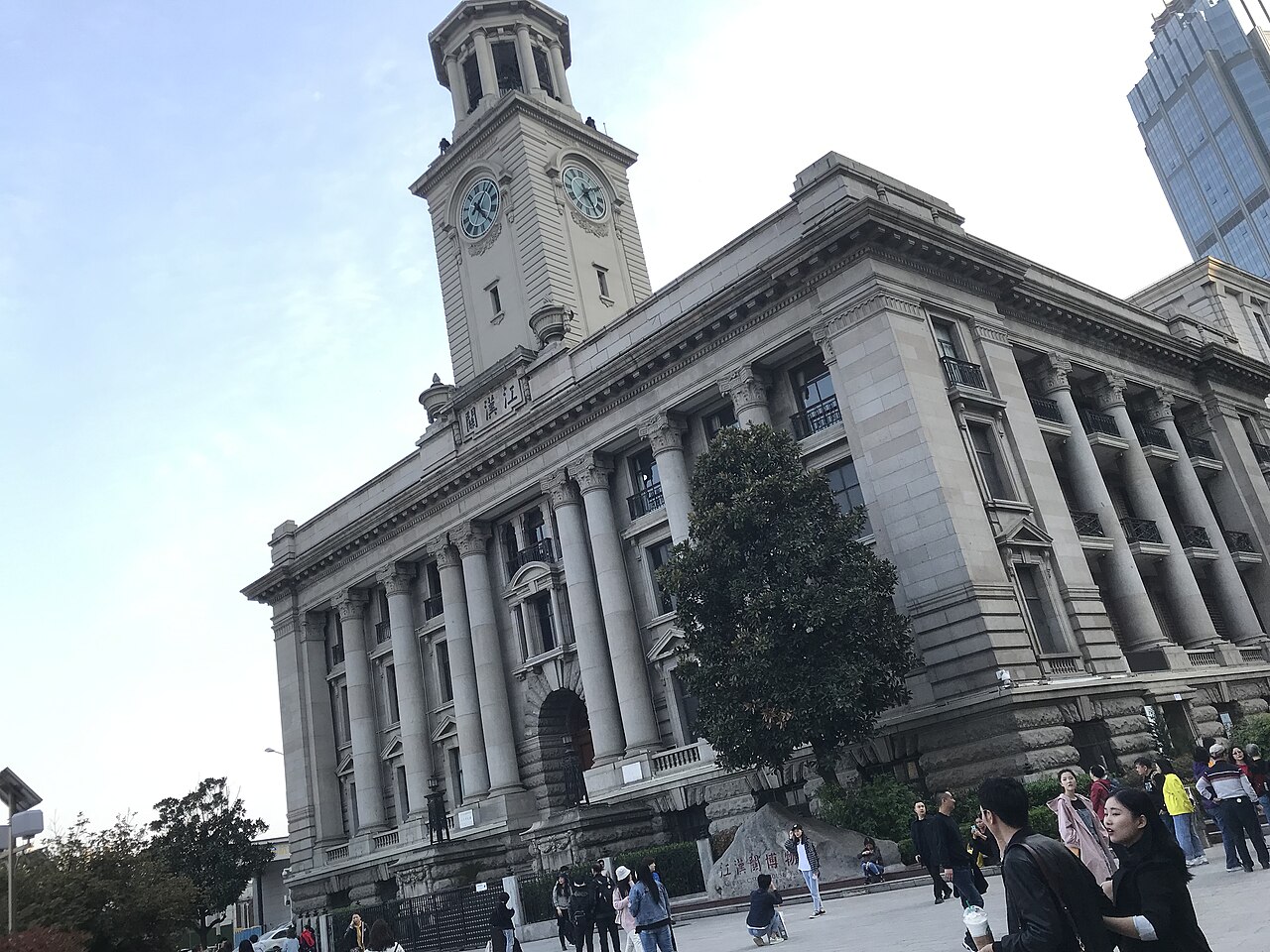
In Wuhan, intangible heritage refuses to gather dust behind velvet ropes. At the Jiqing Folk Street Flagship & Reganmian Museum in Hankou, visitors watch inheritors feed roasted sesame into granite millstones while bronze sculptures recreate 1930s Changdi Street pole-peddlers. Across town at Wuhan Business University and vocational culinary institutes, the eight ICH steps are taught as graded laboratory coursework. Every morning, millions of bowls confirm the ultimate triumph of living heritage: a craft protected by government statute, yet judged anew at dawn by the palates of ordinary citizens.
- Wuhan Municipal People's Government: First Batch Municipal Intangible Cultural Heritage Gazette (2006)
- People's Government of Hubei Province: Third Batch Provincial ICH Notification (Document E-Zheng-Fa [2011] No. 41)
- Hubei Provincial Intangible Cultural Heritage Protection Center: Project Dossier & Inheritor Biographies
- Huangpi District Cultural Center: Field Report on Caizha Reganmian Homeland Folklore
❓ Frequently Asked Questions
When was Wuhan Reganmian officially recognized as Intangible Cultural Heritage?
The craft—formally inscribed under the project title 'Cai Lin Ji Reganmian Making Craft'—was named to Wuhan's First Municipal Intangible Cultural Heritage List in 2006 (Item VIII-9) and elevated in June 2011 by the Hubei Provincial Government to the Third Batch of Hubei Provincial Intangible Cultural Heritage.
Who is Wang Yongzhong, and what is his role in Reganmian heritage preservation?
Wang Yongzhong, a celebrated Master of Chinese Culinary Arts, serves as the official Provincial Representative Inheritor of Cai Lin Ji Reganmian Craft. Having spent decades mastering and refining the old state-enterprise and workshop techniques—including Cai Lin Ji's signature aromatic black-sesame paste blend—he translated unwritten apprentice lore into precise temperature, hydration, and timing standards for modern trainees.
How do Wuhan's dual master lineages—enterprise and family—relate to each other?
Following the 1956 state-private merger, craftsmanship evolved along two intertwined tracks: the institutional master-apprentice line inside Cai Lin Ji (represented by Wang Yongzhong) and the Cai family bloodline preserved by Cai Mingwei's eldest son Cai Hanwen (1935–2017), who later passed the family's pure white-sesame yellow-paste recipe to prominent third-generation disciples.
✦ Cross-Referenced Chapters
Origin Legends: Li Bao & Cai Mingwei Textual Inquiry
Investigating the two foundational 1930s Hankou accounts—street peddler Li Bao on Changdi Street and Cai Mingwei’s Cai Lin Ji.
Centennial Chronology (1920s–2020s)
A decade-by-decade timeline from Republican-era wharf stalls and state-private partnerships to heritage status and global exports.
Genealogy of Time-Honored Brands & Schools
Mapping the historical splits, apprenticeships, and brand evolutions from Cai Lin Ji to Cai Mingwei, Changqing, and Zeng Mazi.
The Core Art of "Danmian": Parboiling & Oil-Tossing
Step-by-step mastery of 80%-cooked boiling, fan-cooling, and sesame-oil tossing that keeps alkaline noodles springy for hours.