Standardized Chinese-English Reganmian Culinary Lexicon
Codifying Pinyin, Food-Science Equivalents, and Menu Nomenclature Across Craft, Ingredients, Utensils, Guozao, and Wuhan Slang
Establishing the definitive bilingual terminology standard for Wuhan Reganmian and Guozao culture—replacing awkward literal menu translations with accurate culinary nomenclature across parboiling craft, condiments, traditional tools, breakfast pairings, and dialect.
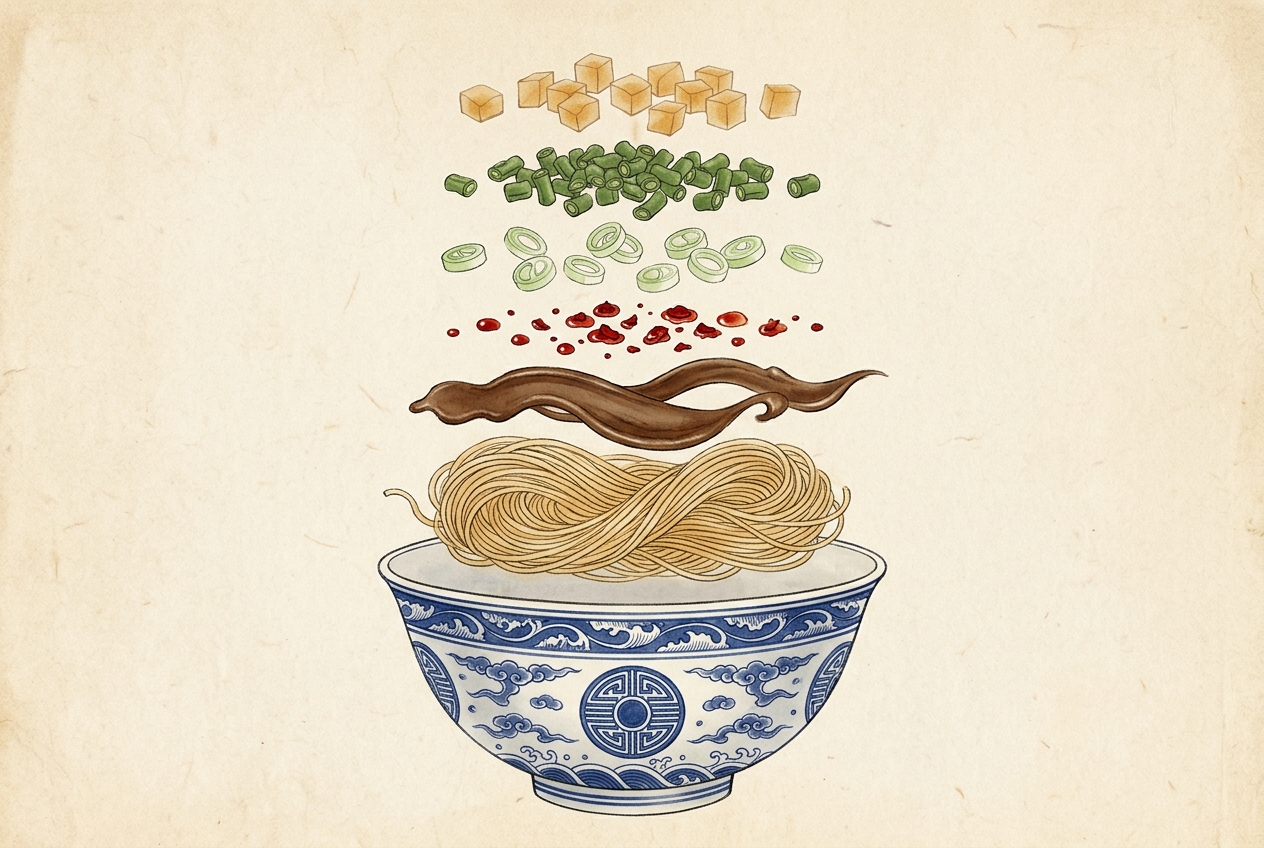
Why Words Matter at the Noodle Counter
As Hubei-packed Reganmian ships to supermarkets across four continents and Wuhan diaspora kitchens open from Flushing and London to Sydney and Singapore, bad menu translation remains an unnecessary barrier between curious diners and a masterpiece of Chinese street food. Literal dictionary lookups have long littered bilingual signs with baffling phrases: rendering Danmian (掸面) as ‘Dusting Noodles’, Mianwo (面窝) as ‘Noodle Nest’, Lushui (卤水) as harsh industrial ‘Brine’, or beloved Cangying Guanzi (苍蝇馆子) as ‘Fly Restaurant’.
Serving as the systematic framework behind our searchable 50-entry digital lexicon (glossary.json), this chapter establishes Three Lexicographical Principles for global menus, food journalism, and academic writing:
- Cultural Loanword + Structural Gloss: Elevate core proper nouns—Reganmian, Guozao, Danmian, Mianwo, Danjiu, Doupi—just as Ramen, Pho, and Carbonara stand in English, paired with concise parenthetical descriptions.
- Process-True Culinary Verbs: Render workshop verbs by their thermal and colloidal mechanics (flash-blanched raw-sliced for
生烫, oil-thinned sesame emulsion for油澥酱, cross-lifting chopstick toss for十字挑拌). - Allergen-Transparent Ingredient Naming: Surface alkaline wheat, sesame, fermented soy, and peanut (in
二八酱) naturally within menu descriptions so international guests order with total confidence.
‘Fidelity in culinary translation asks more than grammar: it must let a reader holding a fork halfway across the ocean smell roasted sesame rising from a bamboo basket.’ — Editorial Preface to the Bilingual Lexicon
Part I: Core Craft, Ingredients & Utensils Nomenclature
| Chinese Term | Pinyin | Canonical English Equivalence | Deprecated Mistranslation | Culinary & Technical Definition |
|---|---|---|---|---|
| 热干面 | Règānmiàn | Reganmian (Wuhan Hot Dry Noodles) | Hot and Dry Pasta | Wuhan’s iconic brothless alkaline noodles in stone-ground sesame emulsion |
| 掸面 | Dǎnmiàn | Parboiling & Oil-Tossing (Danmian) | Dusting / Sweeping Noodles | Pre-boiling strands to 80%, forced-air cooling, and tossing in sesame oil |
| 油澥酱 | Yóuxièjiàng | Oil-Thinned Sesame Emulsion | Watery / Diluted Paste | Thinning pure stone-ground sesame paste with 35%–45% toasted sesame oil |
| 三颠两抖 | Sāndiān Liǎngdǒu | Triple Toss & Double Wrist-Shake | Three Jumps Two Shakes | Centrifugal wrist snaps expelling free cauldron water from the strainer |
| 十字挑拌 | Shízì Tiǎobàn | Cross-Lifting Chopstick Toss | Cross Stirring | Perpendicular bottom-to-top chopstick lifts marrying soy base with paste |
| 生烫 | Shēngtàng | Flash-Blanched Raw-Sliced (Shengtang) | Raw Boiled Meat | Paper-thin fresh beef/kidney poached 12s in rolling stock over noodles |
| 碱水面 | Jiǎnshuǐmiàn | Alkaline Wheat Noodles (Jianshuimian) | Lye / Soda Pasta | 1.8mm high-gluten round wheat strands kneaded with sodium carbonate |
| 二八酱 | Èrbājiàng | 80/20 Sesame-Peanut Blend Paste | Two-Eight Sauce | 80% roasted sesame paste blended with 20% roasted peanut paste |
| 十香老卤水 | Shíxiāng Lǎolǔshuǐ | Ten-Spice Aged Soy Braising Broth | Salty Pickle Brine | Concentrated star-anise, cassia, cardamom & soy umami reduction |
| 黄陂脆萝卜丁 | Huángpí Cuìluóbodīng | Huangpi Sun-Wilted Pickled Radish Dices | Dried Turnip Bits | Sun-dehydrated, chili-cured white radish cubes with crisp snap |
| 大蒜水 | Dàsuànshuǐ | Crushed Raw Garlic Infusion | Garlic Soup | Pounded raw garlic steeped in cooled boiled water for even allicin lift |
| 锥形竹笊篱 | Zhuīxíng Zhúzhàolí | Conical Bamboo Noodle Strainer | Bamboo Basket | Deep split-bamboo single-portion blanching cone with long handle |
| 防油淋膜纸碗 | Fángyóu Línmó Zhǐwǎn | Grease-Proof PE-Lined Paper Bowl | Disposable Paper Cup | Heat-insulated wide-rim paperboard bowl enabling walking-while-eating |
Part II: Guozao Companions & Wuhan Street Dialect
No bowl of Reganmian exists in isolation; translating its morning ecosystem and spirited wharf slang unlocks the soul of Wuhan:
| Domain | Chinese | Pinyin | Standardized English Term & Gloss | Cultural Context |
|---|---|---|---|---|
| Ritual | 过早 | Guòzǎo | Guozao (Wuhan Morning Street Feast) | Attested since 1850; treating everyday breakfast like a festive occasion |
| Beverage | 冲蛋酒 | Chōng Dànjiǔ | Danjiu (Poached-Egg Sweet Rice Wine) | Boiling water ribbons fresh egg into sweet Xiaogan fermented rice wine (<1% ABV) |
| Beverage | 桂花糊米酒 | Guìhuā Húmǐjiǔ | Humijiu (Osmanthus Sweet Rice-Paste Soup) | Silky thickened fermented rice soup with mini glutinous pearls & osmanthus |
| Companion | 面窝 | Miànwō | Mianwo (Crispy Savory Rice-Soy Donut) | Fried in a domed iron ladle: fluffy outer ring, wafer-crisp center for mopping sauce |
| Companion | 三鲜豆皮 | Sānxiān Dòupí | Sanxian Doupi (Pan-Crisped Glutinous Square) | Mung-bean egg crepe griddled over glutinous rice, pork, mushrooms & bamboo shoots |
| Companion | 油饼包烧麦 | Yóubǐng Bāo Shāomài | Crispy Fried Dough Pocket Stuffed with Shaomai | Liangdao Street icon: four peppery pork-rice shaomai tucked inside hot fried dough |
| Ordering | 二两全料 | Èrliǎng Quánliào | Standard Bowl with Full Works | Classic 145g blanched noodle serving dressed with every condiment & pickle |
| Dialect | 虚浮 | Xūfú | Xufu (‘Blissfully Comfortable’ in Wuhanese) | The contented sigh let out right after finishing hot noodles and Danjiu |
| Dialect | 不服周 | Bùfúzhōu | Bufuzhou (Unyielding Wuhan Grit) | Ancient Chu-state idiom celebrating fierce, never-say-die wharf resilience |
| Culture | 苍蝇馆子 | Cāngying Guǎnzi | Hole-in-the-Wall Cult Stall | Affectionate term for tiny, unvarnished alley shops revered for master-level flavor |
Model International Menu Copy for Chefs & Restaurateurs
For overseas restaurateurs introducing Wuhan’s flagship dish to first-time guests, pair the canonical name with sensory cues familiar to lovers of artisanal pasta and ramen:
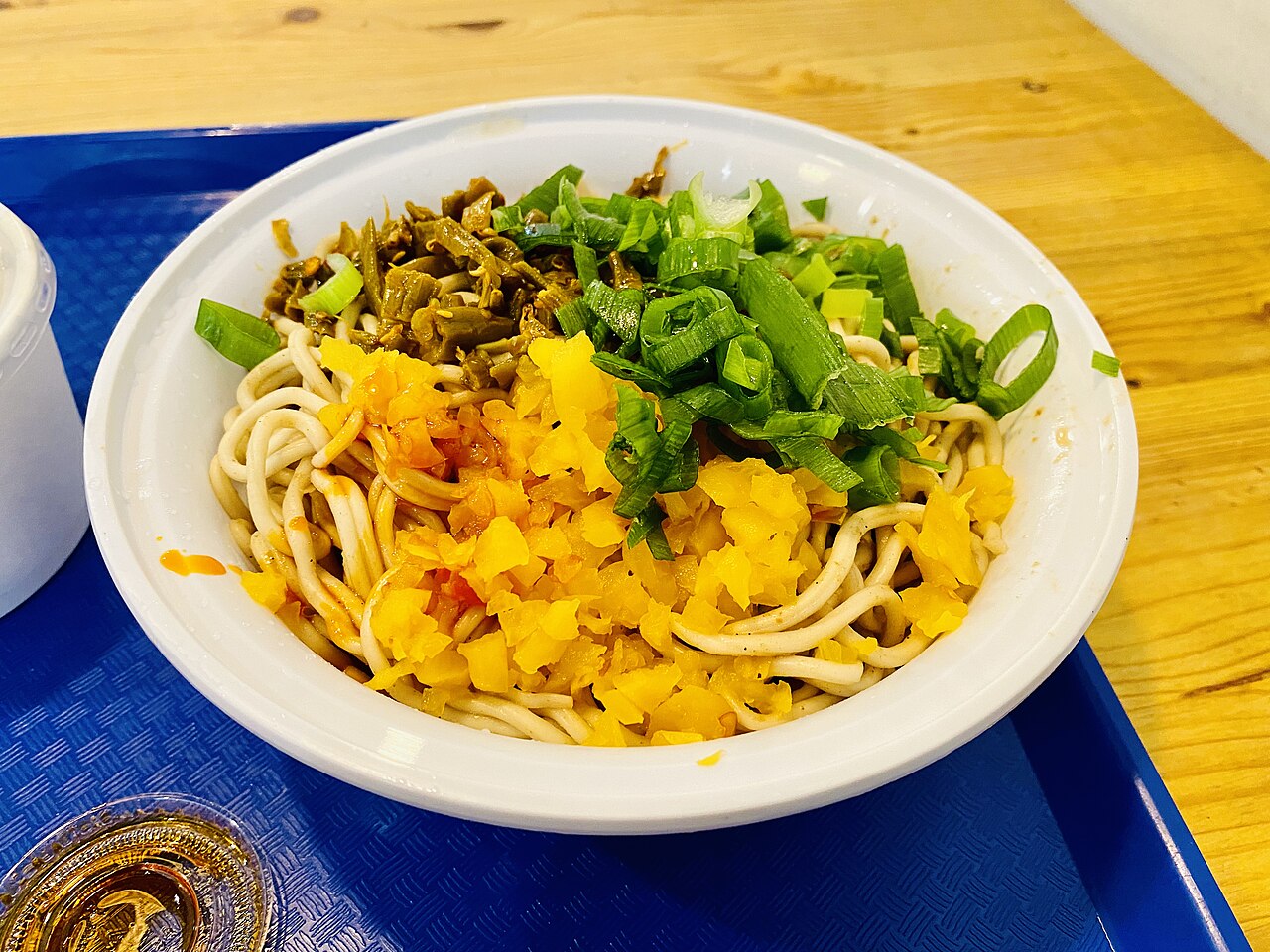
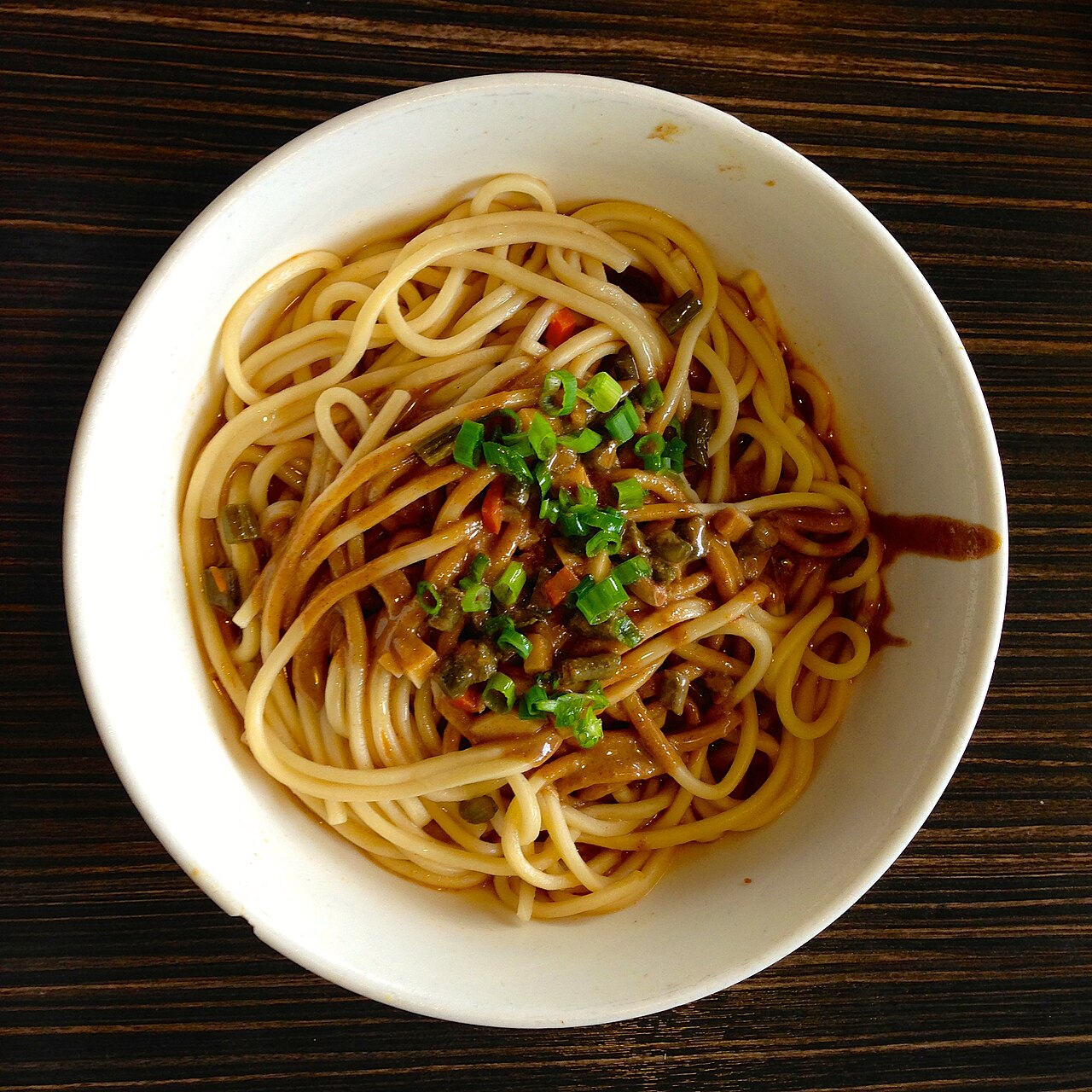
Classic Hankou Reganmian — Wuhan Hot Dry Noodles House-extruded 1.8mm alkaline wheat strands parboiled and sesame-oil tossed (Danmian), flash-blanched for 10 seconds and served brothless in a velvety stone-ground Hubei sesame emulsion, ten-spice aged soy reduction, raw garlic infusion, crisp sun-wilted radish dices, fermented sour cowpeas, and fresh scallions. Toss briskly from the bottom within 30 seconds. (Contains: Wheat Gluten, Sesame, Soy).
- National Guidelines for English Translation of Chinese Culinary Heritage & Public Signage
- The Oxford Companion to Food (Oxford University Press) Asian Lexicography Conventions
- Wuhan Municipal Foreign Affairs & Cultural Tourism Bilingual Gastronomy Standards
❓ Frequently Asked Questions
Should international menus call the dish 'Reganmian' or 'Hot Dry Noodles'?
Use both together on first reference: 'Reganmian (Wuhan Hot Dry Noodles).' Just as Ramen, Pho, and Pad Thai anchored themselves as global culinary loanwords, leading with 'Reganmian' builds cultural recognition while the parenthetical clarifies its hot, brothless format.
Why was translating 'Mianwo' as 'Noodle Nest' misleading for international diners?
Although the characters literally read 'flour/noodle nest,' Mianwo contains zero wheat noodles—it is a crispy, savory ring fried from fermented rice-and-soybean batter with scallions in a domed iron ladle. Calling it 'Mianwo (Crispy Savory Rice-Soy Donut)' conveys both texture and gluten-free grain composition.
How do you translate specialized Wuhan craft verbs like 'Danmian' and 'Youxiejiang' accurately?
Translate the underlying culinary physics rather than dictionary homographs: 'Danmian' becomes 'Parboiling & Oil-Tossing,' and 'Youxiejiang' becomes 'Oil-Thinned Sesame Emulsion,' giving chefs and curious diners an exact mental picture.
✦ Cross-Referenced Chapters
Utensil & Cart Evolution: Poles, Bamboo Strainers & Paper Bowls
A material history from wooden shoulder-poles and conical bamboo baskets to iconic grease-proof paper bowls.
The Core Art of "Danmian": Parboiling & Oil-Tossing
Step-by-step mastery of 80%-cooked boiling, fan-cooling, and sesame-oil tossing that keeps alkaline noodles springy for hours.
Wuhan "Guozao" Panorama: A Month Without Repeating Breakfast
Origins of the term "Guozao" and how Wuhan’s exuberant morning street-food universe revolves around Hot Dry Noodles.
Wuhan Dialect Glossary: From "Guozao" to "Xufu"
Pronunciation, etymology, and lively street dialogues for over twenty authentic Wuhanese expressions heard at noodle stalls.
Global Palate Reactions & Official English Culinary Nomenclature
How international diners experience Wuhan’s "Sesame Carbonara" and standardizing English menu translations for Reganmian craft.