Wuhan 'Guozao' Panorama: A Month Without Repeating Breakfast
From Qing-Dynasty Hankou Poetry to China's Most Exuberant Morning Street-Food Universe
Tracing the 1850 textual origins of the term 'Guozao' in Ye Tiaoyuan's Hankou Bamboo-Branch Lyrics, exploring how two-river wharf labor forged a hundred-dish breakfast ecosystem, and examining why Hot Dry Noodles reign as its undisputed centerpiece.
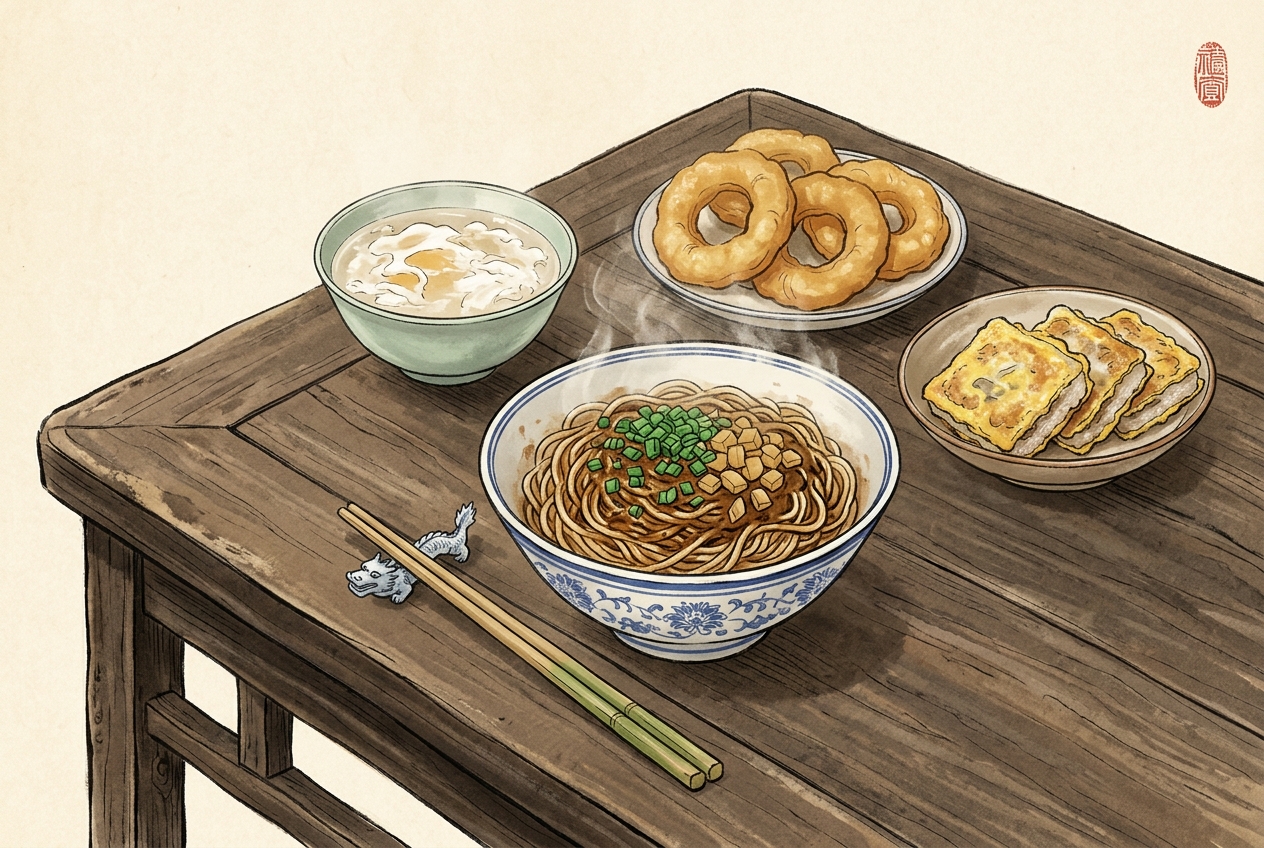
The Weight of a Single Verb: Qing Poetry and the Ritual of Dawn
Across the vast linguistic map of China, most regions name the morning meal with utilitarian restraint. Northerners “eat early bites” (chi zaodian), Shanghainese “eat morning rice” (chi zaofan), and Cantonese diners “sigh with appreciation over morning tea” (tan zaocha). Only in Wuhan—and the surrounding Jianghan Plain of Hubei Province—do ten million citizens attach the ceremonial verb guo (过) to daybreak. In Chinese cultural grammar, guo is reserved for occasions one actively celebrates rather than merely consumes: guonian (celebrating the Lunar New Year), guojie (observing a major festival), guoshou (honoring a longevity birthday). To guozao (过早) is literally to celebrate the morning as a daily feast.
While spoken street slang rarely leaves precise birth certificates, the literary pedigree of guozao is remarkably well preserved. In 1850—the thirtieth and final year of the Qing Daoguang Emperor’s reign—a perceptive scholar from Yuyao, Zhejiang named Ye Tiaoyuan published Hankou Zhuzhici (Bamboo-Branch Lyrics of Hankou), an anthology of nearly three hundred folk quatrains chronicling mercantile life at the confluence of the Yangtze and Han rivers. Two verses capture the city’s morning obsession with photographic clarity:
“Modest housewives ape the grand estates, / Waking from dream-souls only as morning breaks; / Leaving hair uncombed, they rush to guozao first— / Wolfing down sticky rice cakes and fried dumplings in one breath.”
“Every three days, guozao outdoes the ordinary, / One ravenous feast makes lunch quite unnecessary: / Hand-cut wheat noodles, mung-bean strips, dry rice vermicelli, / Fish balls and meatballs tumbling in boiling chicken broth.”
Even eighty years before Hot Dry Noodles (Reganmian) crystallized into their modern sesame-dressed form in the 1930s, every structural trait of Wuhan breakfast culture was already in place: egalitarian street enthusiasm that superseded morning vanity, portion sizes hearty enough to eclipse midday meals, and an extraordinary coexistence of northern wheat noodles (qiemian) alongside southern rice, bean, and freshwater fish delicacies.
Forged on the Wharves: How Nine-Province Commerce Built a Carb Empire
To understand why Wuhan’s morning table evolved such unapologetic richness—heavy on toasted sesame paste, rendered pork lard, deep-fried batters, and cracked black pepper—one must look to the geography of its three historic boroughs: Hankou, Wuchang, and Hanyang. Known since the Ming and Qing dynasties as the “Thoroughfare of Nine Provinces” (Jiusheng Tongqu), Hankou boasted miles of riverfront wharves stretching from Changdi Street and Hanzheng Street to Jijiazui.
Before mechanized cranes, tens of thousands of dockworkers—locally called matou biandan after their bamboo carrying poles—reported to the riverbanks before 5:00 AM to haul 100-kilogram bales of cotton, tung oil barrels, grain sacks, and brick tea. Watery rice porridge and pickled cucumbers could never fuel six hours of backbreaking stevedore labor. Wharf workers demanded morning sustenance governed by four uncompromising rules: high caloric density from complex carbohydrates and lipids, bold sodium and spice to replenish sweat, lightning-fast assembly between cargo shifts, and working-class affordability.
Simultaneously, river trade brought waves of culinary migration from Anhui, Henan, Hunan, Jiangxi, Jiangsu, and Guangdong. Situated squarely along China’s agricultural divide between winter wheat belts to the north and double-cropping paddy rice plains to the south, Wuhan artisans gained access to every staple grain imaginable. Northern alkaline dough-kneading met southern stone-ground sesame oil; Huaiyang steamed soup dumplings (tangbao) stood shoulder to shoulder with Hubei glutinous-rice pan-squares (doupi) and fermented sweet rice wine from neighboring Xiaogan.
Thirty Mornings Without Repetition: The Four Pillars of Guozao
Locals proudly boast that a visitor can guozao in Wuhan for an entire month without eating the same breakfast twice. Rather than a chaotic jumble, this hundred-item street repertoire organizes naturally into four complementary culinary families:
| Craft Family | Signature Dishes | Core Ingredients & Technique | Flavor & Textural Profile | Relationship to Reganmian |
|---|---|---|---|---|
| Alkaline Wheat & Rice Noodles | Reganmian, Fresh Fish Paste Rice Noodles (Hushangfen), Beef Noodle Soup, Zha Jiang Noodles | Parboiled high-gluten jianshui wheat strands or early-indica rice noodles; rapid boiling blanch | Nutty, savory, chewy, or peppery fish-broth umami | Reganmian is the undisputed monarch; beef and fish noodles serve as broth-based peers |
| Pan-Seared & Steamed Grains | Three-Delicacy Doupi, Heavy-Oil Shaomai, Cured Pork Dousi, Water-Fried Buns (Qishuibao) | Mung-bean & rice crepes, glutinous rice, diced pork/mushroom/bamboo, paper-thin wheat skins | Shatteringly crisp egg-washed crust over unctuous, peppery sticky rice | A half-order of Doupi or two Shaomai alongside Reganmian forms the classic VIP morning spread |
| Deep-Fried Golden Carbs | Mianwo (Savory Rice Donuts), Jiguanjiao (Cockscomb Pies), Huanxituo (Sesame Balls), Nuomiji | Fermented rice-and-soybean batter, sweet potato cubes, leavened dough, sesame-coated sticky rice | Blistered, lacy crunch paired with airy or molten-sweet centers | Torn by hand and dipped directly into the sesame-soy sauce pooled at the bottom of a Reganmian bowl |
| Sweet & Savory Morning Sips | Whisked Egg Rice Wine (Danjiu), Osmanthus Humijiu, Radish Beef Broth, Savory Tofu Pudding | Xiaogan fermented glutinous rice wine, fresh eggs, lotus-root starch, slow-simmered ox bones | Floral, lightly sweet, silky-warm, or clean collagen-rich savory warmth | Essential liquid counterpoint that dissolves thick sesame paste on the palate |
Why Reganmian Holds the Center of Gravity
Among peers as dazzling as Lao Tongcheng’s golden Sanxian Doupi—once served to visiting heads of state—and Shunxiangju’s intoxicatingly peppery Shaomai, why does the humble bowl of Reganmian command more than sixty percent of daily morning orders across Wuhan?
The answer lies in culinary geometry and kinetic efficiency. While a giant cast-iron pan of Doupi requires fifteen minutes of patient layering and oil-searing, pre-parboiled danmian alkaline noodles need just six to ten seconds in a roaring cauldron before being shaken dry in a conical bamboo basket and dressed from ten condiment crocks. Within twenty-five seconds of ordering, a commuter holds a steaming, self-contained meal that requires neither table nor broth spoon.
Even more importantly, Reganmian acts as the universal flavor anchor of the morning street. Its dense emulsion of stone-ground white sesame paste, small-mill sesame oil, spiced soy braising liquor, raw garlic water, and crunchy pickled radish dices invites—rather than crowds out—companionship. Sipping velvety Danjiu between mouthfuls creates a thrilling savory-sweet oscillation; tearing a crisp ring of Mianwo to mop up the last streaks of sesame sauce leaves zero waste in the paper bowl. Between 5:30 AM and 9:30 AM along Shanhaiguan Road in Hankou, Liangdao Street in Wuchang, or Meigui Street in Hanyang, billowing clouds of cauldron steam announce that Wuhan is wide awake—and celebrating another day from the very first bite.
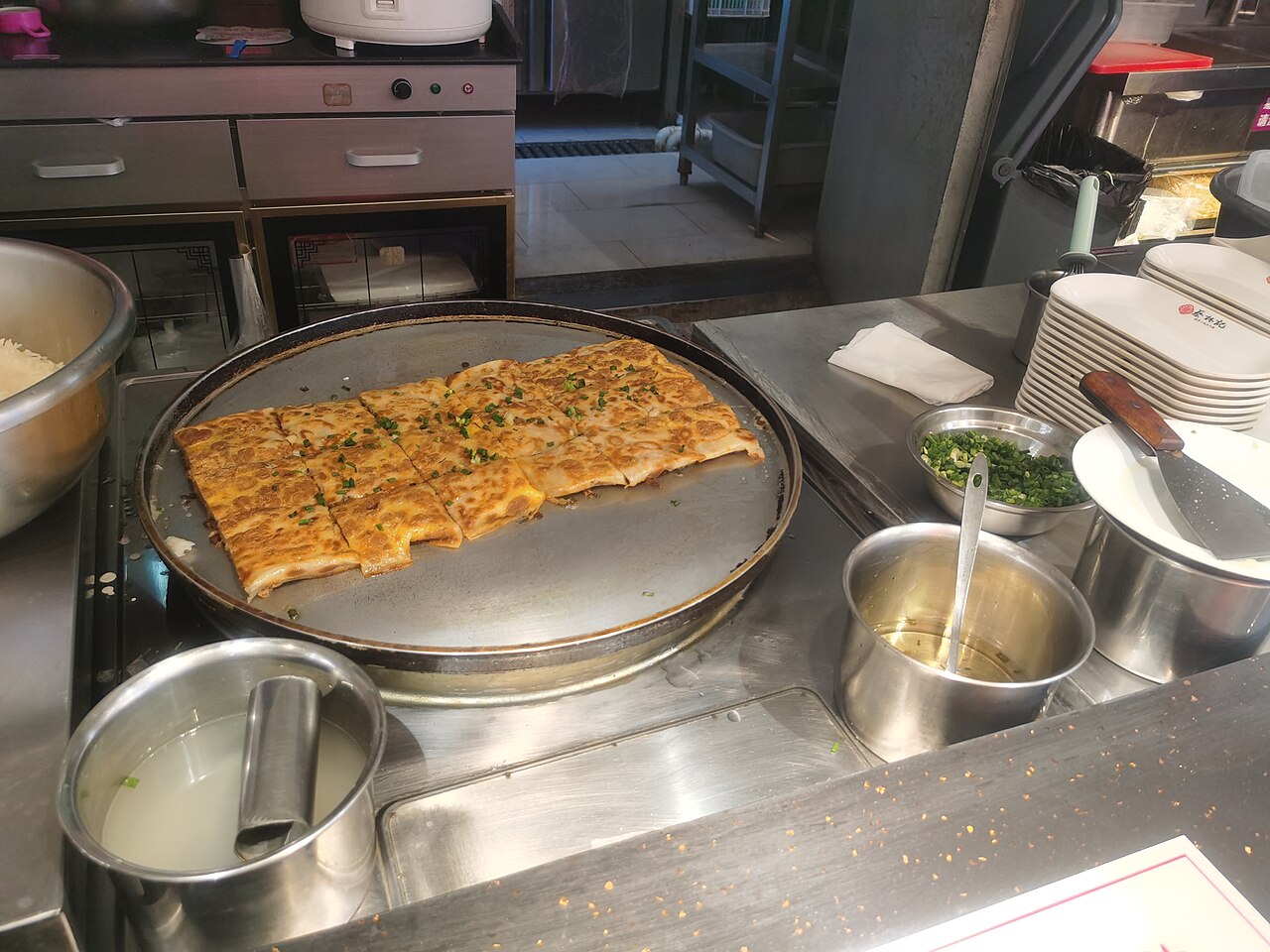
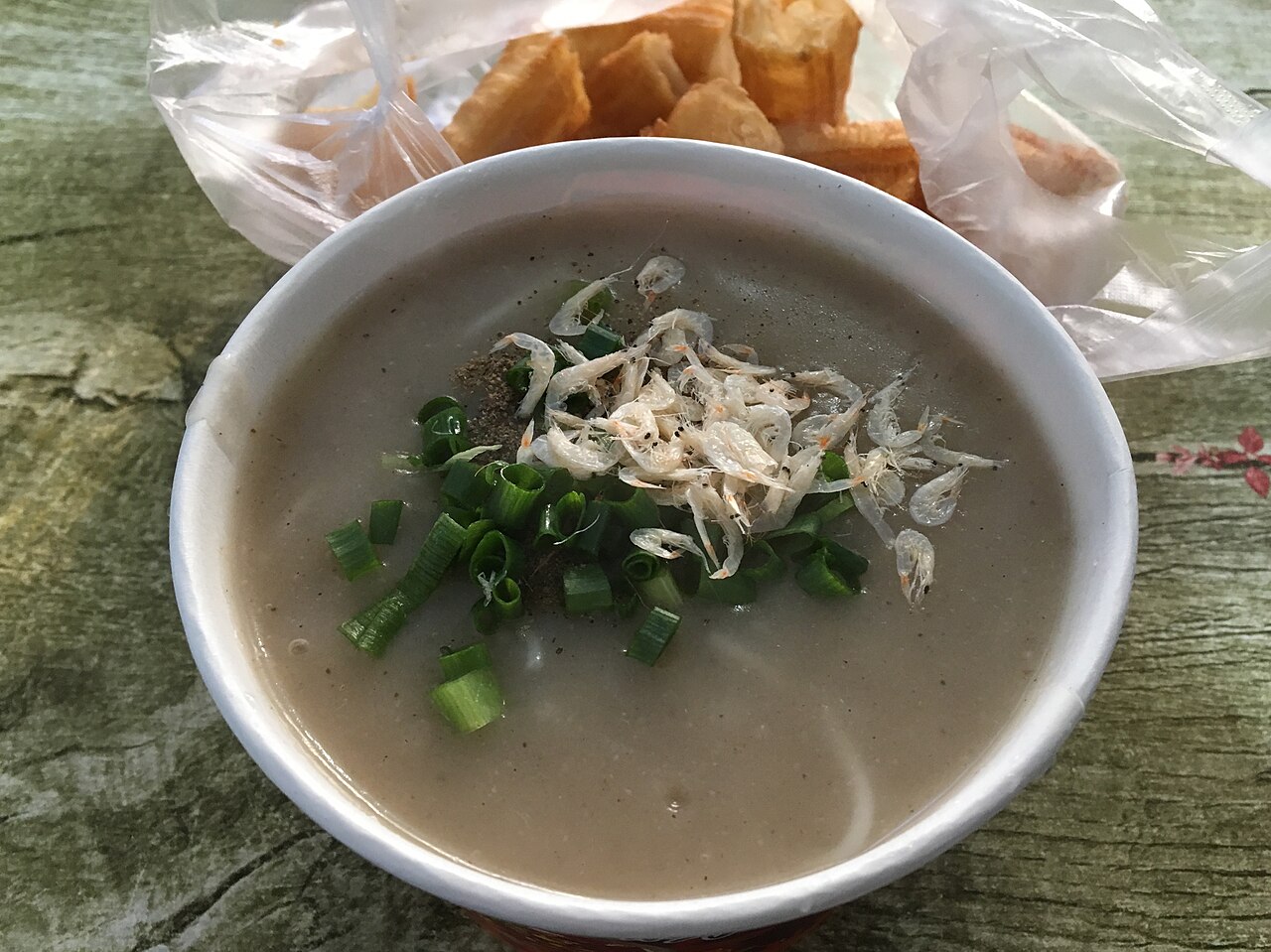
- Ye Tiaoyuan (1850), 'Hankou Zhuzhici' (Bamboo-Branch Lyrics of Hankou), Daoguang 30th Year Woodblock Edition
- Wuhan Local Chronicles Committee, 'Annals of Wuhan: Commerce and Culinary Services Volume'
- Hubei Provincial Intangible Cultural Heritage Center, 'Traditional Culinary Craft Archives of Jingchu'
❓ Frequently Asked Questions
Why do Wuhan locals call eating breakfast 'Guozao' instead of 'chizaofan'?
In Mandarin and Hubei dialect, the verb 'guo' elevates a routine time marker into a cherished ritual, just like 'guonian' (celebrating New Year). First recorded in 1850 by Qing poet Ye Tiaoyuan in Hankou, 'Guozao' reflects a civic philosophy where the morning meal is treated as a daily festival rather than an afterthought.
Can you really eat breakfast in Wuhan for a full month without repeating a dish?
Easily. Sitting at the agricultural crossroads of China's wheat-growing north and rice-growing south, Wuhan's Guozao repertoire spans more than a hundred specialties—from alkaline noodles, fish-paste rice noodles, and mung-bean Doupi squares to savory rice-milk donuts (Mianwo), black-pepper glutinous rice Shaomai, and poached-egg sweet rice wine.
Why did Reganmian become the centerpiece of Wuhan's vast breakfast table?
Reganmian hits a rare culinary sweet spot: parboiled alkaline noodles blanch in under ten seconds for unmatched street-side speed, stone-ground sesame paste delivers sustained caloric energy, the brothless format allows commuters to eat on the move, and its savory profile pairs effortlessly with nearly every sweet soup, broth, or fried snack on the street.
✦ Cross-Referenced Chapters
Origin Legends: Li Bao & Cai Mingwei Textual Inquiry
Investigating the two foundational 1930s Hankou accounts—street peddler Li Bao on Changdi Street and Cai Mingwei’s Cai Lin Ji.
Old Hankou Wharf & Bamboo-Bed Street Roots
How dockworker labor intensity and summer bamboo-bed alleys shaped Reganmian’s brothless, calorie-dense, 10-second format.
Historical Gazettes, Bamboo-Branch Lyrics & Old Press
Archival excerpts from Qing/Republican Hankou poetry, local gazetteers, and early newspaper accounts of sesame alkaline noodles.
Soulmate Drinks: Egg Rice Wine (Danjiu) & Sweet Fermented Rice Soup
Why velvety poached-egg sweet rice wine and osmanthus Humijiu are the ultimate palate-cleansing companions to rich sesame noodles.
Crispy Companions: Mianwo Savory Donuts, Jiguanjiao & Sesame Balls
Dipping crispy rice-milk Mianwo rings into leftover sesame sauce at the bottom of the bowl—classic Wuhan carb-on-carb bliss.
The Guozao Triad: Reganmian, Three-Delicacy Doupi & Peppery Shaomai
How glutinous-rice Doupi pan-squares and black-pepper pork Shaomai join Reganmian as Wuhan’s morning trinity.
Six Old-Alley Guozao Citywalk Trails
Turn-by-turn morning walking itineraries through Shanhaiguan Road, Liangdao Street, Dacheng Road, Meigui Street, and Lanling Road.
Wuhan Dialect Glossary: From "Guozao" to "Xufu"
Pronunciation, etymology, and lively street dialogues for over twenty authentic Wuhanese expressions heard at noodle stalls.