Soulmate Drinks: Egg Rice Wine (Danjiu) & Sweet Fermented Rice Soup
How Boiling-Whisked Egg Ribbons and Xiaogan Fermented Glutinous Rice Dissolve Sesame Richness
An in-depth culinary and scientific exploration of Reganmian's two iconic morning beverage soulmates—whisked poached-egg rice wine (Danjiu) and osmanthus-scented sweet rice soup (Humijiu)—featuring the thousand-year terroir of Xiaogan Mijiu and a foolproof authentic recipe.
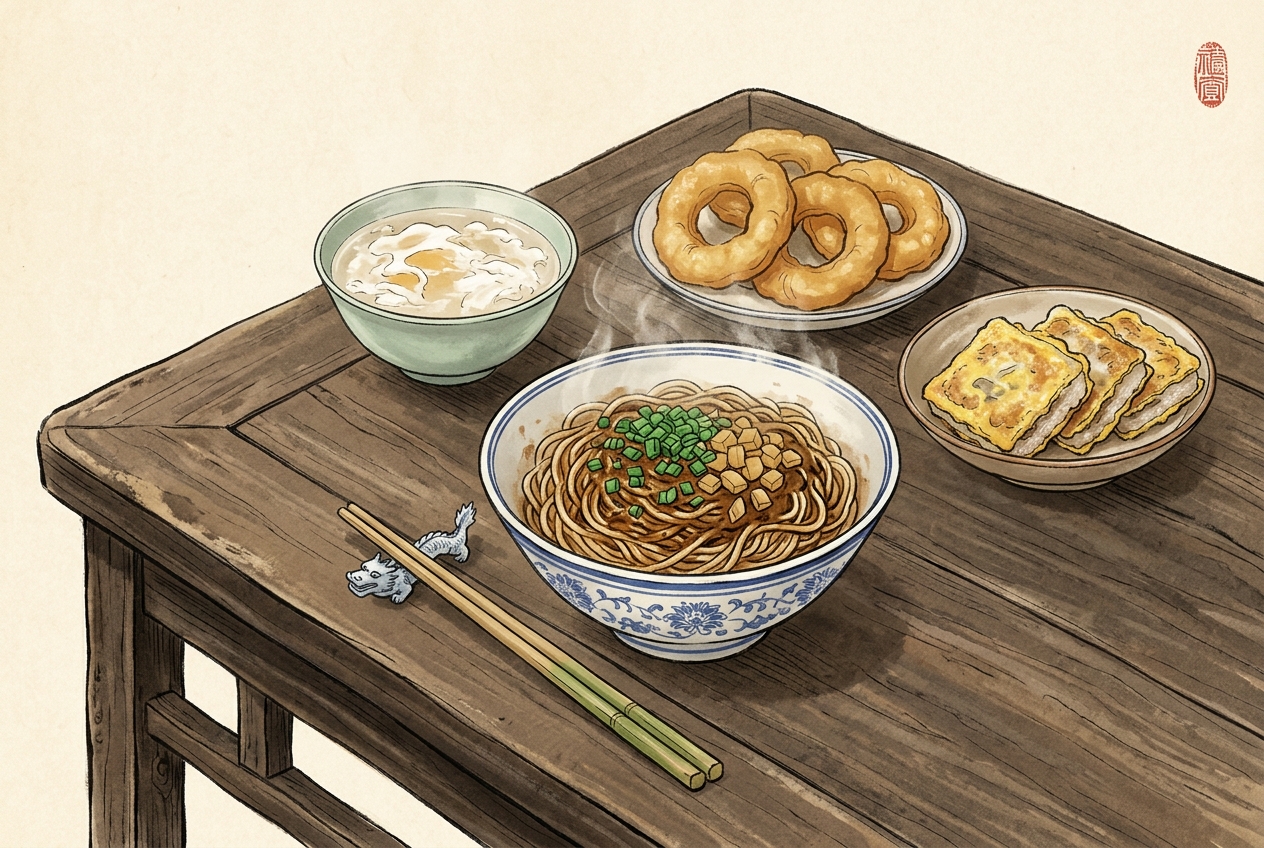
🍜 Standardized Culinary Formula Card
Ingredients
- 1 ultra-fresh room-temperature chicken egg (approx. 55g)
- 80g (3 generous tbsp) authentic Xiaogan sweet fermented glutinous rice wine (laozao, both mash and liquid)
- 220ml water at a vigorous rolling boil (98°C–100°C)
- 5g–8g fine white sugar (adjust to sweetness of the rice wine)
- 1/2 tsp preserved sweet osmanthus blossoms (tang guihua, optional)
Key Steps
- Pre-warm and whip: Rinse a heavy ceramic or enamel bowl with hot water and drain dry so it does not steal heat. Crack in the egg, add the sugar, and beat briskly with chopsticks for 40 seconds until completely homogeneous and topped with fine foam.
- High-elevation pour: Keep the kettle at a full rolling boil. Hold the spout roughly 25 cm (10 inches) above the center of the bowl and pour the boiling water in one forceful, uninterrupted stream. The combination of 100°C heat and hydrodynamic shear will instantly bloom the egg into gossamer golden clouds.
- Fold in the rice wine: Immediately spoon in the Xiaogan fermented glutinous rice mash and liquid while the bowl sits around 85°C, stirring gently twice. Never boil sweet rice wine aggressively over high heat, which drives off delicate floral esters and turns the broth sharp and sour.
- Garnish and pair: Dot the surface with preserved osmanthus blossoms if desired, and sip hot alongside freshly tossed Reganmian.
The Rheology of Relief: Why Thick Sesame Paste Craves Sweet Fermented Rice
First-time visitors standing before a Wuhan breakfast stall often do a double take. In their left hand sits a steaming bowl of Reganmian—unabashedly savory, garlicky, laced with five-spice soy braising broth, pickled cowpeas, and toasted chili oil. Yet into their right hand the vendor presses a porcelain bowl of Danjiu (蛋酒, whisked egg rice wine) or Humijiu (糊米酒, lotus-thickened osmanthus rice wine)—silky, floral, and unmistakably sweet.
Far from a culinary quirk, this pairing is a masterclass in mouthfeel engineering. Authentic Wuhan Reganmian cloaks 150 grams of chewy alkaline noodles in roughly 30 grams of stone-ground sesame paste thinned with sesame oil. Because roasted sesame paste comprises over fifty percent lipid and twenty percent hydrophobic globulin proteins, its emulsion clings tenaciously to both wheat strands and human taste buds. Halfway through a bowl, that glorious nuttiness builds a dense, velvety film across the palate—a sensation locals affectionately describe as huzui (“coating the mouth”).
Cold water only congeals sesame lipids, while plain hot water slides past oil without lifting it. Enter a 80°C bowl of Danjiu or Humijiu. First, gentle thermal warmth relaxes the viscosity of the sesame paste lingering on the tongue. Second, natural organic acids—lactic, succinic, and trace acetic acids produced during glutinous rice fermentation—trigger an immediate burst of fresh salivation that cleaves through fat. Third, maltose sweetness and gossamer egg ribbons create a thrilling savory-sweet oscillation against salty pickled radish and fiery chili oil. One bite of chewy sesame noodles, one sip of fragrant golden Danjiu: each resets the palate for the next.
“Two liang of fully dressed Hot Dry Noodles, one bowl of boiling-poured egg wine— / Trading savory for sweet like immortals at play, I wouldn’t swap mornings with a county magistrate.” — Old Hankou Changdi Street folk rhyme
Terroir in the Jar: Thousand-Year Xiaogan Sweet Rice Wine
Neither Danjiu nor Humijiu would taste truly Wuhanese without a protected agricultural treasure brewed sixty kilometers northwest of the city: Xiaogan Mijiu (孝感米酒), recognized under both China’s National Geographical Indication registry and the EU-China Geographical Indications Agreement. As the 1882 Xiaogan County Gazetteer proudly recorded: “Rice wine was perfected in Xiaogan, originating in the Song Dynasty; many imitated it thereafter, yet Xiaogan alone remains peerless.”
Unlike aged Shaoxing yellow wine—which is fermented dry to 14%–16% alcohol—Xiaogan Mijiu (known elsewhere in China as laozao or jiuniang) is a young, snow-white saccharified glutinous rice mash. Artisans steam pearl-grained Zhuhu glutinous rice, cool it with spring water, and inoculate it with traditional “honeycomb starter” (fengwo jiuqu)—fermented cakes compounded from rice flour and over a dozen wild Dabie Mountain botanicals led by Rhizopus oryzae molds. Over thirty-six hours of warm incubation, fungal enzymes convert complex amylopectin starch directly into glucose, maltose, and fragrant fruit esters while halting alcohol formation around just 1% to 1.5% ABV. Often nicknamed “liquid cake” by Chinese nutritionists, this honeyed, snow-soft mash supplies the aromatic soul of Wuhan’s morning cups.
Ten-Second Alchemy: The Street Craft of Chong Danjiu
Watching a veteran Wuhan stallkeeper prepare Chong Danjiu (chong meaning “to flash-brew by forceful pouring”) is morning theater at its finest. Beside the roaring noodle cauldron sits a tall, narrow-spouted kettle kept at an unbroken,violent 100°C boil.
When an order rings out, the vendor cracks a fresh egg into a pre-warmed bowl, adds a pinch of sugar, and whips it into a frothy golden vortex with bamboo chopsticks—shearing thick egg-white proteins so no rubbery clumps can form. Lifting the boiling kettle nearly a foot above the counter, the master drives a focused column of scalding water straight into the center of the beaten egg. Within two seconds, hydrodynamic turbulence and 98°C heat denature the egg into thousands of feather-light, marigold-yellow clouds (danhua) without a whisper of sulfur or rawness. Only after the egg blooms does the vendor ladle in three generous spoonfuls of unboiled Xiaogan Mijiu mash. Preserving the rice wine from prolonged boiling keeps its delicate pear-and-blossom esters intact and prevents tartness.
Liquid Amber: Osmanthus Humijiu and Pearl Tangyuan
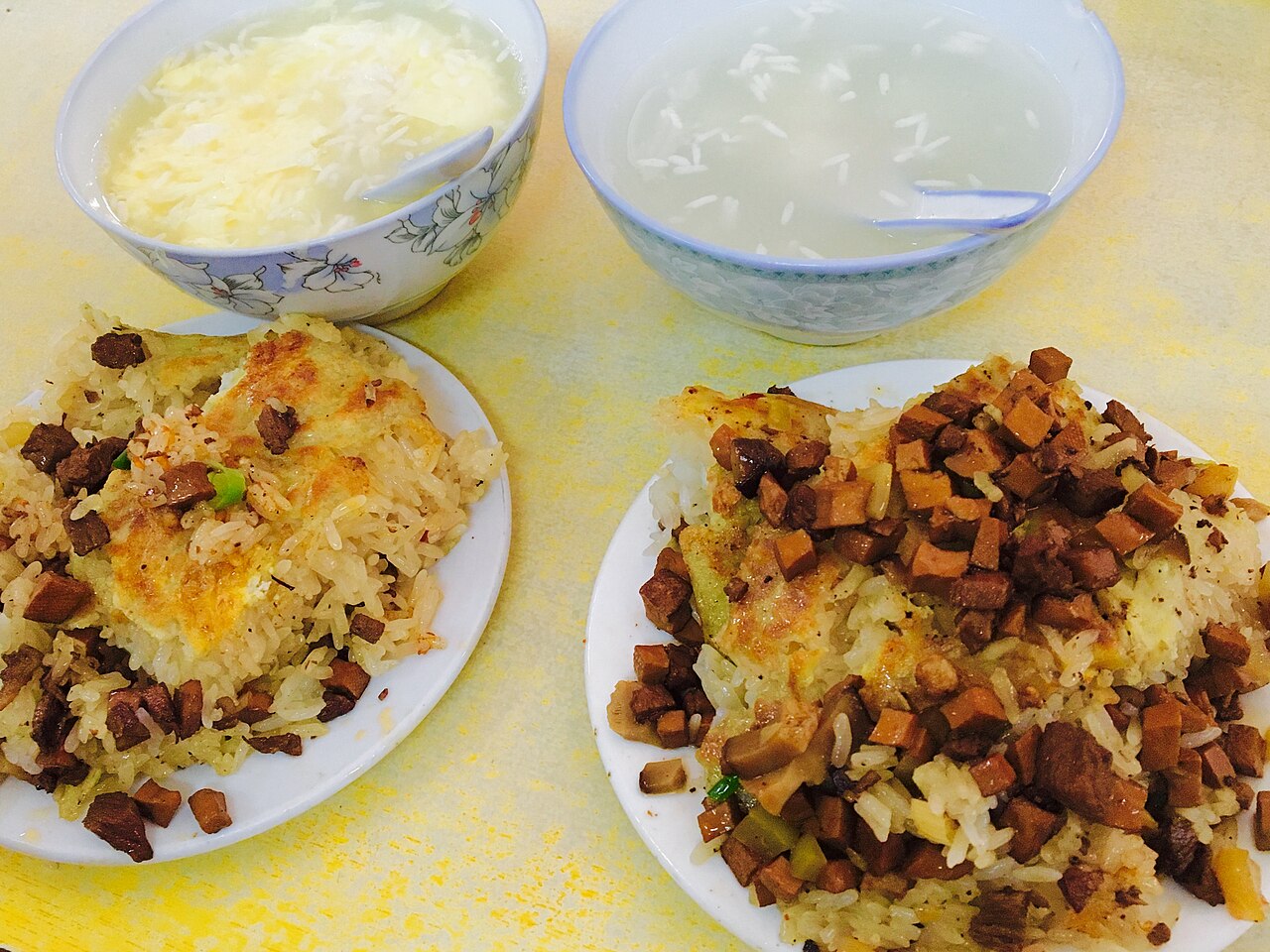
If Chong Danjiu is brisk and cloud-light, Guihua Humijiu (桂花糊米酒) is lush, unctuous comfort. Simmered slowly in deep copper or cast-iron cauldrons at specialty snack shops and Shaomai houses across Wuhan’s Three Towns, Humijiu takes its name from hu—the translucent, velvety starch glaze that suspends every ingredient in mid-bowl.
To build a pot of Humijiu, cooks drop hundreds of tiny, hand-rolled glutinous rice pearls (zhenzhu xiaoyuanzi, no larger than soybeans) into boiling water until they bob to the surface like white jade beads. Sweet Xiaogan Mijiu and rock sugar go in next, followed by a cold slurry of pure Honghu lotus-root starch (oufen) or water-milled glutinous rice flour stirred continuously clockwise until the soup transforms into shimmering amber silk. Just off the heat, a generous scatter of sugar-cured golden osmanthus blossoms (tang guihua) perfumes the steam with apricot-like floralcy. On a damp January morning along Qianjin Fourth Road, alternating bites of spicy Reganmian with spoonfuls of chewy rice pearls and osmanthus-scented Humijiu warms a diner from collarbones to fingertips.
Comparison of Classic Wuhan Morning Beverage Pairings
| Beverage Name | Core Base & Thickener | Serving Temp & Prep Style | Flavor & Mouthfeel Profile | Ideal Reganmian Match |
|---|---|---|---|---|
| Chong Danjiu (Whisked Egg Rice Wine) | Fresh beaten egg + Xiaogan Mijiu (unthickened) | 80°C piping hot / 15-sec flash pour | Lightly sweet, floral-fermented, gossamer egg clouds | Classic plain sesame Reganmian or extra-chili bowls |
| Guihua Humijiu (Osmanthus Rice Soup) | Xiaogan Mijiu + mini rice pearls + lotus-root starch + osmanthus | 75°C velvety warm / cauldron-simmered | Honeyed, lushly viscous, floral osmanthus finish, chewy pearls | Hearty winter appetites; pairs equally with Reganmian and Shaomai |
| Fresh Stone-Ground Soy Milk | Local yellow soybeans, sweet or savory (xian doujiang) | 75°C warm / ladled to order | Clean roasted legume creaminess, light body | Commuters preferring zero fermentation sweetness |
| Simmered White Radish Beef Broth | Ox bones, beef brisket, winter radish, white pepper, garlic sprouts | 85°C steaming / multi-hour simmer | Deep umami collagen richness with warming white-pepper heat | Sliced beef or braised tripe Reganmian in midwinter |
- Xiaogan County Gazetteer (Guangxu 8th Year, 1882), Vol. 5: Local Products ('Rice wine perfected in Xiaogan, originating in the Song Dynasty')
- EU-China Geographical Indications Agreement Dossier: 'Xiaogan Mijiu' Technical Specifications
- Wuhan Municipal Catering Corporation, 'Compendium of Local Wuhan Snacks', Hubei Science & Technology Press
❓ Frequently Asked Questions
Why pair savory, garlicky sesame noodles with a sweet, floral fermented rice drink?
Pure stone-ground sesame paste contains over 50% lipid and dense hydrophobic proteins that coat the roof of the mouth after several bites. Warm Danjiu or Humijiu introduces gentle lactic and succinic acids alongside maltose sweetness from fermented glutinous rice, stimulating saliva and thermally lifting sesame oil from the tongue without dulling the noodles' nutty aroma.
Does Wuhan Danjiu taste raw or fishy since boiling water is poured directly onto beaten egg?
Not at all when executed properly. Vigorously whipping a fresh room-temperature egg breaks up thick albumen strands, and pouring 100°C boiling water from high elevation generates intense shear force that instantly coagulates the egg into paper-thin golden ribbons. Stirring in fragrant Xiaogan fermented rice wine afterward neutralizes any trace of sulfur.
Will drinking Danjiu or Humijiu at 7:00 AM make commuters tipsy?
No. Traditional Xiaogan sweet rice wine relies primarily on Rhizopus mold saccharification rather than heavy yeast alcohol fermentation, yielding a mild mash around 1%–2% ABV. Once diluted 1:3 with boiling water, a finished bowl of Danjiu sits around 0.3%–0.8% ABV—comparable to ripe fruit juice or kombucha.
✦ Cross-Referenced Chapters
Soul of the Bowl: Stone-Ground Sesame Paste Craft
Low-temperature roasting, stone-mill grinding, and the great culinary debate between 100% pure sesame vs. 80/20 sesame-peanut blends.
Hubei Agricultural Terroir: Jianghan Wheat & Xiangyang Sesame
Tracing geographic-indication raw materials across Northern Hubei wheat belts and central Hubei high-oil white sesame farms.
Wuhan "Guozao" Panorama: A Month Without Repeating Breakfast
Origins of the term "Guozao" and how Wuhan’s exuberant morning street-food universe revolves around Hot Dry Noodles.
Seasonal Sips: Simmered Beef Broth in Winter & Chilled Plum Drink in Summer
Pairing steaming radish beef soup in January and icy Hankou sour-plum brew or Erchang soda during Wuhan’s furnace summers.
Food Chemistry: Alkaline Gluten Crosslinking & Sesame Phase Inversion
How sodium carbonate strengthens disulfide gluten bonds and tints flavonoids yellow, plus the rheology of sesame paste emulsion.
Wuhan Dialect Glossary: From "Guozao" to "Xufu"
Pronunciation, etymology, and lively street dialogues for over twenty authentic Wuhanese expressions heard at noodle stalls.