Seasonal Sips: Simmered Beef Broth in Winter & Chilled Plum Drink in Summer
How Wuhan Diners Navigate Damp Winters and 'Furnace' Summers Without Ever Giving Up Hot Noodles
Exploring Wuhan's four-season beverage pairing system around Reganmian: slow-simmered frost-sweetened white radish beef soup and lotus-root pork broth during bone-chilling river winters, balanced against 1910 Lao Wancheng sour plum brew and 1921-pedigree Erchang glass-bottle sodas during 39°C summers.
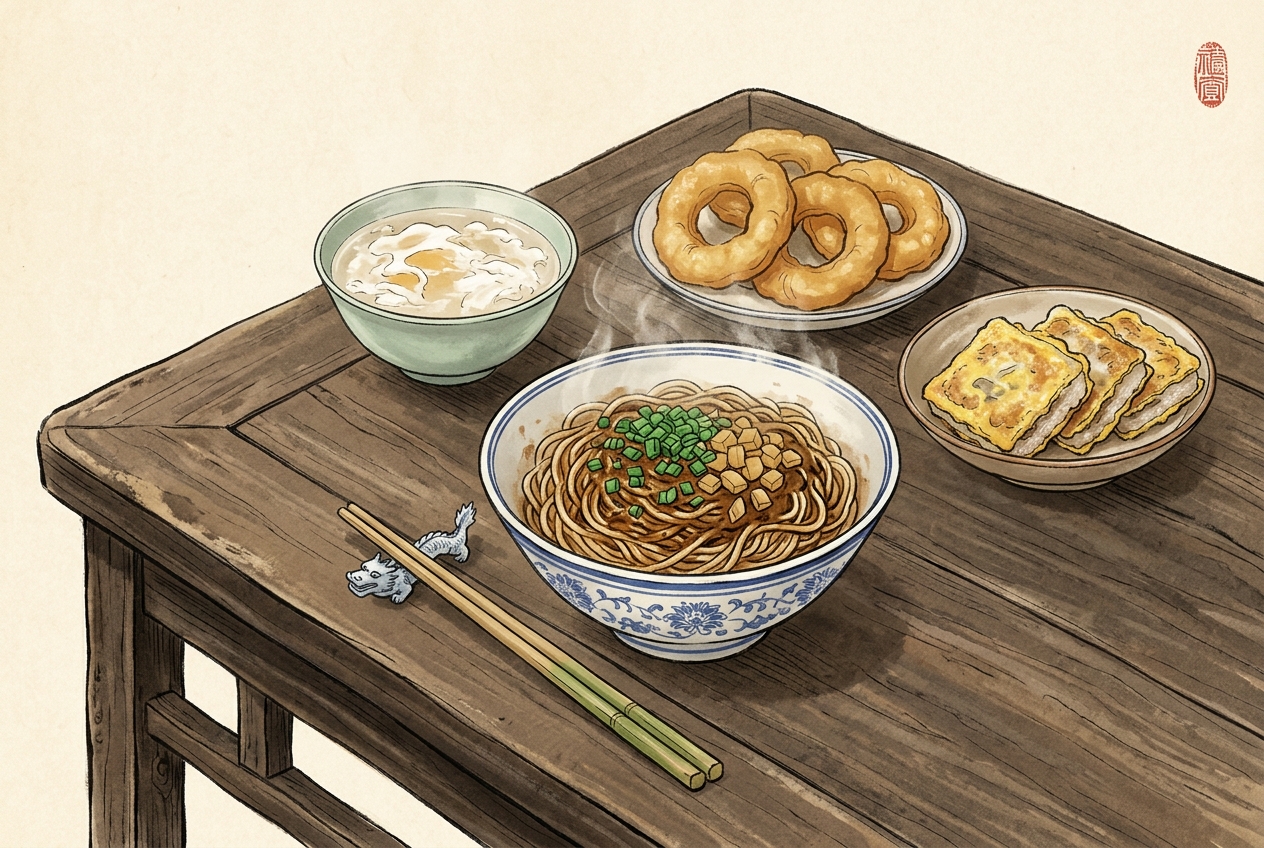
One Constant Bowl Across Two Climate Extremes
Positioned along the thirtieth parallel where the Yangtze and Han rivers braid through hundreds of freshwater lakes, Wuhan endures one of the sharpest seasonal swings of any metropolis in Asia. In January, eighty-percent river humidity turns 2°C air into a penetrating damp chill that seeps straight through wool coats. By July, subtropical high-pressure domes trap tropical moisture over the Jianghan Basin, pushing daytime heat indices past 40°C and earning Wuhan its historic title among China’s “Four Great Furnaces” (Sida Huolu).
Remarkably, neither winter frost nor dog-day swelter dents Hot Dry Noodles’ morning dominance. A true Wuhan native insists that Reganmian be blanched boiling-hot and cloaked in rich, undiluted oil-thinned sesame paste twelve months a year. How does a single heavy dish thrive across a forty-degree temperature swing? Through seasonal liquid counterpoints: keeping the noodles unwaveringly hot while rotating the cup beside the bowl from collagen-rich winter bone broths to century-old iced botanical brews and high-voltage carbonated sodas.
Deep Winter: Frost-Sweetened Radish Beef Broth & Claypot Lotus Soup
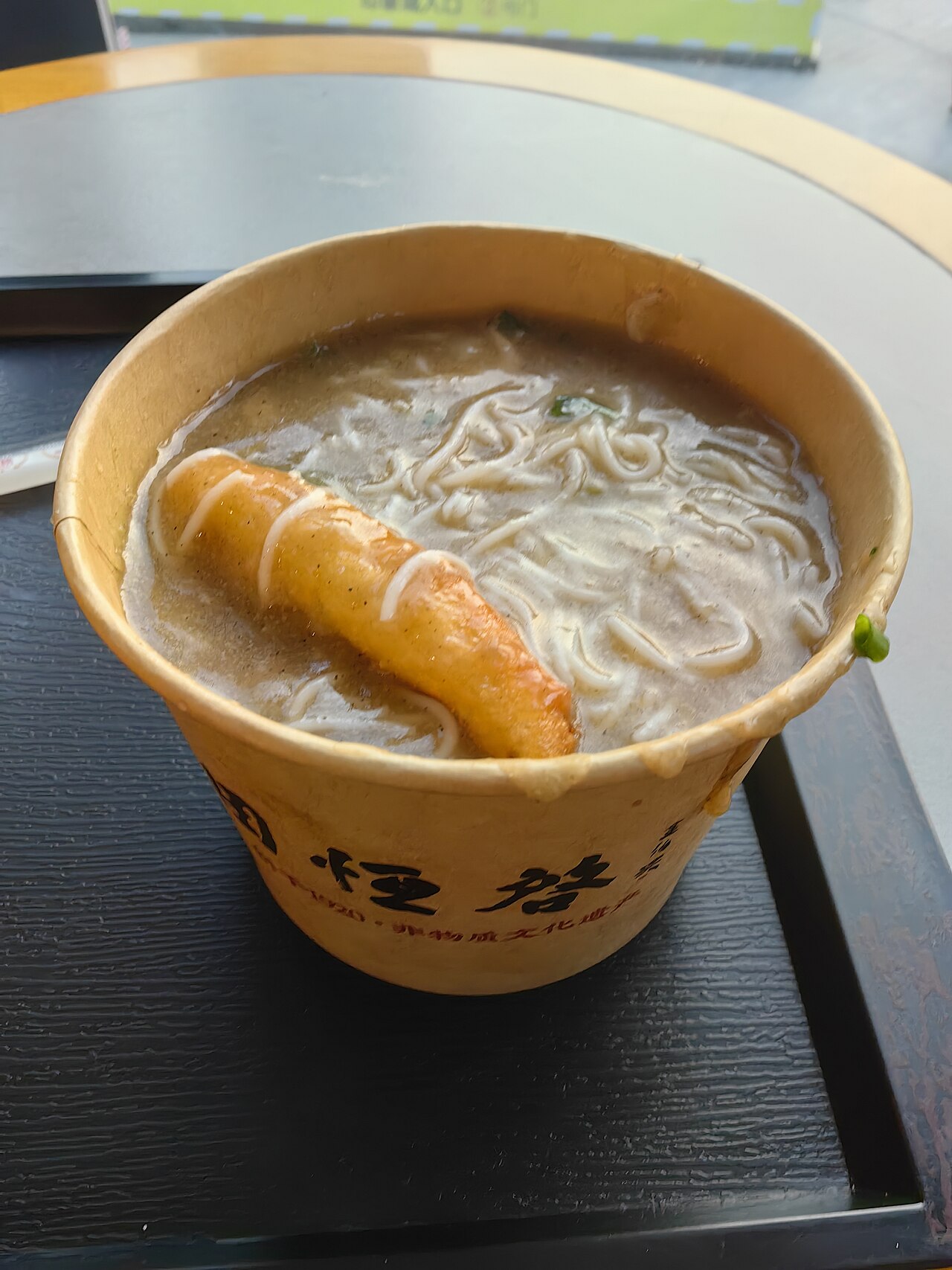
Once the first late-autumn cold front sweeps down from northern Hubei, morning steam outside Wuhan’s neighborhood beef-noodle stalls thickens into opaque white curtains. Along Hankou’s Lanling Road, Qiaokou’s halal corridors, and Wuchang’s Dacheng Road, waist-high stainless cauldrons simmer overnight to produce Reganmian’s ultimate savory winter companion: Qingdun Luobo Niuroutang (清炖萝卜牛肉汤, Simmered White Radish & Beef Broth).
Three elements elevate a humble five-renminbi bowl of Wuhan beef soup into winter alchemy:
- Marrow-Rich Stock: Cracked yellow-cattle leg bones, brisket flats, and tendon trimmings are gently simmered for four to five hours with aged ginger and a restrained sachet of black cardamom and angelica root, yielding a golden, gelatin-silky broth rather than a muddy gravy.
- Frost-Kissed Hubei Radish: Cooks wait eagerly for winter white radishes harvested from Dongxihu and Huangpi sandy loams after the first frost (shuangda luobo). Cold stress prompts the root to convert sharp mustard-oil glucosinolates and starches into clean sugars, allowing thick chunks to braise translucent, tender, and naturally sweet inside the beef stock.
- Green Garlic Sprouts & White Pepper: Just before serving, the ladle hits a bowl pre-primed with finely minced local green garlic sprouts (qingsuanmiao), fresh cilantro, and a generous pinch of freshly ground Hainan white pepper.
Hunched on a low street stool in January, alternating forkfuls of chili-laced sesame noodles with spoonfuls of 85°C peppered beef broth and melt-in-the-mouth sweet radish creates instantaneous thermal bliss. On unhurried winter weekends, locals take the pairing one step further by carrying a freshly tossed bowl of Reganmian next door into a traditional soup shop for a dark earthenware crock (diaozi) of Pork-Rib and Pink Lotus-Root Soup (Paigu Lian’ou Tang)—a velvety, starch-rich Hubei heirloom simmered over charcoal embers until the lotus root pulls into gossamer threads.
Furnace Summers: 1910 Lao Wancheng Smoked Plum Brew
By late June, cicadas roar in the plane trees and pavement shimmers by 8:00 AM. Sweating happily over spicy Reganmian, Wuhan diners reach for an icy dark-amber elixir perfected over a century ago: Lao Wancheng Suanmeitang (老万成酸梅汤, Old Hankou Chilled Sour Plum Soup).
In 1910 (the second year of the Qing Xuantong Emperor), merchant Fei Guangfu and three partners opened the Wancheng shop near Hankou’s bustling Liuduqiao crossroads. When oppressive summer heat drove away daytime tobacco-and-wine customers, Fei adapted memories of Beijing imperial sour plum drinks to suit Wuhan’s sultry river climate. Selecting fleshy, pit-small smoked black plums (wumei) alongside digestion-aiding northern hawthorn berries, licorice root, and aged tangerine peel, Lao Wancheng decocted the botanicals for hours before reducing the extract with pure cane sugar into a glossy, pitch-dark concentrate (suanmeigao) perfumed with sweet Xianning osmanthus blossoms.
Diluted one-to-seven with ice water, the ruby-mahogany brew delivers an electric jolt of natural citric and malic acids followed by lingering smoky sweetness and apricot-like osmanthus aroma. Biochemically, those organic fruit acids trigger immediate salivation, slice effortlessly through sesame lipids coating the palate, and replenish electrolytes lost to Wuhan’s midsummer humidity.
Fizz Against Fat: From 1921 Heli Ice Factory to “Erchang Soda”
If chilled sour plum soup represents classical herbal poise, cracking open an ice-frosted glass bottle of Erchang Soda (二厂汽水) beside a fiery bowl of Reganmian is pure twentieth-century urban pop culture.
“Left hand cradling two liang of chili noodles, right hand gripping a frosted Erchang bottle— / Tilt back your neck for one glorious burp, and the summer furnace turns cool as bamboo.” — 1980s Hankou alleyway rhyme
Wuhan’s love affair with carbonated fruit soda dates back to 1918–1921, when British entrepreneurs established the Heli Ice & Aerated Water Factory (Heli Bingchang) in Hankou, advertising “the finest flavor, richest aroma, purest water, and strongest gas.” Reorganized in 1952 as State-Owned Wuhan Beverage Factory No. 2 (Guoying Wuhan Yinliao Erchang), the plant rolled out thick green-and-clear glass bottles under the Binjiang trademark—universally nicknamed Erchang Qishui (“Factory No. 2 Soda”) by adoring citizens. Throughout the pre-air-conditioned 1970s and 1980s, crates of orange, lemon, banana, and lychee Erchang bottles buried in chipped ice defined Wuhan summers, winning first place among all municipal consumer goods in 1986. Though side-lined during 1990s multinational joint ventures, the beloved Erchang icon surged back to life in the late 2010s and 2020s, reclaiming pride of place inside glass-door refrigerators at noodle shops citywide.
Paired with Reganmian, ice-cold soda performs physical magic: crisp carbonic-acid micro-bubbles scrub dense sesame paste and fiery chili oil clean off taste buds in half a second, leaving bright citrus or lychee aromatics dancing over toasted wheat.
Wuhan’s Four-Season Reganmian Beverage Calendar
| Season | Typical Wuhan Weather | Signature Liquid Pairing | Sensory & Physiological Role | Classic Street Setting |
|---|---|---|---|---|
| Spring (Mar–May) | Mild river breezes, cherry-blossom showers | Chong Danjiu / Fresh Hot Soy Milk | Gentle morning warmth; floral rice esters and soy proteins awaken appetite | Neighborhood stalls & Wuhan Marathon morning routes |
| Summer (Jun–Aug) | Sultry “Furnace” heat (35°C–40°C) | Iced Lao Wancheng Sour Plum / Frosted Erchang Soda | Citric acid stimulates saliva; sharp CO₂ carbonation blasts away sesame film | Liuduqiao, Jianghan Road & Wansongyuan noodle bars |
| Autumn (Sep–Nov) | Crisp mornings, dry afternoon air | Osmanthus Humijiu / White Fungus Lotus Soup | Freshly harvested golden osmanthus & lotus starch soothe autumn dryness | Traditional Hushangfen & heritage snack houses |
| Winter (Dec–Feb) | Piercing damp chill (0°C–6°C, 80% RH) | Simmered Radish Beef Broth / Claypot Lotus Pork Soup | 85°C collagen broth + white pepper drives out damp cold and melts sesame paste | Lanling Road, Dacheng Road beef stalls & claypot soup shops |
- Wuhan Local Chronicles Committee, 'Annals of Wuhan: Light Industry Volume' (Heli Ice Factory & Wuhan Beverage Factory No. 2)
- Wuhan Municipal Intangible Cultural Heritage Registry: 'Lao Wancheng Sour Plum Paste Brewing Craft'
- Hubei Folklore Society, 'Studies in Jingchu Seasonal Culinary Customs', Central China Normal University Press
❓ Frequently Asked Questions
Why don't Wuhan locals switch to cold noodles all summer given the city's 'Four Furnaces' heat?
While chilled summer adaptations exist, traditionalists swear by 'fighting heat with heat' (yi re zhi re)—breaking a light sweat over freshly blanched hot alkaline noodles while cooling down immediately with icy Lao Wancheng sour plum soup, chilled mung-bean soup, or sharply carbonated Erchang fruit soda.
What is the history behind Wuhan's beloved 'Erchang Soda'?
Wuhan's soda obsession began around 1918–1921 with the British-established Heli Ice & Aerated Water Factory in Hankou. Reorganized in 1952 as State-Owned Wuhan Beverage Factory No. 2 ('Erchang'), its glass-bottled Binjiang Brand orange, lemon, banana, and lychee sodas became the city's quintessential summer pairing before inspiring a major craft-soda revival in recent years.
What makes Hubei white radish beef broth such an ideal winter match for Reganmian?
After autumn frosts, local Hubei white radishes convert starch into crisp natural sugars. Simmered for hours in marrow-rich ox-bone and beef brisket stock and finished with green garlic sprouts and freshly ground white pepper, the 85°C savory broth melts thick sesame paste on the tongue and drives damp river chill straight out of the bones.
✦ Cross-Referenced Chapters
Deluxe Toppings Compendium: Sliced Beef, Tripe & Zha Jiang
Expanding beyond classic plain sesame to blanched tender beef, braised honeycomb tripe, beef tendon, and duck-neck dices.
Hubei Agricultural Terroir: Jianghan Wheat & Xiangyang Sesame
Tracing geographic-indication raw materials across Northern Hubei wheat belts and central Hubei high-oil white sesame farms.
Wuhan "Guozao" Panorama: A Month Without Repeating Breakfast
Origins of the term "Guozao" and how Wuhan’s exuberant morning street-food universe revolves around Hot Dry Noodles.
Soulmate Drinks: Egg Rice Wine (Danjiu) & Sweet Fermented Rice Soup
Why velvety poached-egg sweet rice wine and osmanthus Humijiu are the ultimate palate-cleansing companions to rich sesame noodles.
Trademark Chronicles & Collective Geographical Branding
Landmark intellectual-property cases, time-honored trademark stewardship, and building Wuhan Reganmian’s regional brand equity.
Seasonal Folkways: Fighting Dog-Day Heat with Hot Noodles
Understanding Wuhan’s summer tradition of sweating over steaming bowls in 38°C weather and neighborhood stall community bonds.