Trademark Chronicles & Collective Geographical Branding
Inside the Landmark Cai Lin Ji vs. Founder-Descendant IP Rulings, Anti-Counterfeit Sweeps, and Regional Brand Defense
An authoritative legal-historical study of China's most famous noodle trademark dispute—examining how 1950s state-private restructuring separated the 'Cai Lin Ji' mark from founder Cai Mingwei's descendants, why courts ruled that bloodline does not override registered trademark rights, and how Wuhan defends its culinary city brand.
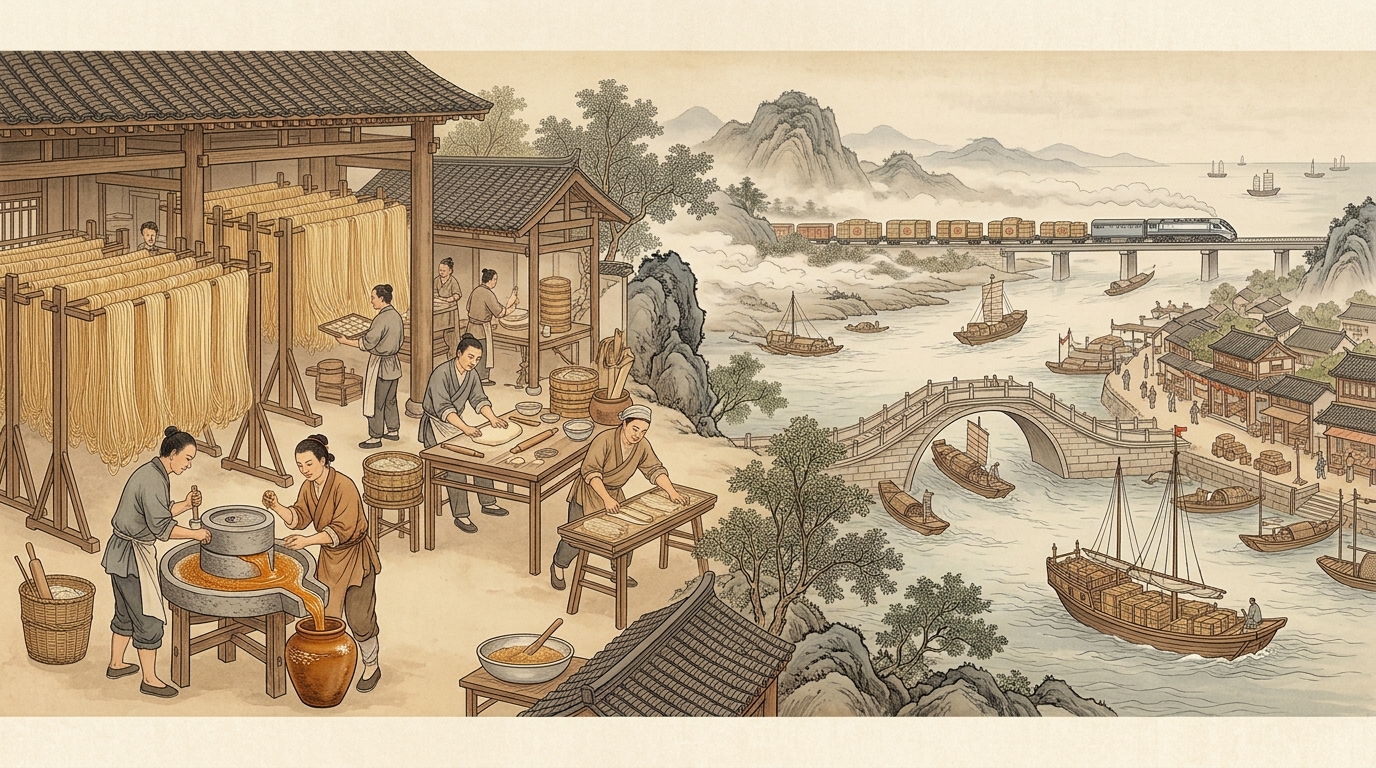
Two Chinaberry Trees and Seventy Years of History
Across China’s culinary landscape, century-old Time-Honored Brands (Zhonghua Laozihao) carry complex legal biographies shaped by twentieth-century history. Just as famous disputes divided rival heirs of Wanglaoji herbal tea or Daoxiangcun pastries, Wuhan’s most iconic noodle house—Cai Lin Ji (蔡林记)—became the centerpiece of a landmark intellectual-property saga that Chinese law schools now teach as the definitive case on founder bloodline versus statutory corporate trademark ownership.
“Two chinaberry trees shaded Manchun Road where the plaque was raised; decades of history parted family name from corporate seal, until modern law gave each its rightful lane.”
In the 1930s and 1940s, culinary pioneer Cai Mingwei (蔡明纬) perfected his stone-ground sesame alkaline noodle formula in Hankou, opening a permanent storefront fronted by two tall chinaberry trees (kulianshu). Seeing two trees standing side by side—forming the Chinese character 林 (lin, forest)—neighbors auspiciously christened the shop Cai Lin Ji. During China’s nationwide socialist transformation of private industry in 1955, Cai Lin Ji transitioned into a state-private joint enterprise (gongsi heying) with Cai Mingwei serving as manager, later becoming a wholly state-run catering unit. When Wuhan restructured municipal state-owned catering enterprises in 1995, the enterprise entity and its registered “Cai Lin Ji” trademarks were lawfully valued and transferred into what became Wuhan Cai Lin Ji Trading Co., Ltd., which subsequently earned national recognition from the Ministry of Commerce as an official Zhonghua Laozihao. While Cai’s descendants preserved family craft lore, legal title to the three-character trademark resided cleanly with the restructured corporation.
Gavel in the Steam: The Cai Lin Ji vs. Cai Mingwei Courtroom Saga
In 2013, history Knocked on the courtroom door. Cai Mingwei’s eldest son, intangible-heritage master Cai Hanwen, partnered with Hubei Dingjinyao Catering Management Co., Ltd. to launch a rival chain honoring his late father. Alongside registering “Cai Mingwei” and his father’s portrait, the new venture applied for trademarks and hung shopfront signage featuring “Old Cai Lin Ji” (Lao Cai Lin Ji) and “Cai Mingwei — Founder of Cai Lin Ji”, occasionally opening storefronts directly beside existing Cai Lin Ji branches.
Years of high-profile litigation ensued before local civil courts, the China National Intellectual Property Administration (CNIPA), the Beijing Intellectual Property Court, and the Beijing High People’s Court—culminating in live-streamed appellate hearings watched by legal scholars nationwide. The courts established three foundational principles:
1. Bloodline Inheritance Does Not Equal Trademark Inheritance
Appellate judges drew a crystal-clear distinction between personal biographical heritage and commercial trademark property. Under China’s Trademark Law, a trademark’s paramount function is identifying a consistent commercial source for consumers. Once ownership of “Cai Lin Ji” lawfully passed through state enterprise reform and accumulated immense nationwide goodwill under Wuhan Cai Lin Ji Trading Co., a biological descendant held no residual right to reclaim or dilute that mark on competing noodle restaurants.
2. Factual History vs. Confusing Commercial Prominence
Dingjinyao argued that calling Cai Mingwei “Founder of Cai Lin Ji” merely stated an indisputable historical fact. The Beijing courts answered with surgical nuance: recounting family biography modestly inside an autobiographical essay is permissible, but incorporating “Founder of Cai Lin Ji” or “Old Cai Lin Ji” into a registered trademark graphic or prominent storefront sign hijacks the senior mark’s distinctiveness, leading diners to assume corporate affiliation or licensing. Consequently, the composite marks containing “Cai Lin Ji” were invalidated, and “Old Cai Lin Ji” signage was ruled infringing.
3. Constructive Coexistence: Two Thriving Wuhan Giants
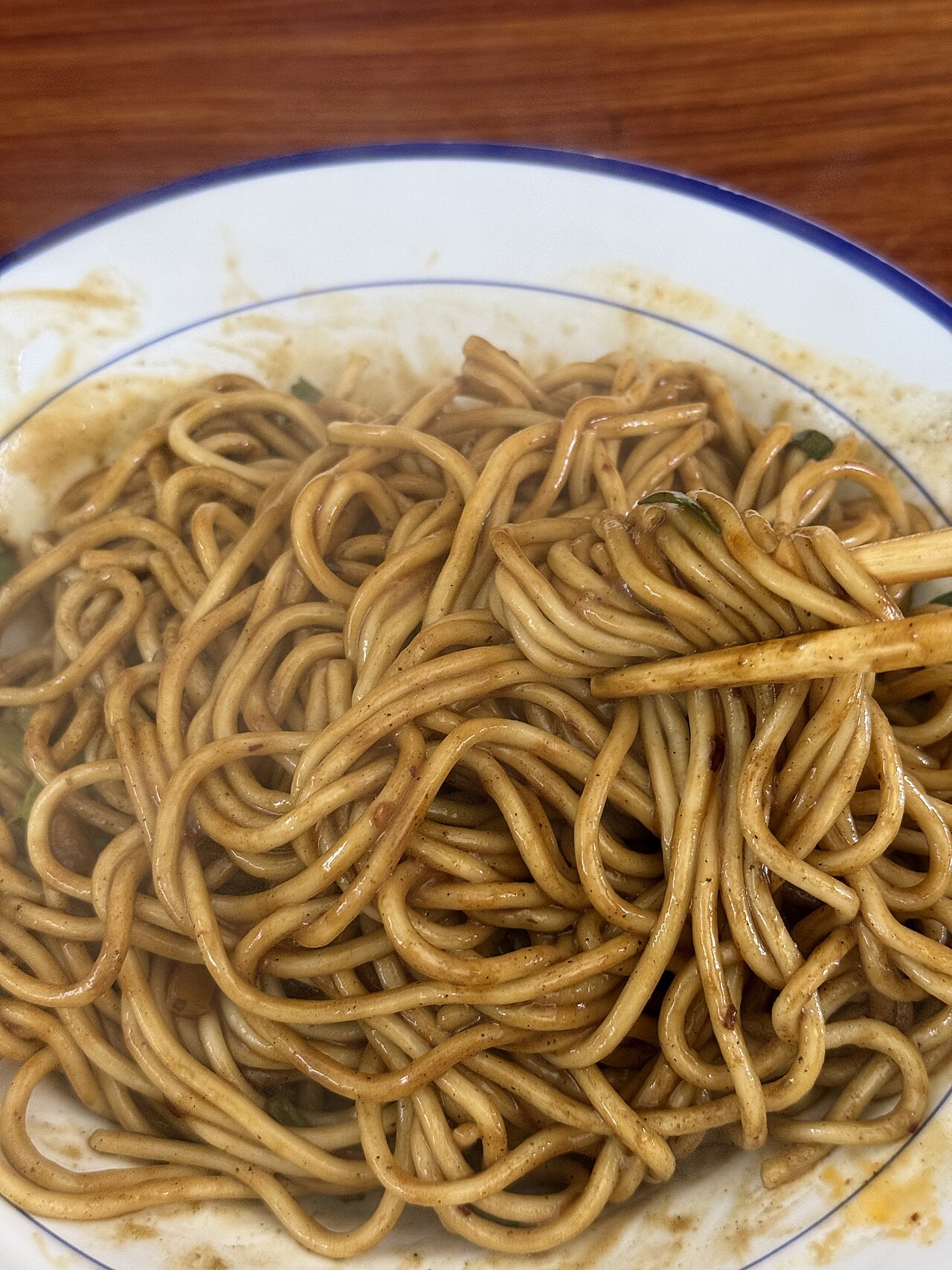
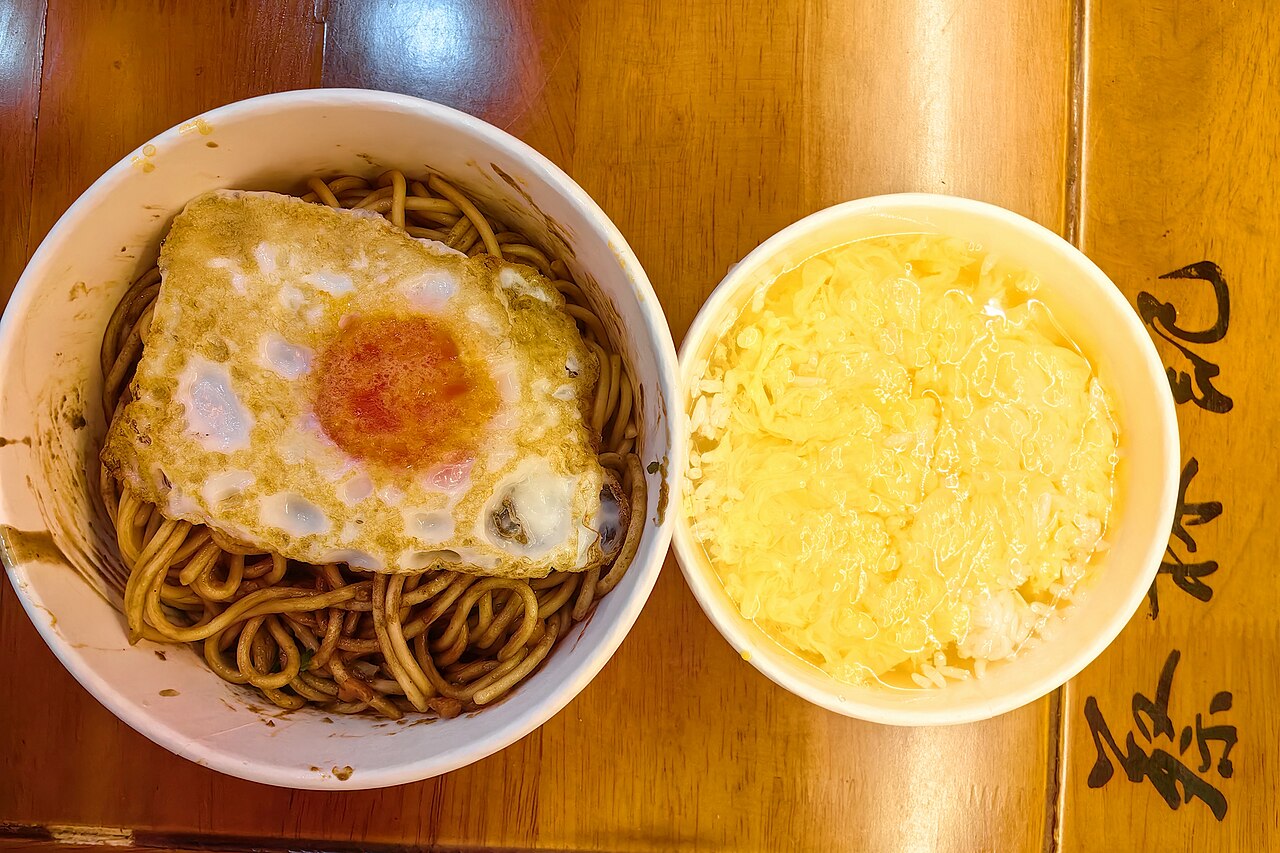
Once judicial boundaries were enforced, litigation gave way to healthy culinary competition. Wuhan Cai Lin Ji Trading Co. retained exclusive command of Cai Lin Ji, scaling hundreds of stores nationwide and overseas; Dingjinyao stripped away all references to “Cai Lin Ji” and built Cai Mingwei (蔡明纬) into a respected multi-hundred-store chain celebrated for its silky golden sesame emulsion. Today, Wuhan diners enjoy two rigorous standard-bearers instead of a muddled turf war.
Sweeping Out Knockoffs & Defending the Collective City Card
Beyond resolving historical family splits, Wuhan’s noodle industry has waged a relentless campaign against brazen roadside counterfeiters across China—unauthorized stalls sporting look-alike names such as “Authentic Hankou Cai Mu Ji” or “Cai Lin Xuan” that served mushy white noodles with watered-down peanut butter, tarnishing out-of-towners’ first impressions of Wuhan cuisine.
| IP Asset Tier | Typical Infringement Threat | Legal & Regulatory Defense Mechanism | Industry Impact & Benchmark Outcome |
|---|---|---|---|
| Core Heritage Trademarks (Cai Lin Ji, Changqing, Dahankou) |
Copycat franchise signs, look-alike characters (Cai Mu Ji), fake e-commerce pouches | PRC Trademark Law Art. 57 civil suits + Anti-Unfair Competition trade-dress injunctions | Hundreds of counterfeit storefronts dismantled nationwide; statutory & punitive damages awarded |
| Founder Name & Portrait Marks (Cai Mingwei & portrait logo) |
Unauthorized biographical claims (“Secret Heir Formula”) by unrelated third parties | Civil Code personality/name rights + defensive multi-class registrations (Classes 30, 35, 43) | Clean brand separation enabling legitimate parallel growth |
| Collective Regional Name (“Wuhan Reganmian” city card) |
Out-of-province factories selling plain noodles + soy flour paste labeled “Wuhan Reganmian” | DBS 42/005 mandatory ≥50% sesame & pH rules + Provincial ICH heritage certification | Drives inferior “fake sesame” packs out of compliant retail & livestream channels |
| Global Cross-Border Shield (WIPO Madrid System & ISO) |
Bad-faith trademark squatting in Southeast Asia, North America, and Australia | Proactive Madrid Protocol filings across 20+ jurisdictions + ISO standard English naming | Cleared legal runway for Cai Lin Ji & Dahankou flagship stores and supermarket exports |
Public Domain Stewardship: Why Standards Complement Trademarks
Unlike Liuzhou Luosifen or Shaxian Snacks, which manage municipal collective graphic certification marks, the plain words “Wuhan Reganmian” combine a provincial-capital place name with a generic culinary noun—keeping the phrase itself an open public commons for every honest stallkeeper in the Three Towns. Rather than letting the public commons suffer a tragedy of quality erosion, Hubei paired strict DB42 physicochemical floors with Intangible Cultural Heritage master-apprentice certification and aggressive private trademark enforcement by leading chains.
Whether guarded by a judicial gavel in Beijing or a laboratory pH meter in Dongxihu, intellectual-property law has ensured that a plaque raised beneath two Hankou chinaberry trees eighty years ago still means exactly what it promises on the bowl.
- Beijing Intellectual Property Court & Beijing High People's Court Administrative Judgments on Trademark Invalidation ('Cai Mingwei Founder of Cai Lin Ji')
- Supreme People's Court of China Typical Cases on Time-Honored Brand ('Zhonghua Laozihao') Intellectual Property Governance
- Ministry of Commerce Measures for Administration of China Time-Honored Brands & WIPO Madrid International Trademark Registry
❓ Frequently Asked Questions
Why do I see both 'Cai Lin Ji' and 'Cai Mingwei' chain stores across Wuhan? Are both legitimate?
Yes—both are completely legal, major chains today that share historical roots but operate under separate ownership. 'Cai Lin Ji' passed through 1950s state-private partnership and 1995 state-enterprise privatization into Wuhan Cai Lin Ji Trading Co., Ltd. Meanwhile, 'Cai Mingwei' was co-founded in 2013 by Cai Hanwen, eldest son of founder Cai Mingwei. Following court rulings, each company operates strictly under its own registered trademark.
Why did Chinese courts forbid the founder's own son from using 'Old Cai Lin Ji' or 'Founder of Cai Lin Ji' inside his trademark?
In landmark rulings by the Beijing Intellectual Property Court and Beijing High People's Court, judges held that modern trademark law protects established consumer source-identification, not family genealogy. Because 'Cai Lin Ji' had been lawfully transferred and built into a nationally famous mark over decades, prominently embedding 'Cai Lin Ji' inside a competing catering mark caused consumer confusion—even when claimed by a biological descendant.
Can any single company trademark the phrase 'Wuhan Reganmian' to monopolize the dish?
No. Under Chinese trademark law, combining a major administrative geographical name ('Wuhan') with a generic food term ('Reganmian') lacks single-entity distinctiveness and remains in the public domain. Instead, Wuhan protects the collective reputation of the name through mandatory DB42 purity standards, Intangible Cultural Heritage certification, and Madrid Protocol overseas trademark defense for flagship brands.
✦ Cross-Referenced Chapters
Origin Legends: Li Bao & Cai Mingwei Textual Inquiry
Investigating the two foundational 1930s Hankou accounts—street peddler Li Bao on Changdi Street and Cai Mingwei’s Cai Lin Ji.
Genealogy of Time-Honored Brands & Schools
Mapping the historical splits, apprenticeships, and brand evolutions from Cai Lin Ji to Cai Mingwei, Changqing, and Zeng Mazi.
Flagship Heritage Brands: Cai Lin Ji, Cai Mingwei & Changqing
Detailed profiles of Wuhan’s historic benchmark chains, flagship locations on Jiqing Street, and signature flavor profiles.
Official Technical Standards: Hubei DB42 Specifications Decoded
Key physicochemical, moisture, alkalinity, and sesame purity benchmarks codified in Hubei’s official regional standards.