Robotic Noodle Kiosks & 24-Hour Smart Stations
Inside Wuhan's 45-Second Automated Blanch-and-Sauce Machines Powering Hospitals, Rail Hubs, and Midnight Shifts
Exploring the mechatronics and commercial deployment of 24-hour unmanned Reganmian kiosks—from Wuhan-engineered 'Xiao K' steam-blanching robots and Wanjie Smart Noodle Stations to progressive-cavity sesame pumping, cam-driven wrist-shake draining, and IoT cold-chain safety locks.

A Warm Glow at 2:15 AM: Where Bamboo Craft Meets Six-Axis Mechatronics
Picture a freezing January night at 2:15 AM inside the surgical wing corridor of a major Wuhan teaching hospital. Outside, neighborhood breakfast alleys lie dark and silent for another three hours. An exhausted resident surgeon steps out of the operating theater, walks up to a softly glowing cabinet occupying barely one square meter against the corridor wall, and taps “Classic All-In Reganmian — Mild Spicy” on a smartphone screen. Behind tempered glass, a linear actuator retrieves a sealed cassette of parboiled alkaline noodles from an 8°C chilled carousel, blasts it with 110°C purified steam for 17 seconds, vibrates away surface moisture, and glides the bowl beneath four heated dosing nozzles that layer velvety sesame paste, spiced soy broth, crunchy radish dices, and bright green scallions. Forty-two seconds after scanning, a motorized door slides open to reveal a steaming bowl.
“Skilled wrists rule the morning street; precision servos guard the midnight watch—who says steel gears carry no warmth when they feed a traveler coming through the snow?”
Showcased at the Canton Fair and Wuhan’s Hankou North International Trade Expo—and increasingly deployed across Optics Valley tech parks, highway service plazas, bullet-train concourses, and 24-hour hospitals—automated systems like Wuhan-developed “Xiao K Reganmian” kiosks and Wanjie Intelligent’s “Future Noodle Stations” mark the newest chapter in a century-long utensil evolution that began with wooden shoulder poles on Changdi Street.
Under the Hood: Solving Three Hardcore Mechatronic Challenges
To casual observers, blanching pre-cooked noodles and adding sauce sounds trivial. To food-robotics engineers, however, automating authentic Wuhan Reganmian inside a one-square-meter unmanned enclosure without human intervention for 150 consecutive bowls proved vastly harder than building an espresso kiosk or soup-ramen dispenser. Three thorny engineering problems had to be cracked:
1. Taming Non-Newtonian Sesame Paste Without Clogs or Drips
Clearラーメンスープ (ramen broth) flows like water through simple gravity valves. Wuhan sesame paste, by contrast, is a heavy, thixotropic non-Newtonian suspension: left motionless, solids settle into cement; chilled, viscosity spikes exponentially; at the end of a pour, long viscoelastic strings drip across conveyor tracks.
- The Mechatronic Fix: Kiosks house sesame emulsion inside a 35°C–40°C water-jacketed hopper stirred intermittently by low-shear planetary scraper blades, preserving satin fluidity around the clock. Dispensing relies on food-grade progressive-cavity (eccentric screw) pumps or high-torque servo peristaltic tubes accurate to
±0.5g. Crucially, each nozzle terminates in a pneumatic suck-back valve that applies a split-second vacuum retraction at the end of every squirt, severing the sesame thread cleanly with zero drip.
2. Flameless 17-Second Steam Penetration & Biomimetic “Wrist-Shake” Draining
Subways, airports, and hospital wards strictly prohibit gas lines, open flames, and grease-laden exhaust ducts—while soggy, poorly drained noodles ruin sesame emulsion cling.
- The Mechatronic Fix: Engineers replaced open boiling vats with enclosed micro-pressure superheated steam chambers (paired with internal vapor condensers). High-enthalpy steam at
105°C–115°Cpenetrates 80%-parboiled danmian strands to their core in 17 seconds without leaching wheat starch into murky water, achieving zero flame and zero smoke. Immediately post-steaming, an eccentric-cam high-frequency shaker jolts the strainer basket vertically at 8–10 Hz—mechanically replicating the street master’s signature “three lifts, two wrist snaps” (sandian liangdou) so strands hit the bowl dry, glossy, and ready to grip sauce.
3. Closed-Loop Cold Chain & IoT Food-Safety Circuit Breakers
Unmanned fresh food demands uncompromising microbiological failsafes. Inside the cabinet, thermal insulation separates the cooking bay from a 2°C–8°C medical-grade refrigerated magazine holding individually RFID- or QR-coded fresh noodle and scallion cassettes supplied daily by central kitchens. Cloud IoT telemetry logs internal temperatures every sixty seconds: if a power flicker nudges cabinet temperature out of spec, or if any single noodle cassette crosses its programmed 24-to-36-hour freshness window, software triggers an instant electronic lockout, refusing to vend that unit while alerting a mobile technician. During pre-dawn idle windows, automated Clean-in-Place (CIP) high-temperature steam flushes sauce manifolds while UV-C germicidal lamps sanitize the pickup chamber.
Street Couple Stall vs. 24-Hour Robotic Kiosk: Coexistence, Not Replacement
How do unmanned robotic stations stack up economically and culturally against Wuhan’s 25,000 human-run neighborhood stalls?
| Benchmark Dimension | Traditional Neighborhood Stall (35 m²) | 24-Hour Robotic Noodle Kiosk (1.2 m²) | Ecological Role & Synergy |
|---|---|---|---|
| Site & Fire-Code Access | Requires gas/heavy power, drainage & exhaust hood | Plugs into 1.2 m² space with zero flame/smoke | Unlocks hospitals, rail gates, dorm lobbies & highway rest stops |
| Operating Hours | Concentrated morning rush (05:30–11:00 AM) | True 24/7 operation (>35% of sales occur 9 PM–5 AM) | Captures graveyard-shift workers when human stalls sleep |
| Peak Output Cadence | 1 bowl every 10–12 sec (dual bamboo baskets) | 1 bowl every 35–48 sec (steady single-lane cycle) | Human masters crush dense morning queues; kiosks suit steady trickles |
| Culinary Ceiling | 9.0–9.8 / 10 (sizzling chili oil, raw-blanched beef) | 7.8–8.5 / 10 (consistent plain/braised-beef standard) | Artisans set the gourmet ceiling; robots guarantee a warm floor |
| Labor & Fixed Overhead | ¥5,000+ rent + grueling 3:30 AM couple labor | ¥1,000–2,000 site fee; 1 tech services 8–10 kiosks | profitable at just 40–50 bowls/day with humane daytime restocking |
Epilogue: Silicon Arms Serving a Carbon-Based Soul
Will robotic arms ever replace the clamorous morning theater of Shanhaiguan Road—where neighbors balance bowls atop tall plastic stools while the proprietor calls out “Two liang, extra spicy, hold the scallions—xufu!” through clouds of white cauldron steam? Never. That exuberant street symphony is woven into Wuhan’s civic DNA.
Yet technology proves its noblest worth where human endurance hits its wall. When a night-shift nurse, a stranded midnight traveler, or an overtime engineer lifts a genuinely springy, fragrant bowl of stone-ground sesame noodles at 3:00 AM without requiring a seventy-year-old stallkeeper to wake before dawn in the winter dark, Wuhan’s multi-billion-RMB noodle industry comes full circle—honoring its working-class origins through twenty-first-century engineering empathy.
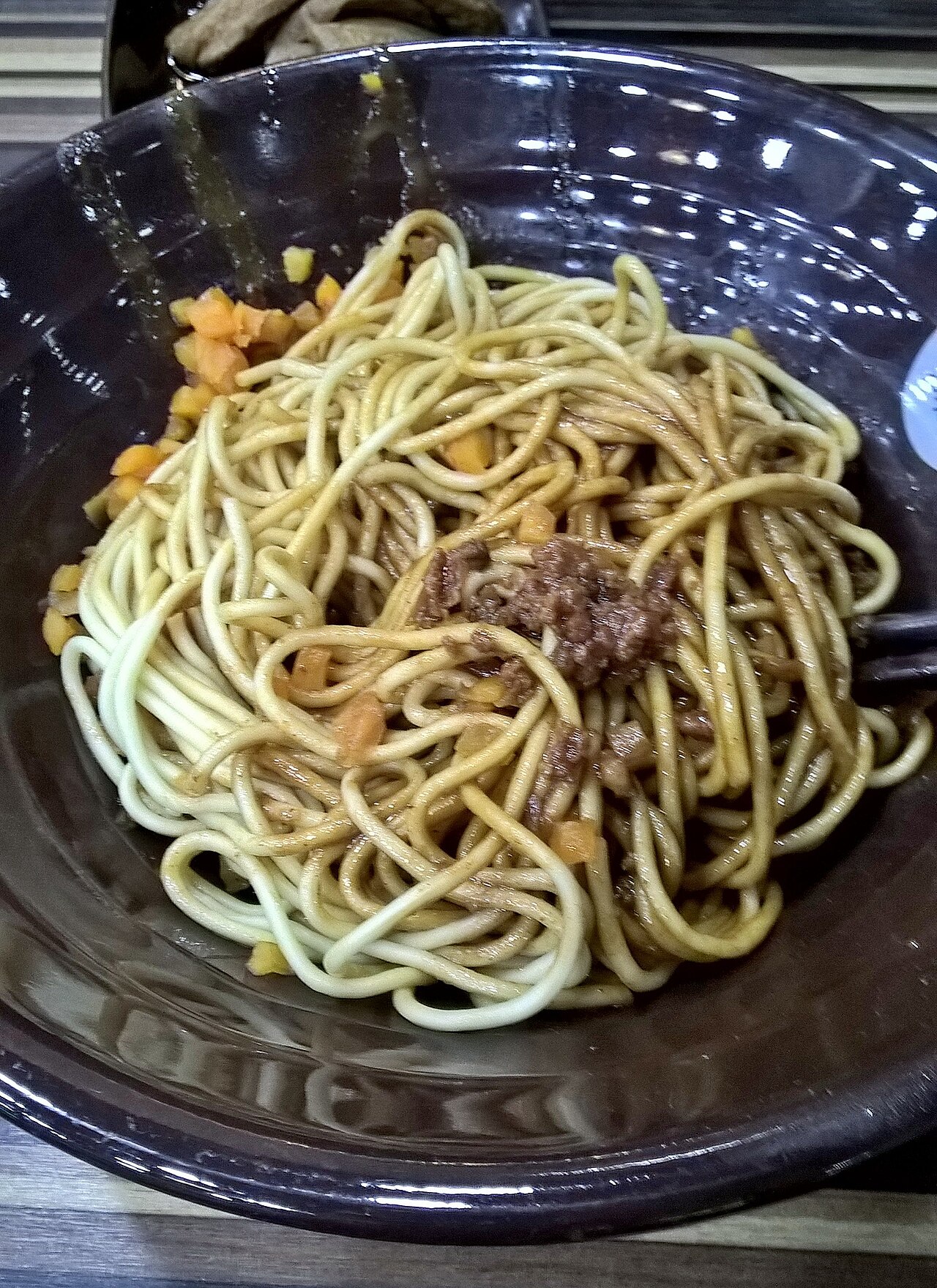
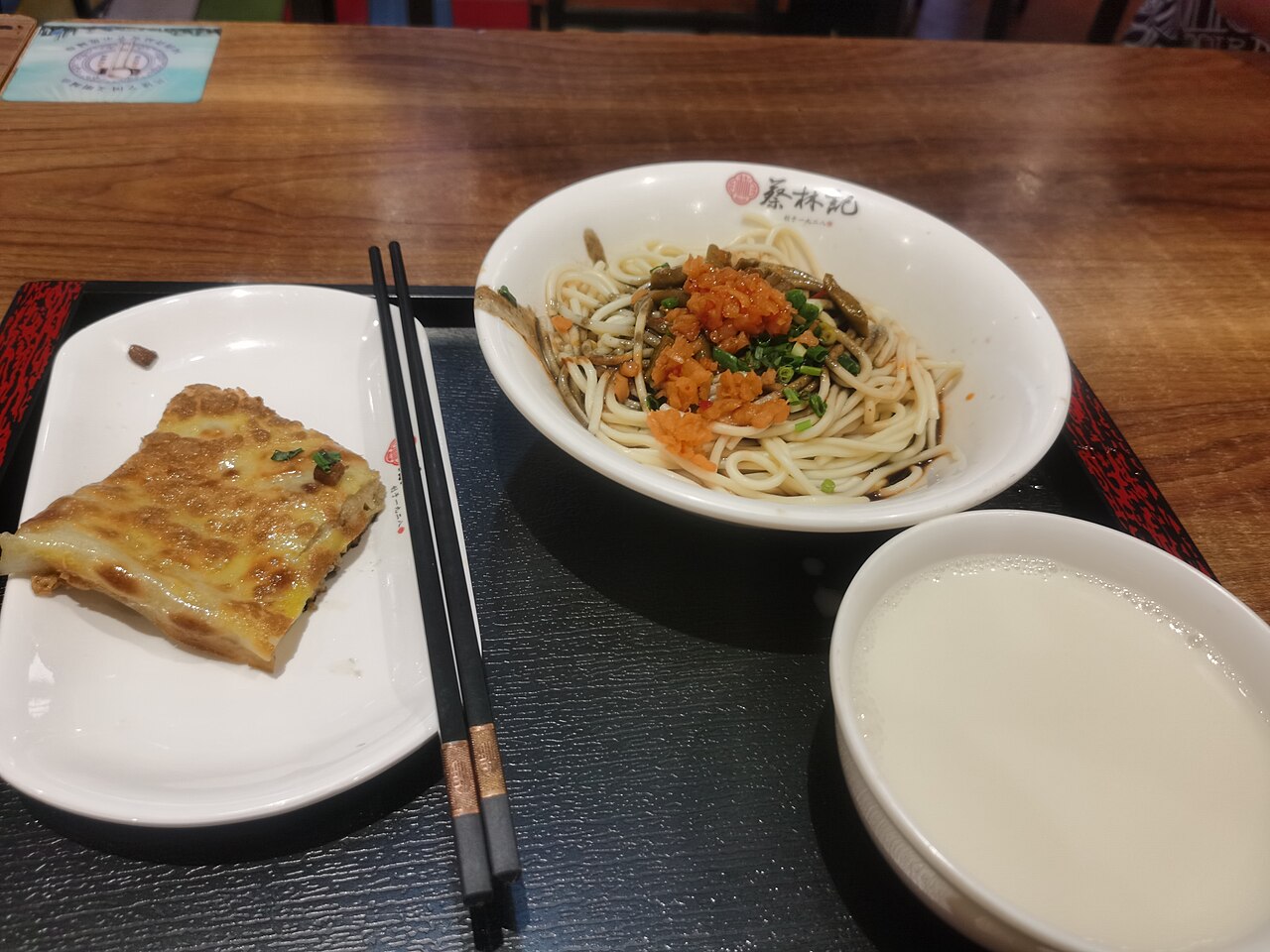
- Wuhan Kuantu Tech 'Xiao K Reganmian' Automated Catering Terminal Technical Showcases (Canton Fair & Hankou North Expo)
- Wanjie Intelligent 'Future Noodle Shop' Hospital, University & High-Speed Rail Deployment Case Studies
- Food & Machinery (Shipin Yu Jixie): Rheological Pumping & Automated Dosing of High-Viscosity Chinese Sauces
❓ Frequently Asked Questions
How do robotic kiosks pump ultra-thick sesame paste without clogging valves or dripping?
Sesame paste is a dense, thixotropic non-Newtonian fluid that jams standard solenoid valves. Wuhan engineers house the paste inside a gentle 38°C water-jacketed hopper with slow planetary wall-scrapers to prevent oil separation, dispense exact gram weights (±0.5g) via positive-displacement progressive-cavity or high-torque peristaltic pumps, and use a pneumatic negative-pressure suck-back nozzle to snap off paste threads cleanly.
How can these machines cook fresh hot noodles inside hospitals, subways, and airports where open flames and kitchen exhausts are banned?
Instead of gas cauldrons, smart Reganmian kiosks inject 110°C pressurized purified micro-steam (or use enclosed induction baskets) to penetrate parboiled noodles in just 17 seconds, routing all vapor through an internal condenser. Producing zero flame and zero grease smoke, a unit plugs into standard building power on a single square meter of floor space.
Are robotic kiosks meant to replace Wuhan's traditional neighborhood noodle masters?
Not at all—they serve completely different ecological niches. Neighborhood masters easily win on morning rush burst speed (10 seconds/bowl), sizzling house chili oil, and community camaraderie. Smart kiosks thrive in 'time-and-space blind spots'—like feeding a surgeon coming off a 2:00 AM emergency operation or a traveler catching a 5:30 AM bullet train—delivering a reliable, piping-hot bowl when every human stallkeeper is asleep.
✦ Cross-Referenced Chapters
Utensil & Cart Evolution: Poles, Bamboo Strainers & Paper Bowls
A material history from wooden shoulder-poles and conical bamboo baskets to iconic grease-proof paper bowls.
Street Blanching & The Golden Ten-Second Bowl
Deconstructing the street master’s 6-second boiling dip, triple wrist-shake drain, and rapid sauce ladling.
Beyond Sunrise: Late-Night Stalls & Midnight Reganmian
How night-shift taxi drivers and barbecue revelers turned hot dry noodles into a 2:00 AM Wuhan comfort staple.
New Consumer Trends: High-Speed Rail Dining & Sesame-Latte Crossovers
Tracking sesame-paste espresso tonics, croissant mashups, bullet-train dining cars, and design-forward boutique noodle bars.