2020 Collective Memory: 'Cheer Up, Reganmian!'
How a Personified Bowl of Sesame Noodles United a Nation and Marked Wuhan's Spring Awakening
A historical chronicle of how Wuhan's signature breakfast became China's most poignant emblem of solidarity during the spring of 2020—from illustrator Chen Xiaotao's viral cartoons to the steaming paper bowls served at dawn on April 8.
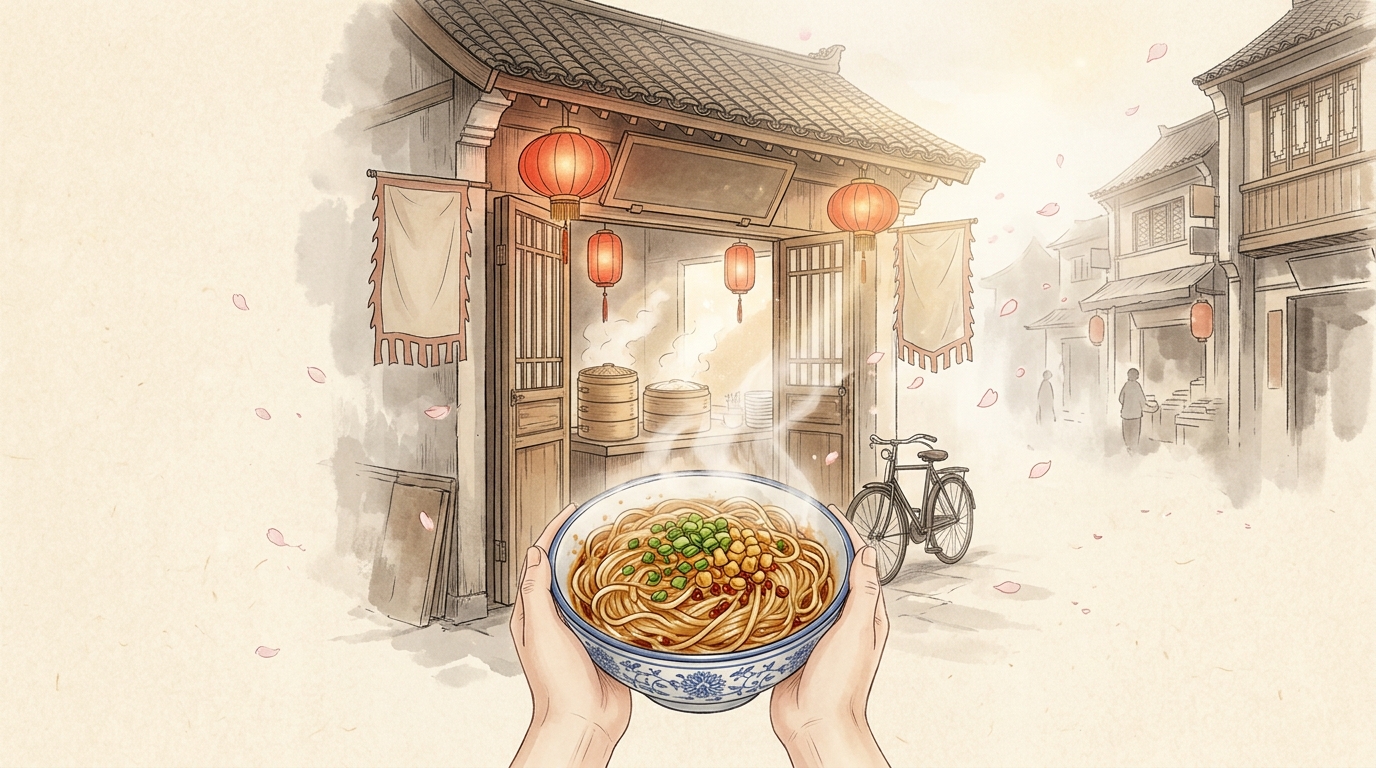
When the Morning Cauldrons Fell Silent
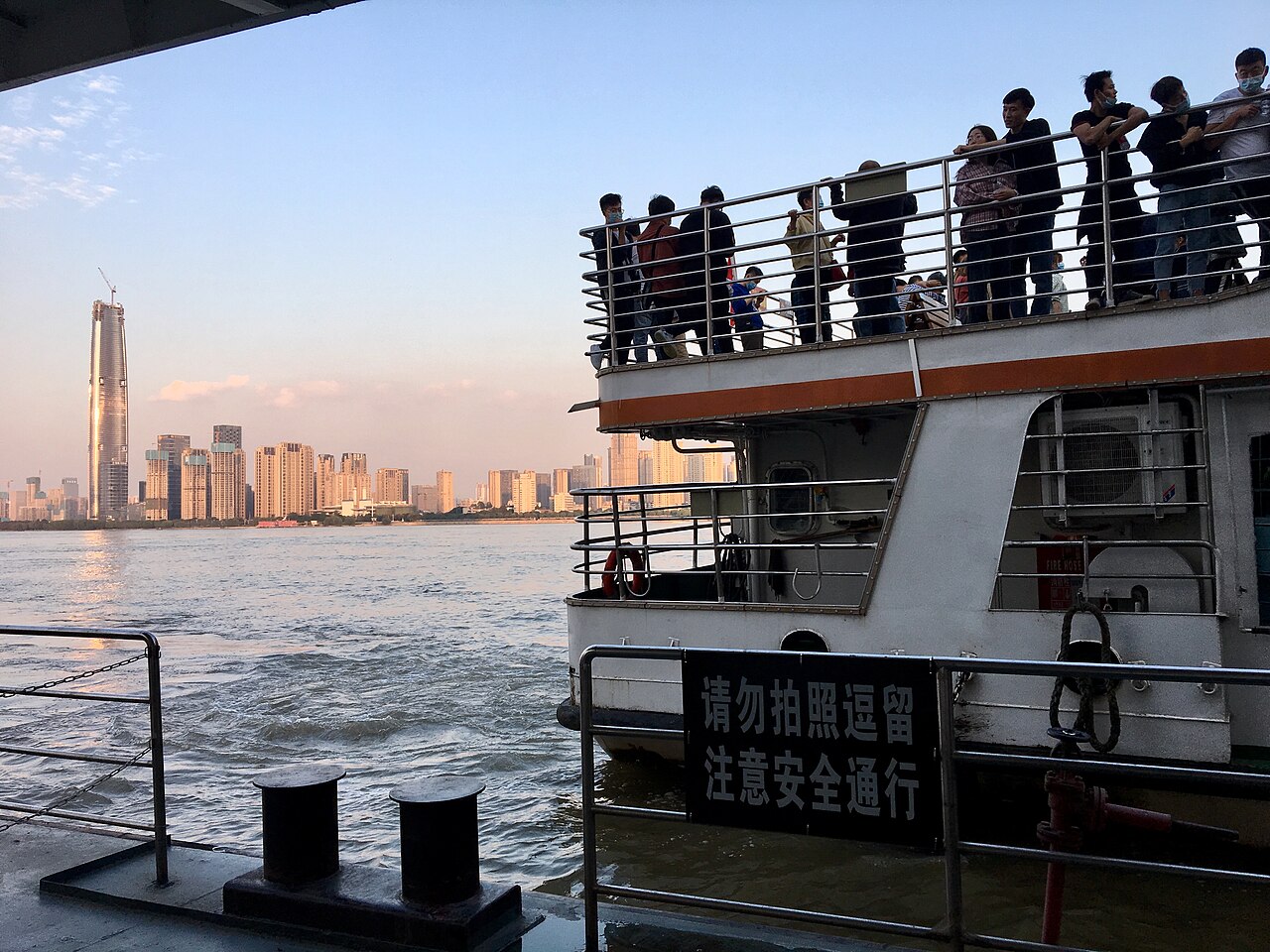
In the long annals of world gastronomy, rare is the street snack that transcends culinary pleasure to become the emotional emblem of an entire nation in crisis. At 10:00 AM on January 23, 2020, Wuhan—a riverine metropolis of eleven million people at the confluence of the Yangtze and Han rivers—sealed its outbound transport corridors in an unprecedented effort to halt the spread of COVID-19.
For generations of Wuhanese whose internal clocks are calibrated to Guozao (“passing the morning,” the city’s exuberant breakfast ritual), the most jarring sign of the lockdown was acoustic. At 5:30 AM, the alleys fell utterly still. Gone was the rolling thunder of cauldron water, the rhythmic clack of conical bamboo strainers against iron rims, and the gravelly banter of neighbors calling out for er-liang quanliao (a standard 100-gram bowl with all the fixings). Tens of thousands of breakfast stalls lowered their steel shutters. Overnight, a city that ordinarily devoured millions of bowls of Reganmian (Hot Dry Noodles) every morning saw its defining comfort vanish from the pavement.
“Only when the bamboo strainers hung dry and the morning mist smelled solely of winter river wind did eleven million citizens realize: peace is nothing more, and nothing less, than a steaming paper bowl at dawn.”
Yet that sudden absence turned Reganmian into a shared civic longing—and, within days, a visual language through which hundreds of millions of strangers expressed solidarity.
Through the Hospital Glass: Chen Xiaotao’s Visual Poetics
Late on the night of January 30, 2020, just days after the Lunar New Year, a young illustrator in Tianjin named Chen Xiaotao (@陈小桃momo) posted a gentle, pastel-toned drawing titled National Delicacies Cheer for Wuhan (《全国美食为武汉加油》). Inside a sterile hospital room lay an anthropomorphized bowl of Wuhan Reganmian, wearing a surgical mask and a small adhesive bandage on its brow, eyes weary yet resolute. Pressed against the exterior glass window stood a crowd of regional culinary icons from every corner of China: Tianjin jianbing savory crepes, Beijing roast duck, Sichuan simmering hotpot, Shaanxi roujiamo flatbread burgers, Shandong giant scallions, and Cantonese shrimp dumplings, all holding up handwritten placards reading “Cheer up, Reganmian!” (热干面加油!).
Within forty-eight hours, the illustration amassed hundreds of millions of views across Weibo and WeChat, amplified by People’s Daily, Xinhua, and CCTV. Illustrators from every province joined an impromptu relay, sketching Lanzhou beef noodles, Henan braised noodles, Shanxi knife-cut noodles, and Liuzhou luosifen marching toward Hubei with medical supplies and warm broth.
From the perspective of media sociology, the cartoon achieved something statistics and official communiqués could not: intimate scale. Epidemiological charts induce dread and abstraction; a round-faced noodle bowl evokes domesticity, memory, and appetite. In Chinese culture, where affection is traditionally voiced through care for another’s meals rather than grand declarations, telling a city “Get well soon so we can eat breakfast together” struck the deepest possible emotional chord.
| Chronological Milestone | Key Cultural / Historical Event | Defining Visual Imagery | Significance in Collective Memory |
|---|---|---|---|
| Jan 23, 2020 | Outbound transport lockdown begins | Shuttered alley stalls, silent cauldrons at dawn | Everyday Guozao life suspended for public safety |
| Jan 30, 2020 | Chen Xiaotao posts Cheer Up, Reganmian! | Bandaged noodle bowl comforted through glass by regional dishes | Establishes Reganmian as the nationwide persona of Wuhan |
| Feb–Mar 2020 | Frontline volunteer kitchen relays | Local chefs delivering freshly blanched bowls to 42,000+ aid medics | Culinary hospitality sustained amidst crisis |
| Mar 25, 2020 | Sequel cartoon Reganmian Woke Up! | Unbandaged noodle bowl steaming warmly, holding cherry blossoms | Signals spring recovery and imminent reopening |
| Apr 8, 2020 | 76-day lockdown officially lifted | Socially distanced morning queues tossing sesame noodles outdoors | Global photographic icon of urban rebirth |
A Promise Written on Protective Suits
Throughout the seventy-six days of lockdown, Reganmian remained an unspoken covenant between Wuhan residents and the more than 42,000 healthcare workers who arrived from across China to staff ICU wards and temporary Fangcang hospitals. Scrawled in black marker across the backs of countless white Tyvek protective suits was the same lighthearted vow: “No retreating until we eat authentic Wuhan Reganmian!”
Determined to honor that wish even while storefronts remained closed, Wuhan’s culinary community mobilized behind the scenes. Time-honored brands such as Cai Lin Ji and Changqing Maixiangyuan converted central factories into emergency supply kitchens, donating hundreds of thousands of fresh-locked noodle kits and stone-ground sesame paste pouches to hospital builders and medical dormitories. Meanwhile, independent shopkeepers—among them Luo Sisi of Hankou’s famed Luoshi Raw-Blanched Beef Noodle Stall—organized volunteer kitchen brigades. Rising at 3:00 AM, they parboiled alkaline strands, simmered spiced soy broth, and delivered insulated crates of piping-hot noodles to hotel lobbies where exhausted nurses were coming off night shifts.
For many visiting clinicians from northern China or coastal Guangdong, that first encounter with dense, oil-emulsified sesame paste clinging to springy alkaline wheat strands was revelatory—calorically fortifying, deeply aromatic, and unmistakably alive with Wuhan’s forthright wharf spirit.
April 8 at Daybreak: Steam Rising Over the Three Towns
By late March, pink clouds of cherry blossoms had drifted across East Lake and Wuhan University. On March 25, 2020, as surrounding prefectures in Hubei reopened, Chen Xiaotao released her sequel illustration: Reganmian Woke Up! (《热干面醒了!》). Standing tall beside a sunlit casement window, bandage gone and tendrils of white steam curling from its golden strands, Reganmian waved a sprig of cherry blossoms to cheering culinary friends outside.
Thirteen days later, cartoon prophecy became street reality. At midnight on April 8, 2020, the century-old customs house clock at Jianghan Pass chimed twelve, marking the end of Wuhan’s 76-day lockdown. Before 6:00 AM, metallic shutters rattled upward along Jiqing Street in Hankou, Liangdao Street in Wuchang, and Meigui Street in Hanyang. Veteran noodle masters lifted wooden cauldron lids, sending plumes of white vapor into the crisp spring air. Six seconds in boiling water, three brisk shakes of the bamboo basket, a generous ladle of amber sesame paste, pickled radish dices, and bright green scallions—muscle memory had not rusted a whit.
With indoor dining still cautiously paused, masked locals stood patiently at one-meter intervals along the curbstones. Commuters squatted beside plastic stools or cradled grease-proof paper bowls in one palm, lifting chopsticks in high crosswise motions until every strand gleamed mahogany. More than one lifelong resident paused mid-bite as tears welled behind fogged spectacles. Departing medical teams stopped at street corners on their way to Wuhan Station, snapping photos of empty bowls captioned simply: “Reganmian is wide awake. Our mission is complete.”
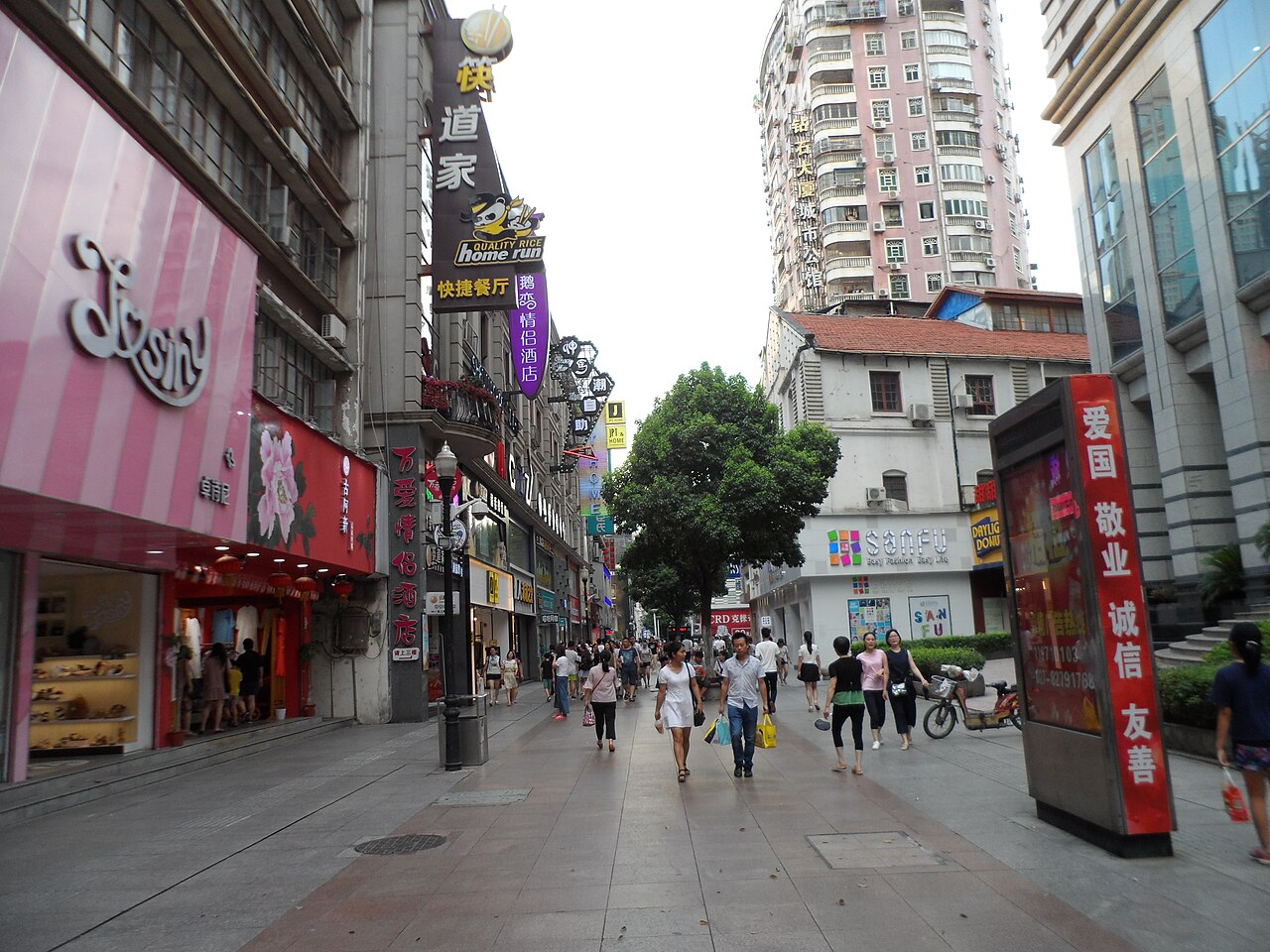
Years on, the morning rush across Wuhan’s Three Towns has returned to its boisterous, unhurried self. Yet every spring, that pair of bookend phrases—Reganmian Jiayou and Reganmian Woke Up—remains an indelible chapter in modern Chinese history: proof that the truest measure of a great city’s endurance lies in the warmth of its most ordinary bowl.
- People's Daily Online: 'From Cheer Up Reganmian to Reganmian Woke Up: The Warmth Behind Two Viral Illustrations', March 2020
- Xinhua News Agency: 'Wuhan Reboots: Familiar Street Steam Returns on the Morning of April 8', April 8, 2020
- China National Radio (CNR): 'Interview with Illustrator Chen Xiaotao on Drawing the Cherry-Blossom Window', April 2020
- Wuhan Municipal Government Archives: 'Chronicle of the Heroic City's Post-Epidemic Revitalization (2020)'
❓ Frequently Asked Questions
Who created the viral 'Cheer Up, Reganmian!' cartoon in January 2020?
Tianjin-based illustrator Chen Xiaotao (known online as @ChenXiaotaoMomo) published the drawing on January 30, 2020. It portrayed Wuhan as a masked, bandaged bowl of Reganmian resting in an isolation ward while regional dishes from across China—Tianjin Jianbing crepes, Beijing Roast Duck, Sichuan Hotpot, and Shaanxi Roujiamo—cheered outside the window.
Why did Reganmian become the nationwide nickname for Wuhan during 2020?
Because 'Guozao' (Wuhan's vibrant morning street-breakfast ritual) is the heartbeat of local life, consuming millions of bowls daily. Personifying the city as Reganmian translated an overwhelming public-health crisis into an intimate, relatable human wish: returning to ordinary mornings shared over hot food.
What happened at Wuhan's noodle stalls on the morning of April 8, 2020?
As Wuhan lifted its 76-day outbound travel lockdown at midnight on April 8, rolling shutters rose across Hankou, Wuchang, and Hanyang before sunrise. Residents queued a meter apart outside heritage shops like Cai Lin Ji and neighborhood stalls, tossing sesame paste into steaming alkaline noodles on the sidewalk in scenes broadcast around the globe.
✦ Cross-Referenced Chapters
Centennial Chronology (1920s–2020s)
A decade-by-decade timeline from Republican-era wharf stalls and state-private partnerships to heritage status and global exports.
Flagship Heritage Brands: Cai Lin Ji, Cai Mingwei & Changqing
Detailed profiles of Wuhan’s historic benchmark chains, flagship locations on Jiqing Street, and signature flavor profiles.
Oral Histories of 3:00 AM Noodle Artisans
Intimate portraits of husband-and-wife stallkeepers and third-generation masters tending boiling cauldrons before dawn.
Brush & Palette: Old Hankou Watercolors, Ink Art & Culinary Comics
Appreciating urban sketchbooks, traditional xieyi ink paintings, woodblock prints, and whimsical food illustrations.