Culinary Diplomacy & Notable Tasters
From the Foreign Ministry's Blue Hall to Grand Slam Champions and Sidewalk Stools
Documenting how Wuhan's five-yuan street staple stepped onto the stage of international gastrodiplomacy—highlighted by the April 2021 Ministry of Foreign Affairs showcase for 155 diplomatic missions, WTA tennis icons tossing noodles at the Wuhan Open, and hometown champions carrying its memory worldwide.
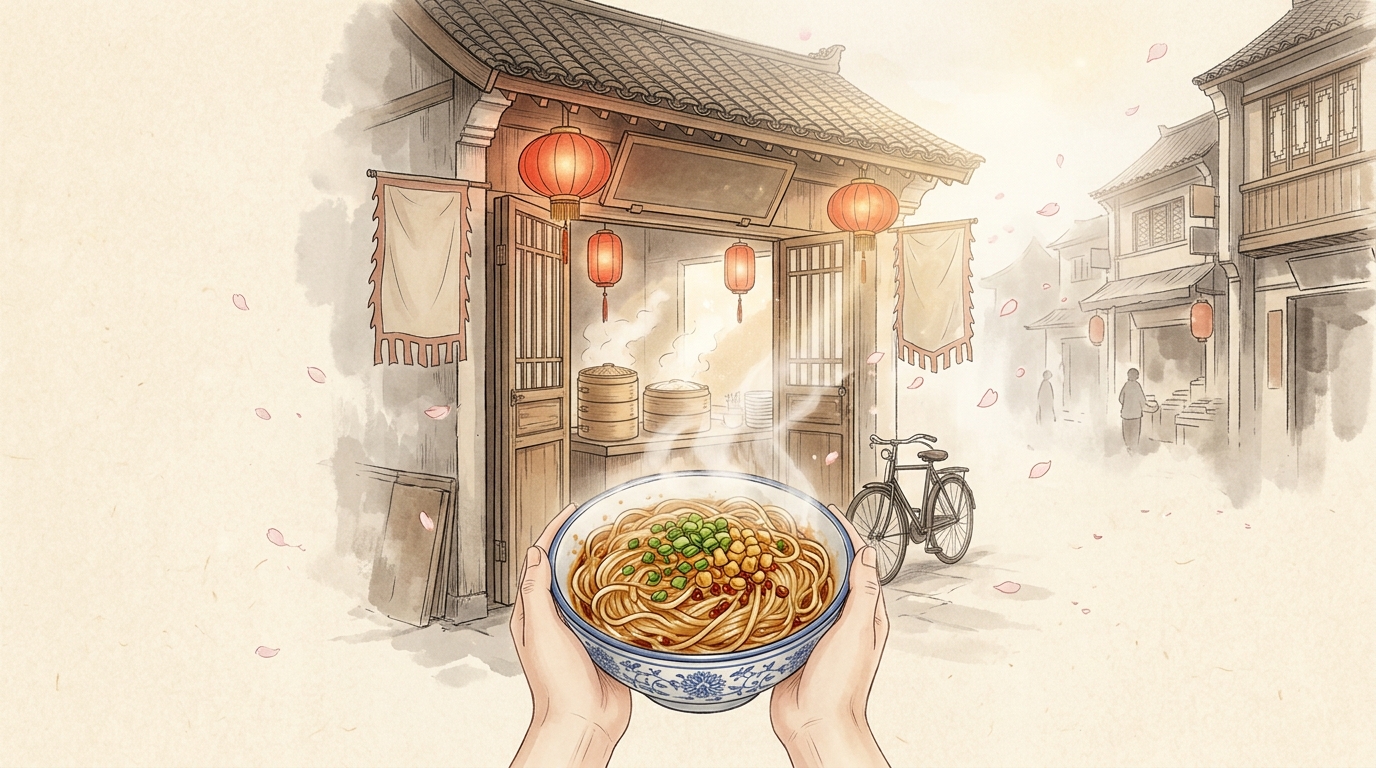
Street Steam in State Halls: The Gastrodiplomacy of a Humble Bowl
In the study of modern soft power, gastrodiplomacy usually favors the rarefied and the ornate: vintage Bordeaux poured into crystal stems, multi-course kaiseki lacquerware, or intricately sculpted banquet centerpieces. Yet whenever Wuhan—central China’s historic transport and industrial crossroads—introduces itself to foreign dignitaries, the centerpiece is rarely an imperial delicacy. Instead, it is a humble bowl of Reganmian (Hot Dry Noodles) that sells on neighborhood corners for less than a dollar.
That choice is neither accidental nor ironic. Formal state cuisine commands admiration from a polite distance, whereas street food invites participation. Because Reganmian arrives brothless with thick, stone-ground sesame paste resting atop hot alkaline strands, no diner—not even a plenipotentiary ambassador—can eat it passively. One must take up chopsticks, rotate the wrist, and toss the noodles vigorously until dark soy broth, sesame lipids, chili oil, and pickled radish bind into a glossy emulsion. In those twenty seconds of shared manual effort, diplomatic stiffness melts into convivial curiosity.
“No gilded platter, no rarefied shark fin—only six seconds in boiling water and a ladle of roasted white sesame, turning strangers from five continents into breakfast companions.”
April 12, 2021: Boiling Cauldrons Inside the Blue Hall
The crowning diplomatic moment for Reganmian unfolded in Beijing on April 12, 2021, one year and four days after Wuhan emerged from its historic 76-day lockdown. Inside the Blue Hall (蓝厅) of China’s Ministry of Foreign Affairs, the ministry and the Hubei Provincial People’s Government co-hosted a special global promotion titled “Heroic Hubei: Reborn from the Ashes, Creating New Glories.” Attended by over 270 ambassadors, chargés d’affaires, and representatives from 155 countries and international organizations, it stood as the largest provincial showcase in the Foreign Ministry’s history.
Before formal addresses began in the main auditorium, an unmistakable aroma of roasted sesame and boiling wheat drifted across the reception atrium. Chefs and intangible-cultural-heritage masters from Cai Lin Ji (founded in 1928) had set up a live blanching station steps away from diplomatic exhibition panels. Dressed in crisp white jackets, the artisans plunged conical bamboo baskets of golden jianshuimian (alkaline noodles) into rolling water, executed the classic triple wrist-shake to shed excess moisture, and ladled amber sesame paste into petite blue-and-white porcelain tasting bowls.
In his keynote speech, State Councilor and Foreign Minister Wang Yi recalled how people across China had cheered “Cheer up, Reganmian!” during the darkest days of early 2020, declaring that the steaming bowl before the diplomatic corps symbolized urban vitality restored. At the tasting counter, envoys from Europe, Latin America, Africa, and Southeast Asia compared notes on chopstick technique. Several European diplomats remarked on its intriguing kinship with Roman Cacio e Pepe—another brothless pasta reliant on rapid mechanical emulsification—while marveling at the nutty depth of roasted Hubei white sesame cut by tart diced radish.
| Diplomatic / Cultural Arena | Landmark Event or Platform | Notable Participants | Culinary Presentation & Cultural Impact |
|---|---|---|---|
| MFA Blue Hall (Apr 2021) | Hubei Global Special Promotion | 270+ diplomats from 155 nations & organizations | Live heritage blanching; 40g porcelain tasting bowls symbolizing rebirth |
| WTA 1000 Wuhan Open | Annual International Tennis Tournament | Aryna Sabalenka, Petra Kvitová & top WTA players | Hands-on bamboo-strainer workshops broadcast to global sports fans |
| Consular & Civic Visits | Visiting delegations & sister-city missions | Foreign consuls general, scholars & trade envoys | Paired with Doupi and lotus-root soup as a miniature Guozao sampler |
| National Screen & Stage | Broadcast galas, film festivals & Olympics | Li Na, Zheng Qinwen, Sa Beining & Zhu Yilong | Spoken in authentic Wuhan dialect as an emblem of hometown pride |
Center Court Cravings: Tennis Royalty and Alkaline Carbs
Beyond ministerial halls, international sport has carried Reganmian to a global audience. Wuhan holds a singular place in Asian tennis history as the training ground of two generational icons: Li Na, Asia’s first Grand Slam singles champion, and Zheng Qinwen, gold medalist at the 2024 Paris Olympics. Spending ten months a year living out of suitcases on the international tour—subsisting on plain pasta, steamed chicken, and hotel buffets—both champions have spoken fondly in press conferences about their ultimate homecoming reward: slipping into an unassuming Wuhan alley stall for an unapologetically rich bowl of sesame noodles.
Since 2014, the Wuhan Open (a premier WTA 1000 tournament held each autumn at the Optics Valley International Tennis Center) has turned this local ritual into a playful rite of passage for visiting superstars. Three-time Wuhan Open champion Aryna Sabalenka and two-time Wimbledon champion Petra Kvitová, among a dozen top-ranked contemporaries, have traded tennis racquets for long bamboo chopsticks during tournament cultural days—learning from local masters how to shake boiling water from a woven strainer and pronounce “Hao chi!” (delicious) in Wuhan dialect. For elite endurance athletes accustomed to carb-loading before three-set battles, high-gluten alkaline wheat dressed in calcium-rich sesame paste proved an unexpectedly gratifying fuel.
The Hometown Badge of Cultural Luminaries
Within Chinese popular culture, Reganmian also serves as an instant badge of kinship among prominent writers, broadcasters, and actors raised by the Yangtze. Celebrated television host Sa Beining, who grew up in Wuhan, has turned demonstrations of Wuhanese breakfast etiquette into recurring comic set pieces on national broadcasts—illustrating how a seasoned local cradles a burning-hot bowl with splayed fingertips while striding briskly down the sidewalk without staining a white shirt. Wuhan-born film actor Zhu Yilong has similarly championed neighborhood breakfast stalls during international film festival interviews and variety appearances, introducing millions of younger fans to the subtle magic of garlic water, spiced soy broth, and sun-dried radish dices.
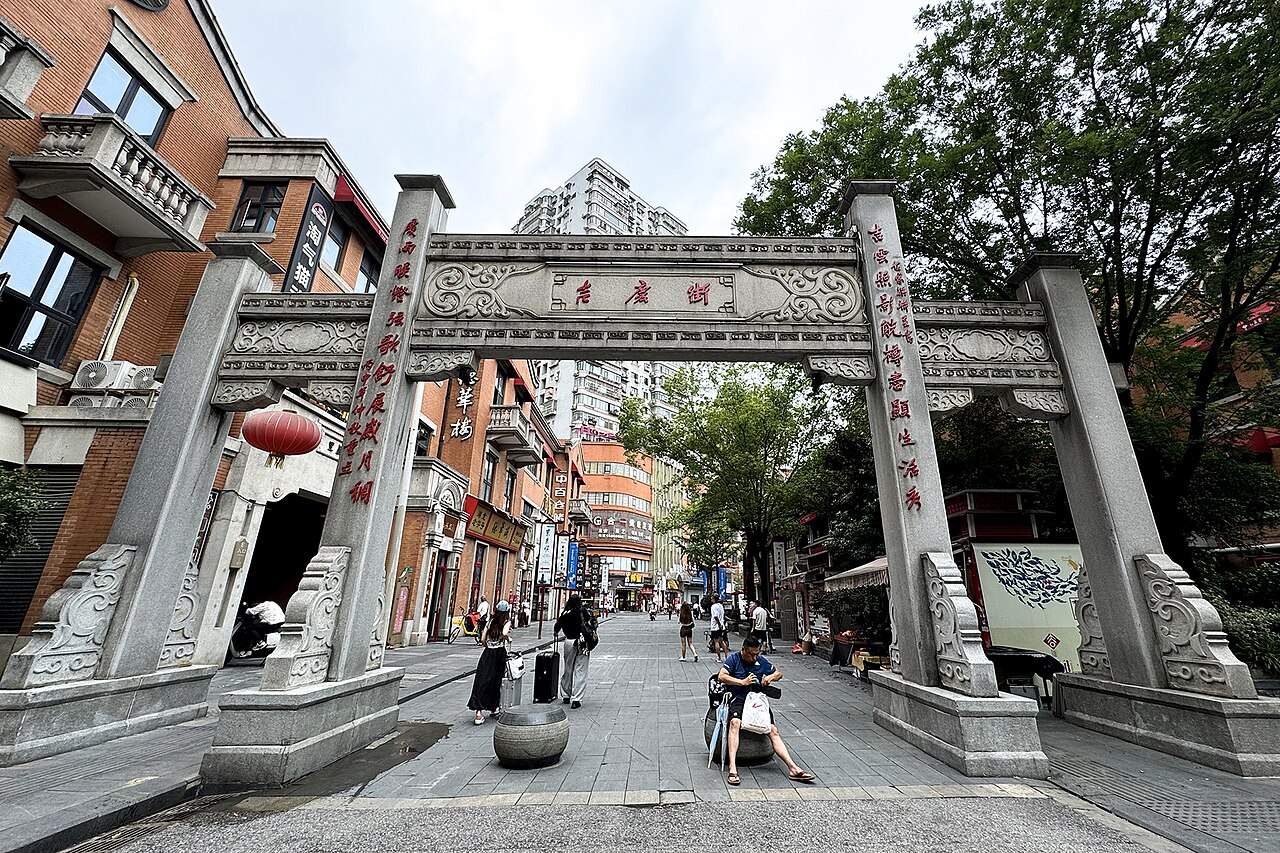
Perhaps most tellingly, when visiting novelists, indie rock bands, or film directors arrive in Wuhan on tour, they rarely ask for VIP private dining rooms. Instead, guided by local friends at 7:00 AM along Shanhaiguan Road or Liangdao Street, they pull up a knee-high plastic stool, set their paper bowl atop a taller plastic stool, and eat elbow-to-elbow with retirees and delivery riders. Capable of gracing diplomatic receptions in Beijing one day and anchoring a curbside plastic stool the next, Reganmian remains China’s most egalitarian cultural ambassador.
- Ministry of Foreign Affairs of the PRC: 'MFA Holds Global Special Promotion Event for Hubei Province in Blue Hall', April 12, 2021
- China Daily: 'Diplomats Savor Wuhan's Iconic Hot Dry Noodles at MFA Showcase', April 2021
- Wuhan Municipal Government Portal: 'Ten Years of Cultural Exchange at the WTA Wuhan Open'
- Xinhua Sports: 'From Li Na to Zheng Qinwen: Wuhan's Tennis Champions and Hometown Flavors', 2024
❓ Frequently Asked Questions
How was Reganmian featured at the 2021 Ministry of Foreign Affairs Hubei showcase?
On April 12, 2021, China's Ministry of Foreign Affairs hosted 'Heroic Hubei: Reborn from the Ashes, Creating New Glories' at the Blue Hall in Beijing. Master noodle artisans from heritage brand Cai Lin Ji blanched alkaline noodles live on site, serving miniature blue-and-white porcelain bowls to envoys from 155 countries and international organizations.
How are diplomatic reception bowls adapted compared to street-side Wuhan bowls?
Reception tastings serve 35–45 gram 'taster portions' rather than the hearty 150–200 gram street serving. The sesame paste is slightly loosened with aromatic sesame oil and spiced soy broth for effortless tossing with either chopsticks or forks, while preserving the signature crunch of Huangpi pickled radish and fresh scallions.
Which international athletes have tried making or tasting Reganmian in Wuhan?
During the annual WTA 1000 Wuhan Open, international tennis stars including three-time champion Aryna Sabalenka and two-time Wimbledon champion Petra Kvitová have stepped behind traditional noodle carts to practice six-second bamboo-strainer blanching, introducing Wuhan's breakfast culture to global sports audiences.
✦ Cross-Referenced Chapters
Intangible Cultural Heritage Dossier & Lineage
Official Hubei provincial heritage classifications, master inheritor lineages, and traditional craft preservation standards.
Flagship Heritage Brands: Cai Lin Ji, Cai Mingwei & Changqing
Detailed profiles of Wuhan’s historic benchmark chains, flagship locations on Jiqing Street, and signature flavor profiles.
Diaspora Nostalgia: First Bowl Home & Suitcases Packed with Noodles
Why returning Wuhan natives head straight from the train platform to their neighborhood stall—and pack dry noodles across oceans.
Global Palate Reactions & Official English Culinary Nomenclature
How international diners experience Wuhan’s "Sesame Carbonara" and standardizing English menu translations for Reganmian craft.