Diaspora Nostalgia: First Bowl Home & Suitcases Packed with Noodles
From High-Speed Rail Platforms Straight to Alley Stalls—and Crossing Oceans with Stone-Ground Sesame Paste
An intimate chronicle of the Wuhanese diaspora's two sacred rituals: rolling suitcases straight from Hankou, Wuchang, or Wuhan Station to eat a downstairs bowl before unlocking the front door, and carrying dry alkaline strands across continents.
Before Unlocking the Front Door: The Curbside Rite of Luowu
The moment the bullet-train chime sounds—“Next stop: Wuhan Station / Hankou Station / Wuchang Station”—every returning Wuhan native standing in the aisle experiences an involuntary Pavlovian reflex: a phantom aroma of toasted white sesame, crushed garlic water, and scorched chili oil rises in the back of the throat.
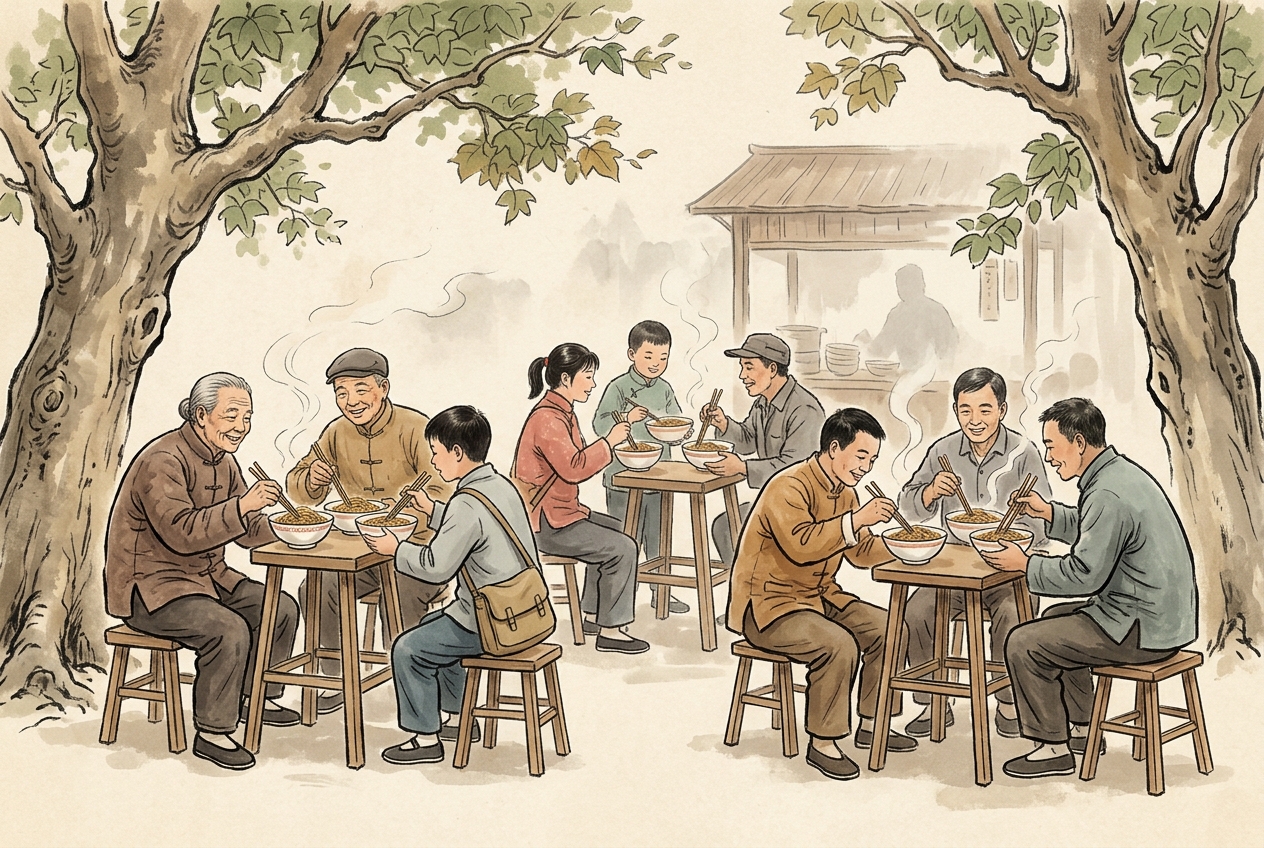
For the millions of Wuhan-born engineers in Shenzhen, financiers in Shanghai, researchers in Beijing, and graduate students scattered from London to Los Angeles, geographic arrival happens on the railway platform, but emotional arrival—what Wuhanese calls luowu (落屋, truly settling back under one’s own roof)—happens ten paces outside their childhood residential compound, hunched over a grease-proof paper bowl while a wheeled suitcase stands guard beside their knees.
Walk through any old Hankou lifen lane or Wuchang residential alley during the Lunar New Year travel rush (Chunyun) or Golden Week dawn, and you will witness the exact same tableau. A traveler in a rumpled coat rolls a tagged twenty-four-inch suitcase across uneven flagstones, bypasses the apartment stairwell altogether, parks the luggage beside a stack of red plastic stools, and calls into the rising steam: “Sister-in-law, whip up two liang all-in—extra pickled radish!”
“While my suitcase wheels are still warm from the subway platform, that first cross-toss of dark sesame paste and crisp sour beans melts away ten months of big-city armor in five seconds flat.”
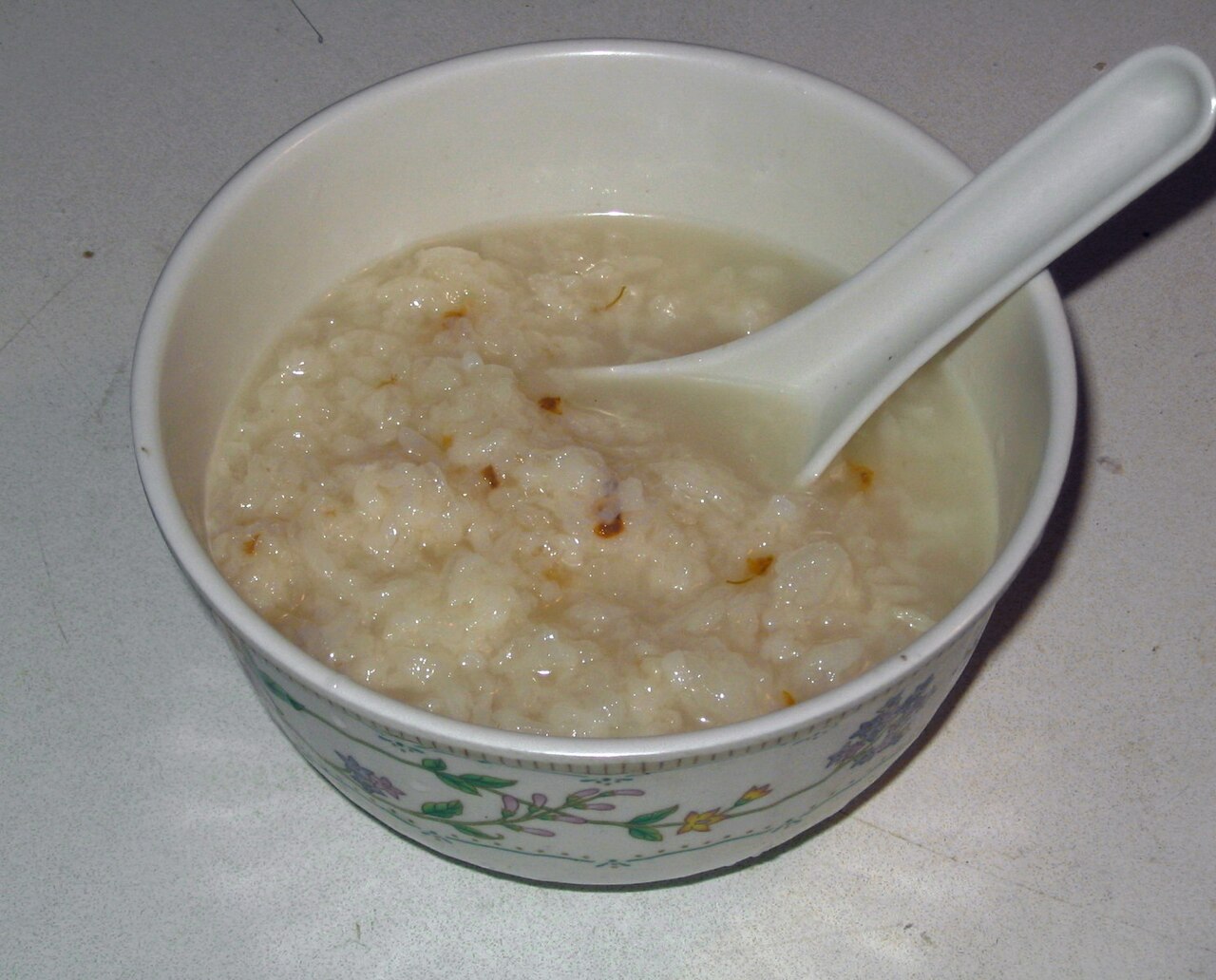
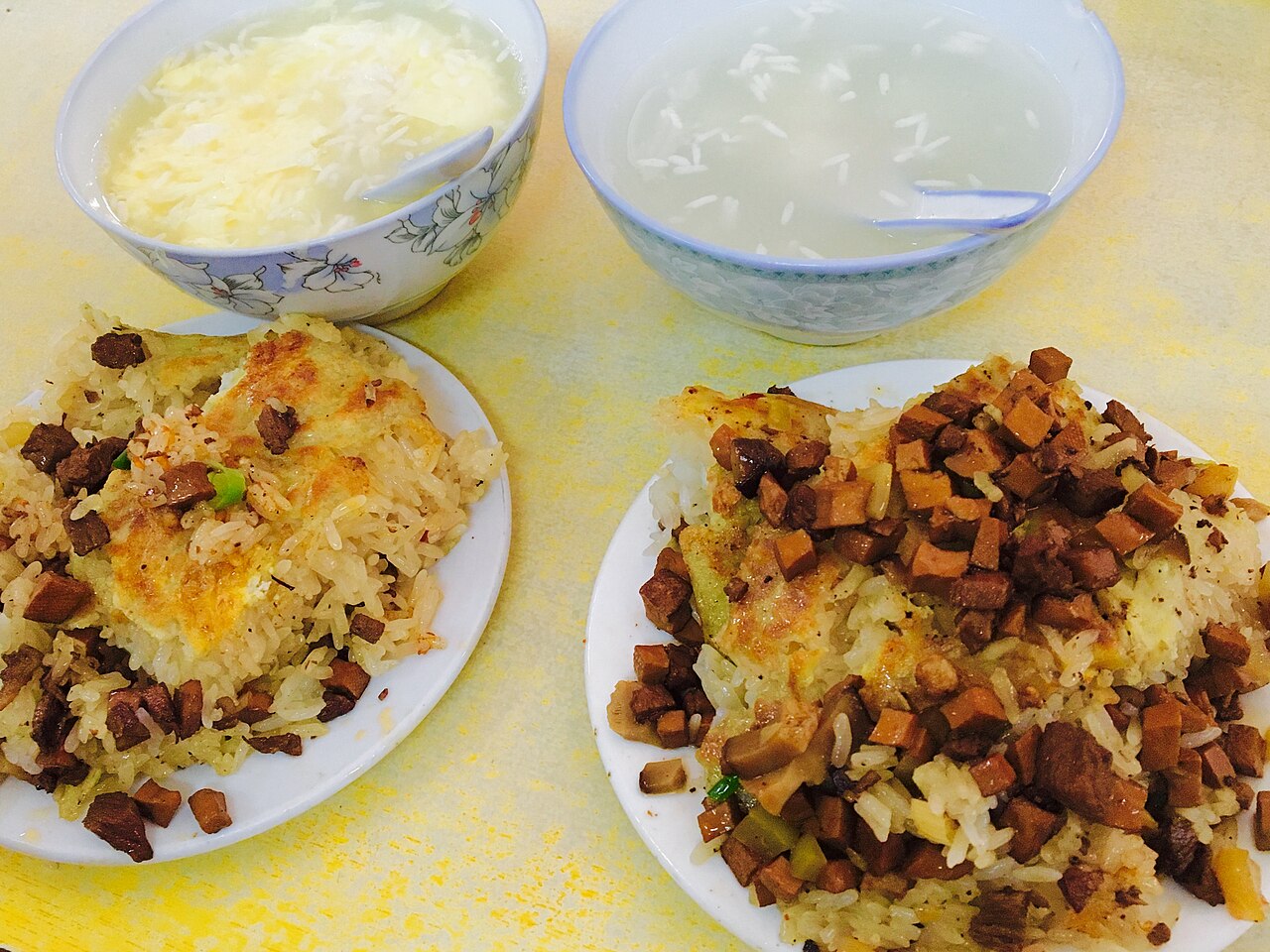
The stall owner glances at the airline tags, smiles without fuss, and slips an extra half-ladle of spiced soy broth into the bottom of the bowl: “Back early for the holidays this year, eh?” No red carpet could rival that gruff, matter-of-fact recognition. Only after the last sesame-streaked strand disappears—washed down with a scalding cup of sweet danjiu egg rice wine—does the traveler pick up the suitcase handle and climb upstairs.
Why Distance Sharpens the Craving: The Terroir Trap
Outsiders sometimes wonder why Wuhan natives suffer such acute withdrawal when tens of thousands of storefronts across China advertise “Authentic Wuhan Hot Dry Noodles.” Ask any homesick Wuhaner, however, and you will hear a litany of culinary heartbreak.
Reganmian is deceptively fragile across distance because its soul rests on hyper-local fresh supply chains and split-second emulsion physics. In Wuhan, central micro-factories deliver freshly extruded, oil-fanned alkaline wet noodles (danmian) before 4:00 AM; their exact balance of high-gluten wheat protein, moisture, and sodium carbonate peaks within hours. Five hundred miles away, well-meaning shopkeepers substitute ordinary pale wheat noodles or soft ramen strands that turn gummy on the surface and chalky at the core.
Worse still is the sauce heresy. Traditional Wuhan stalls thin stone-ground white sesame paste exclusively—or predominantly—with fragrant sesame oil (you xie), creating a hydrophobic velvet coat that clings to every strand without feeling watery. Outside Hubei, shops routinely cut costs with heavy peanut butter that cloys on the palate, thin the paste with tap water until it puddles gray at the bottom, or commit the unforgivable sin of ladling noodle soup into the bowl. That uncanny-valley gap between imitation and memory turns the humble five-yuan neighborhood bowl into an irreplaceable anchor of identity.
Rail-to-Bowl Homecoming Routes & Outbound Suitcase Matrix
Whether stepping off a train in Wuhan with luggage in tow or packing for a transoceanic flight out, diaspora veterans rely on a time-tested playbook:
| Transit Hub / Scenario | Fastest Route to an Authentic Bowl | Classic Pairing | Practical Luggage & Travel Tips |
|---|---|---|---|
| Hankou Railway Station | Metro Line 2 (2–4 stops) to Zhongshan Park or Jianghan Rd; walk into Shanhaiguan or Lanling alleys | 2-liang pure sesame bowl + crispy Mianwo donut | Smart luggage lockers line the metro concourse; Changqing flagship shops sit minutes away |
| Wuchang Railway Station | Walk east/west into Qianjia St neighborhood stalls, or ride Line 4 one stop toward Liangdao St | Raw-blanched beef Reganmian + sweet Humijiu | Old Wuchang lanes have steps and curbs—stash heavy trunks at station lockers if detouring |
| Wuhan Station (HSR Hub) | Arrivals level hosts time-honored Dehualou noodle counters; Line 4 reaches Yuejiazui in 20 min | Pork zhajiang Reganmian + simmered radish-beef soup | Even a 35-minute high-speed rail layover is enough for a freshly blanched arrivals bowl |
| Tianhe Int’l Airport (T3) | Terminal heritage kiosks by day; Metro Line 2 into Hankou or late-night Wansongyuan stalls | Heavy-chili plain Reganmian + chilled sour-plum drink | Landing after midnight? Wuhan’s 2:00 AM barbecue-street noodle stalls never sleep |
| Outbound Diaspora Suitcase | Air-dried alkaline noodles + foil-pouch stone-ground white sesame paste + vacuum Huangpi radish | Add fresh scallions, garlic water & black vinegar abroad | Crucial: Sesame paste jars/pouches are regulated as liquids/pastes—pack strictly in checked bags! |
Love Measured in Packing Tape: The Outbound Suitcase
If the homecoming bowl is an act of devotion by the child, the outbound suitcase is an act of engineering by Wuhan parents.
On the eve of departure at the end of every winter holiday, living-room floors across Hankou, Wuchang, and Hanyang fill with disassembled cardboard gift boxes. Young professionals protest that instant Reganmian packs can be ordered online anywhere; mothers wave the objection aside, insisting that factory packets never match neighborhood stone-milled sesame paste. Bundles of brittle dry alkaline noodles are cushioned between down jackets; glass jars of freshly ground sesame paste from the local market oil mill are sealed under three tight layers of plastic wrap and clear packing tape; tiny vacuum pouches of spicy Huangpi dried radish dices are wedged inside sneakers to maximize every cubic inch.
Months later—at midnight after a brutal exam week in Manchester, Toronto, or Melbourne—a student boils water on a cramped dorm hotplate, times the dry alkaline strands to the exact seventh minute, and slowly whisks warm water and sesame oil into the jar Mom triple-taped by hand. As the nutty, roasted perfume fills a foreign kitchen ten thousand kilometers from the Yangtze, the suitcase reveals its true cargo: portable resilience, wrapped in tape and toasted sesame.
- Wuhan Municipal Bureau of Culture and Tourism, 'Wuhan Guozao Transit & Neighborhood Tasting Guide'
- Changjiang Daily Special Feature, 'Spring Festival Homecoming: Young Wuhaners Rolling Suitcases to Guozao'
- Fei Xiaotong, 'From the Soil: The Foundations of Chinese Society' (on regional foodways and native-place attachment)
❓ Frequently Asked Questions
With 'Wuhan Reganmian' shops in almost every major Chinese city, why do returning natives rush for a bowl immediately upon arrival?
Out-of-province shops frequently substitute soft egg noodles for high-gluten wet alkaline strands, thin peanut-heavy paste with plain water instead of sesame oil, or even ladle broth into the bowl. Only a ten-second flash-blanched bowl from a Wuhan neighborhood cauldron—chased with sweet fermented egg rice wine—restores the true sensory baseline of home.
Where can travelers get an authentic bowl right after arriving at Wuhan's three main train stations?
From Hankou Station, hop Metro Line 2 a few stops into Zhongshan Park or Jianghan Road's historic alleys; from Wuchang Station, walk straight into Qianjia Street or ride Line 4 one stop toward Liangdao Street; at Wuhan High-Speed Station, time-honored brands like Dehualou operate right on the arrivals concourse.
How can overseas students and expats safely pack Reganmian ingredients in international luggage?
Choose air-dried non-fried alkaline noodles, foil-sealed pure white sesame paste pouches, and pasteurized pickled radish or cowpeas—avoiding beef-tallow or meat-containing sauce packets restricted by agricultural customs. Always place sesame paste jars or pouches in checked baggage rather than carry-on.
✦ Cross-Referenced Chapters
Across China: Authentic Reganmian Outposts in Major Cities
Where to find genuine Wuhan alkaline noodles and stone-ground paste in Beijing, Shanghai, Guangzhou, Shenzhen, and Chengdu.
Global Footprint: Overseas Reganmian Shops Worldwide
Tracking Wuhan noodle stalls from Flushing and Los Angeles to London, Sydney, Melbourne, Tokyo, and Singapore.
Global Export Surge: Hubei Packaged Reganmian Abroad
Customs export trends, international supermarket distribution, and cross-border e-commerce growth across four continents.
2020 Collective Memory: "Cheer Up, Reganmian!"
How personified noodle illustrations united a nation in solidarity and made the first post-lockdown bowl an enduring historical symbol.
Campus Chronicles: Canteen Reganmian Across Wuhan’s 80+ Universities
Beloved dining-hall noodle windows at Wuhan University, HUST, CCNU, and WUT that turned millions of students into lifelong fans.