Across China: Authentic Reganmian Outposts in Major Cities
Where three million Hubei expats cure homesickness: vetted Reganmian strongholds in Beijing, Shanghai, Shenzhen, Guangzhou, Hangzhou, and Chengdu
A rigorous nationwide field guide to finding genuine Wuhan Hot Dry Noodles outside Hubei—profiling provincial liaison kitchens, boutique Guozao cafés, and migrant neighborhood stalls across Beijing, Shanghai, Shenzhen, Guangzhou, Hangzhou, and Chengdu.
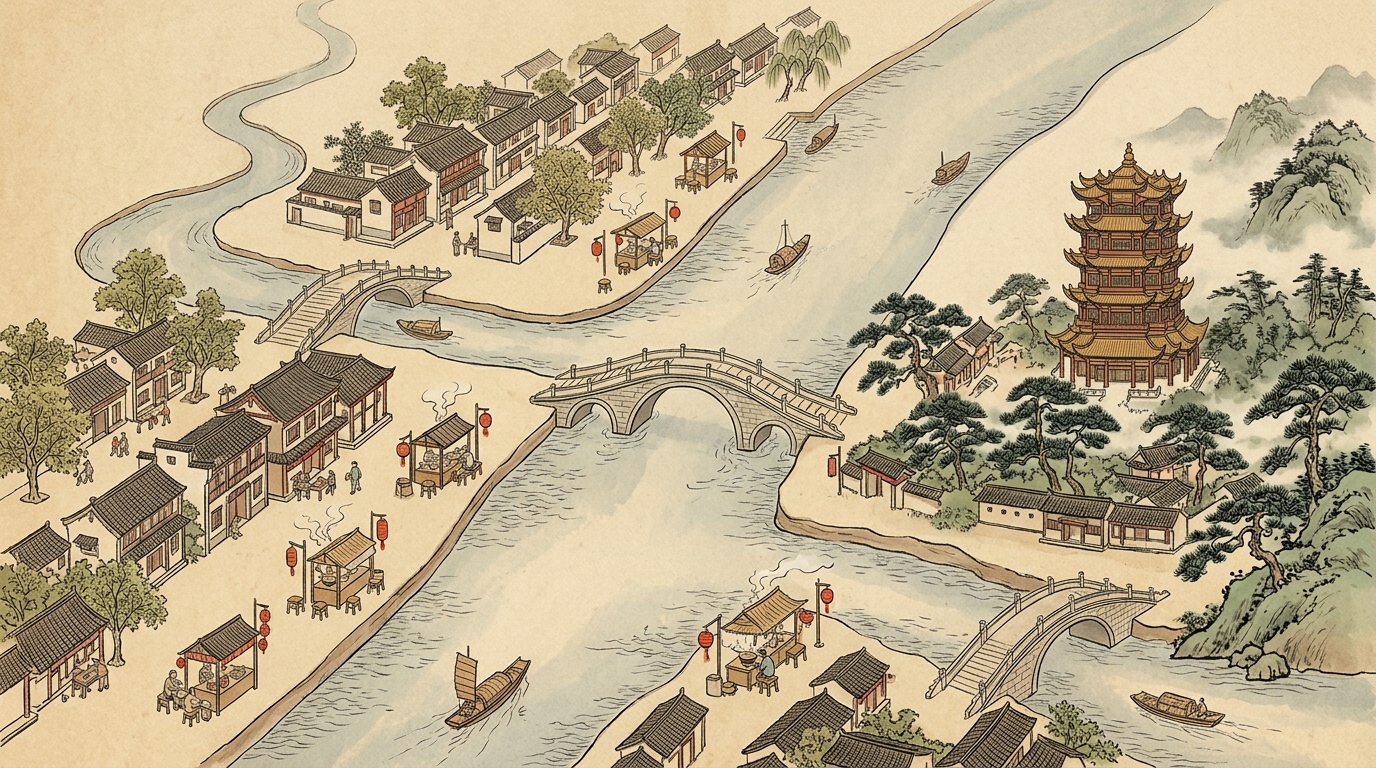
Breaking the Geographic Curse: How Reganmian Traveled Across China
For decades, a rueful truism circulated among Wuhan expats: Reganmian loses its soul the moment it crosses the Hubei border. Unlike broth noodles whose stock can mask imperfect pasta, Hot Dry Noodles expose every flaw. In northern China, street vendors habitually thinned Beijing-style 80/20 sesame-peanut hotpot paste with warm water, producing a sour, runny coating over limp white noodles. In coastal Jiangnan, cooks timidly halved the sesame paste to suit sweeter, lighter palates.
Over the past decade, however, cold-chain overnight logistics, direct expansion by heritage chains like Cai Lin Ji, and the migration of millions of Hubei entrepreneurs across China’s tech and garment corridors shattered that curse. Today, if you know which alleys to enter—and which counter cues to inspect—you can savor uncompromising Wuhan Guozao across Beijing, Shanghai, Shenzhen, Guangzhou, Hangzhou, and Chengdu.
“Step through the door and scan the bamboo tray: if golden strands gleam with sesame oil, you have found home.” — Hubei Expat Dining Maxim
Beijing & Shanghai: Liaison Kitchens, Chic Cafés & Market Legends
1. Beijing: From Official Provincial Diplomacy to Hutong Morning Bars
Beijing’s regional驻京办 (zhujingban—provincial government liaison offices) have long been secret temples of regional fidelity, and Jingchu Weidao (荆楚味道) inside Hubei Tower (36 Zhongguancun South Street, Haidian District) sets the capital’s gold standard. Using alkaline noodles and stone-ground white sesame paste shipped directly from Hubei, its kitchen turns out taut, glossy strands that pair effortlessly with simmered Honghu lotus-root pork-rib soup and pan-seared Doupi.
For pure street spirit, Dongcheng District’s Guozao MORNING (过早) on Chunxiu Road recreates Wuhan’s beloved morning duo—full-condiment Reganmian alongside velvety poached-egg sweet rice wine (Danjiu)—in a bright contemporary space. Meanwhile, Haidian’s Xiong Taipo Old Wuhan Snacks (Suzhou Street) and Chaoyang’s gritty Lao Hankou Beef Reganmian (Tianshuiyuan)—famous for self-serve jars of crunchy sour long beans, pickled radish, and fiery chili oil—keep Beijing’s Hubei diaspora lined up every weekend.
2. Shanghai: Twenty Years on Qipu Road
In cosmopolitan Shanghai, the most storied grassroots bowl hides beside Jing’an District’s Qipu Road Garment Wholesale Market. Back in the late 1990s, hundreds of Wuhan clothing merchants from Hanzheng Street set up shop on Qipu Road, inspiring Hubei native Master Xie to open Xie Ji Wuhan Reganmian (谢记武汉热干面). More than twenty years later, Xie Ji still parboils springy alkaline noodles before dawn and ladles thick, nutty sesame paste with a subtle sweet-savory finish. For consistent mall accessibility across People’s Square, Wujiaochang, and Hongqiao, Cai Lin Ji’s direct-operated Shanghai branches deliver signature roasted black-sesame bowls.
Shenzhen & Guangzhou: The Pearl River Delta’s “Second Hankou”
Nowhere outside Hubei beats the sheer grassroots density of Shenzhen and Guangzhou, home to over three million Hubei natives working in technology, logistics, and textiles.
- Shenzhen: In Luohu District’s historic Huangbeiling village, Wenshu Hubei Snacks (文叔·湖北小吃) serves full-throttle Guozao: deeply sauced Reganmian accompanied by freshly fried Mianwo savory rings and osmanthus Humijiu. Longhua’s Dingweiji Lao Hankou, Bingge Reganmian, and late-night husband-and-wife stalls tucked into Nanshan’s Baishizhou and Bao’an’s Fanshen neighborhoods operate on overnight cold-chain deliveries straight from Wuhan noodle factories.
- Guangzhou: Around Haizhu District’s sprawling Zhongda Textile Market—nicknamed “Guangzhou’s Little Hubei” because tens of thousands of Hubei garment makers live and trade there—as well as Baiyun’s Xinshi and Tianhe’s Longdong university belt, Lao Hankou Wuhan Reganmian stalls thrive round the clock. Authentic Hubei proprietors never substitute Cantonese duck-egg zhusheng wonton noodles; they insist on true wheat-and-sodium-carbonate strands with unmistakable chew.
Hangzhou & Chengdu: Holding the Line in Sweet and Spicy Capitals
- Hangzhou: Amid a city devoted to broth-laden Pian’erchuan and scallion-oil noodles, Hubei expats gather around Wensan Road tech offices, Binjiang, and Xiasha University Town, alongside Cai Lin Ji’s West Lake outposts. Insider tip: Because some Hangzhou shops slightly thin their sauce for local palates, explicitly request “Wuhan local thickness—extra sesame paste, crunchy radish dices” (anzhao Wuhan kouwei, duo majiang).
- Chengdu: Holding court in the capital of Sichuan Dandanmian requires fearless flavor. Veteran neighborhood spots like Hanwei Hanzhong Wuhan Reganmian (汉味汉忠武汉热干面) near Jianshe Road and Wannianchang in Chenghua District import alkaline noodles and stone-ground sesame paste from Hubei while infusing their chili oil with fragrant Sichuan roasted chilies—producing a thrilling marriage of Hankou sesame lushness and Chengdu aromatic heat.
Six-City Authentic Reganmian Directory Across China
| City | Benchmark Shops | District & Neighborhood | Culinary Highlight | Insider Ordering Tip |
|---|---|---|---|---|
| Beijing | Hubei Tower · Jingchu Weidao / Guozao MORNING | Haidian (Zhongguancun) / Dongcheng (Chunxiu Rd) | Hubei-shipped fresh strands & Xiaogan Danjiu egg wine | Pair with Danjiu or Three-Delicacy Doupi |
| Shanghai | Xie Ji Wuhan Reganmian / Cai Lin Ji Direct | Jing’an (Qipu Rd) / Yangpu (Wujiaochang) | 20-year garment-merchant legend; thick nutty-sweet paste | Visit Qipu Rd before 10:00 AM for peak bounce |
| Shenzhen | Wenshu Hubei Snacks / Dingweiji Lao Hankou | Luohu (Huangbeiling) / Longhua | Full Guozao spread with fresh-fried Mianwo & Humijiu | Ask for a splash of spiced lushui broth |
| Guangzhou | Lao Hankou Reganmian (Zhongda / Xinshi) | Haizhu (Zhongda Textile Hub) / Baiyun | Overnight Wuhan wet noodles + generous sour long beans | Verify yellow oil-parboiled strands on counter |
| Hangzhou | Cai Lin Ji West Lake / Xiasha Hubei Stalls | Shangcheng (Hubin) / Qiantang (Xiasha) | Roasted black-sesame paste & braised sliced beef | Request “extra thick sesame paste, local Wuhan style” |
| Chengdu | Hanwei Hanzhong Wuhan Reganmian | Chenghua (Jianshe Rd / Wannianchang) | Hubei sesame paste kissed with toasted Sichuan chili oil | Mild-to-medium chili unlocks intense aroma |
- Hubei Provincial Government Liaison Offices (Beijing, Shanghai, Guangdong) Culinary Directories
- Beijing Municipal Bureau of Culture and Tourism 'Regional Flavors in the Capital: Hubei Edition'
- Hubei Chambers of Commerce Expat Dining Surveys across Shanghai, Shenzhen, Hangzhou, and Chengdu
❓ Frequently Asked Questions
Why do many generic 'Wuhan Reganmian' stalls in northern or coastal Chinese cities taste wrong?
Two fatal substitutions ruin unvetted stalls: replacing Wuhan’s high-gluten sodium-carbonate parboiled noodles with ordinary soft white noodles, and thinning sesame-peanut hotpot paste with tap water instead of emulsifying 100% roasted sesame paste with small-mill sesame oil.
Where in Beijing can diners experience a full authentic Wuhan Guozao spread?
Head to 'Jingchu Weidao' inside the Hubei Provincial Liaison Office (Hubei Tower, 36 Zhongguancun South St, Haidian) for air-freighted Hubei ingredients, or Dongcheng’s 'Guozao MORNING' on Chunxiu Road, which pairs rich Reganmian with authentic Xiaogan poached-egg sweet rice wine (Danjiu).
Why do Shenzhen and Guangzhou have such remarkably authentic hole-in-the-wall Wuhan noodle shops?
Over three million Hubei natives live and work across the Pearl River Delta’s electronics and garment sectors. Neighborhoods like Guangzhou’s Zhongda Textile Market ('Little Hubei') and Shenzhen’s Huangbeiling and Baishizhou sustain fierce local demand, justifying daily cold-chain shipments of fresh alkaline noodles straight from Wuhan.
✦ Cross-Referenced Chapters
Regional Schools: Wuhan, Xiangyang, Jingsha & Xinyang Styles
Comparing classic Wuhan dry style with Xiangyang beef-tallow chili, Jingzhou sweet-savory notes, and Xinyang’s bean-sprout broth adaptation.
Flagship Heritage Brands: Cai Lin Ji, Cai Mingwei & Changqing
Detailed profiles of Wuhan’s historic benchmark chains, flagship locations on Jiqing Street, and signature flavor profiles.
Global Footprint: Overseas Reganmian Shops Worldwide
Tracking Wuhan noodle stalls from Flushing and Los Angeles to London, Sydney, Melbourne, Tokyo, and Singapore.
Diaspora Nostalgia: First Bowl Home & Suitcases Packed with Noodles
Why returning Wuhan natives head straight from the train platform to their neighborhood stall—and pack dry noodles across oceans.