Brush & Palette: Old Hankou Watercolors, Ink Art & Culinary Comics
Urban Sketching in Historic Alleys, Xuan-Paper Ink Scrolls, and Viral Anthropomorphic Illustrations
Exploring how visual artists capture Wuhan’s morning noodle culture across pen-and-watercolor urban sketches, monumental xieyi Chinese ink paintings, woodblock prints, and Chen Xiaotao’s iconic 2020 'Cheer Up, Reganmian!' comic.
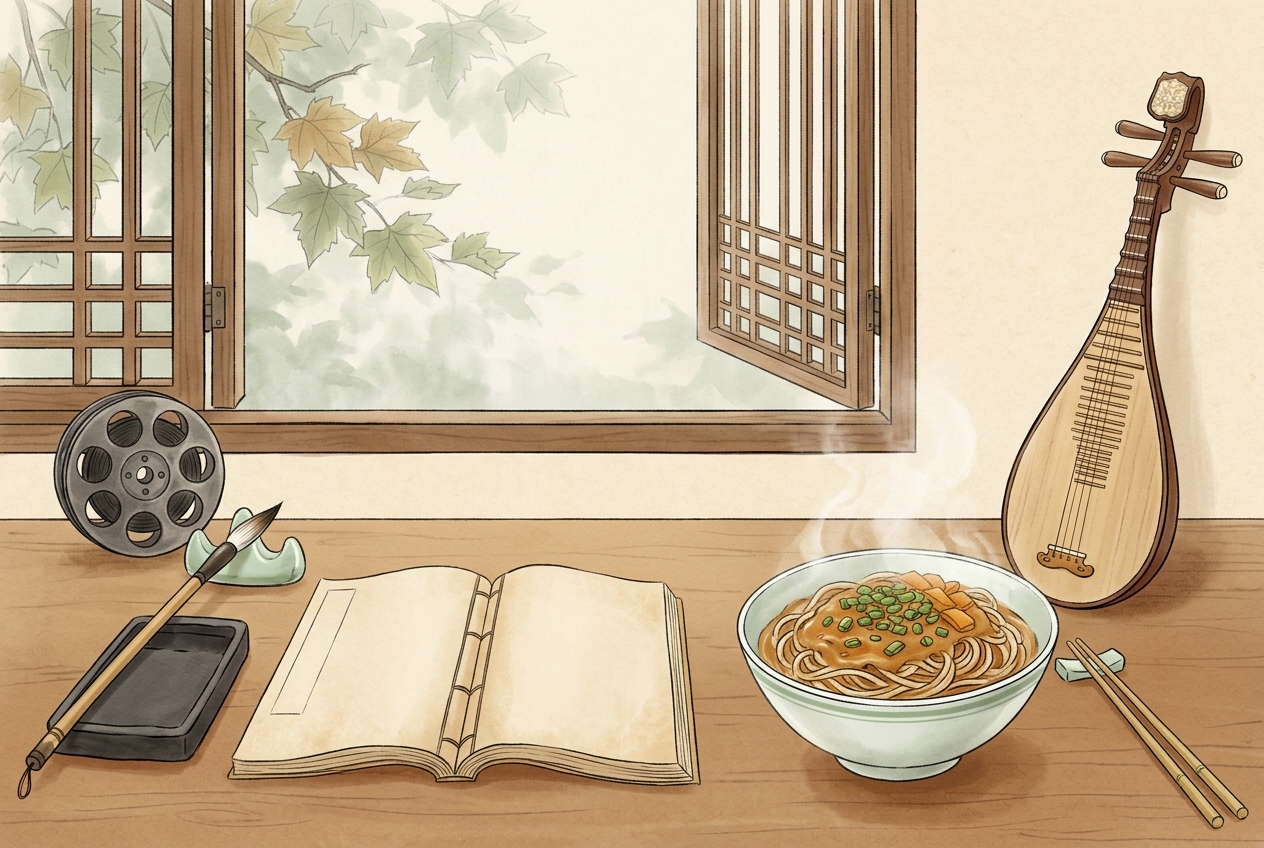
China’s Watercolor Stronghold: Pen-and-Wash Sketches of Old Hankou
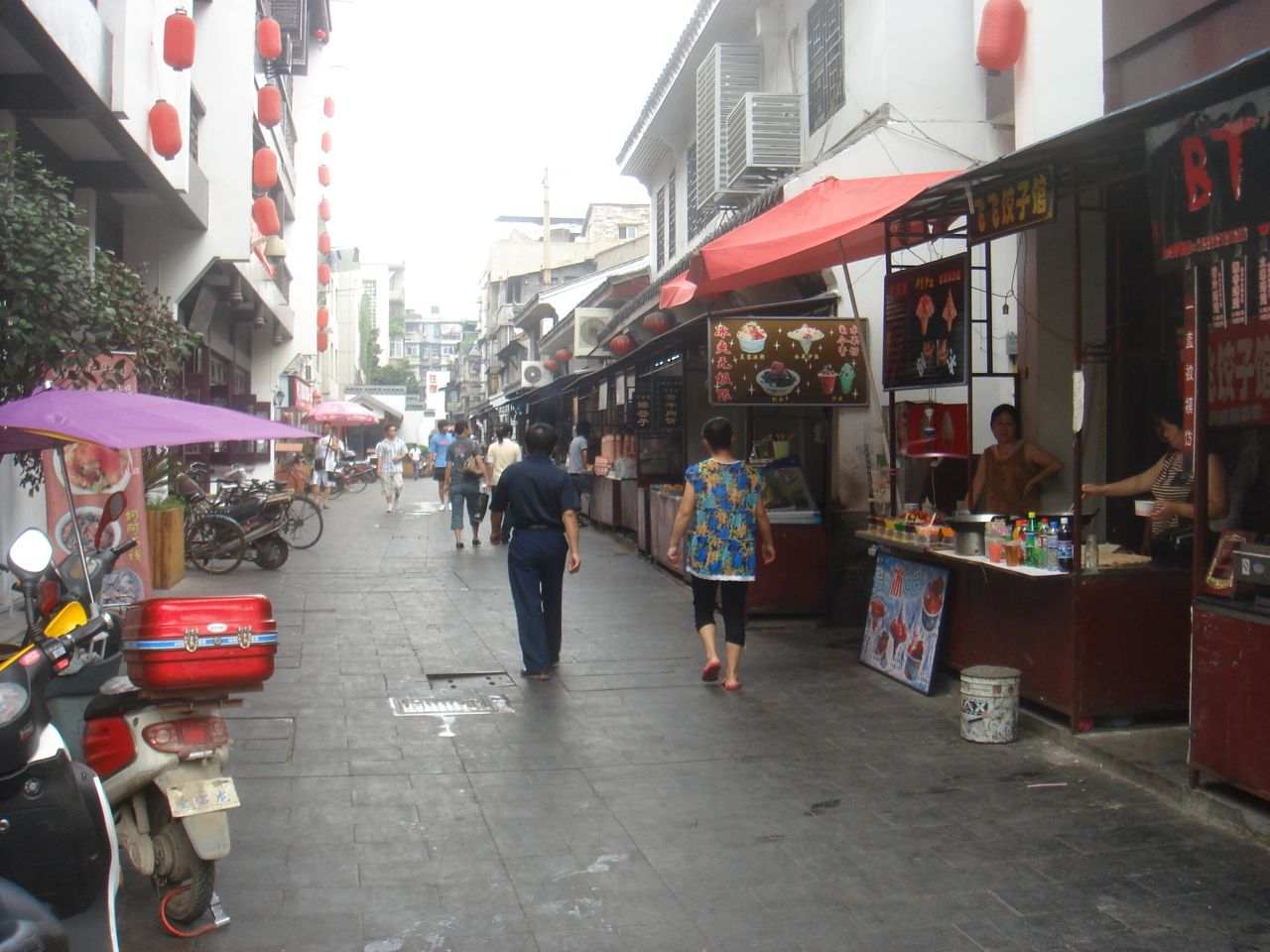
Within Chinese fine-art circles, Wuhan holds a singular distinction as mainland China’s foremost stronghold of contemporary watercolor (shuicaihua zhongzhen). Nurtured by the century-old Hubei Institute of Fine Arts, the Wuhan Art Museum, and generations of master watercolorists such as Liu Shouxiang and Chen Yongjin, fluid water-based media feel almost indigenous to a metropolis surrounded by two rivers and a hundred lakes. When local painters, architects, and urban sketchers carry folding stools into historic Hankou lanes like Changdi Street, Xian’an Fang, Tongxing Li, and Shanhaiguan Road at daybreak, pen-and-watercolor wash (gangbi dancai) becomes their medium of choice.
Visually, a traditional Hankou Guozao corner offers a textbook study in structural contrast. Overhead, early-twentieth-century lifen rowhouses present intricate red-brick archways, carved stone lintels, wooden shutters, and cat’s-cradles of overhead utility wires—ideal subjects for expressive waterproof fountain-pen linework (fude nibs). Below, around the roaring noodle cauldron, rigid architecture dissolves into billowing white vapor. Seasoned Wuhan watercolorists leave the cotton paper completely unpainted at the center of the stall, laying cool ultramarine and lavender-gray washes into surrounding alley shadows so the raw white paper glows like sunlit steam. Warm touches of yellow ochre, burnt sienna, and cadmium red then bring the oiled mounds of parboiled noodles, enamel basins of sesame paste, and low plastic stools to vivid life.
From fine-art works like Xiao Feng and Wu Qing’s Morning in Wuhan (Wuhan de Zaochen) and Professor Hu Chaoyang’s celebrated plein-air studies of historic Hankou architecture to grassroots urban-sketching anthologies documenting vanishing neighborhood stalls, pen-and-wash art serves as a tender visual preservation project—recording chipped porcelain bowls, bamboo strainers, and elders balancing bowls atop vintage bicycles before glass skyscrapers replace old flagstones.
Xuan-Paper Mist and Carved Wood: Ink Scrolls & Printmaking
While sketchbooks excel at intimate street corners, Hubei’s fine-art academies have also brought Wuhan’s morning noodle ritual onto monumental gallery walls through traditional freehand figure painting (xieyi renwu guohua) and woodblock printmaking (muke banhua).
Featured in major provincial exhibitions and retrospectives aligned with the Wuhan Art Museum’s Old Wuhan · New Wuhan, painter Liu Xiulin’s large-scale Chinese ink scroll Wuhan · Guozao demonstrates how classical brush-and-ink techniques adapt effortlessly to boisterous street life:
- Ink Diffusion as Cauldron Vapor: Exploiting absorbent raw xuan paper (shengxuan), the artist uses wet pomo (“broken-ink”) washes once reserved for mountain clouds to render swirling morning steam rising beneath tarpaulin awnings.
- Mineral Earth Tones for Sesame Richness: Departing from pale literati palettes, warm mineral ochre (zheshi), rattan yellow (tenghuang), and roasted ink capture the unmistakable amber-brown sheen of stone-ground sesame paste and golden mianwo rings.
- Calligraphic Vitality in the Crowd: Dozens of townsfolk—burlap-aproned masters shaking bamboo baskets, schoolchildren counting coins, construction workers hunched over tall stools, and chatting grandmothers—are drawn with brisk center-tip brushstrokes (zhongfeng), turning an ordinary Tuesday morning into a modern Hubei echo of Along the River During the Qingming Festival.
Meanwhile, Hubei’s printmaking lineage—exemplified by works such as Li Nan’s woodcut Beneath Morning Light (Chenguang Xia)—harnesses stark gouge marks on pearwood blocks. Crisp white knife-lines radiating against deep black ink transform 4:30 AM noodle artisans tending pre-dawn fires into heroic, sculptural silhouettes honoring working-class labor.
Viral Empathy: From “Cheer Up, Reganmian!” to Anatomical Food Art
In the digital era, tablet illustration and webcomics carried Reganmian out of galleries and into the hearts of hundreds of millions. No single image in modern Chinese food history achieved deeper emotional resonance than illustrator Chen Yuting’s (@Chen Xiaotao momo) January 30, 2020 cartoon, All China’s Delicacies Cheer for Wuhan Reganmian.
| Visual Medium | Notable Artists / Works | Core Technical Language | Depiction of Steam & Sesame Noodles | Cultural & Aesthetic Role |
|---|---|---|---|---|
| Pen & Watercolor Sketch | Xiao Feng & Wu Qing (Morning in Wuhan); Wuhan Urban Sketchers | Waterproof ink linework + wet-on-wet transparent washes | Reserved white paper glowing as steam against ochre noodle mounds | Archiving historic lifen alleyways & artisanal postcards |
| Xieyi Chinese Ink Scroll | Liu Xiulin (Wuhan · Guozao) | Calligraphic brushlines & pomo ink diffusion on raw xuan paper | Panoramic neighborhood crowd; classical cloud-wash steam | Museum-grade social realism celebrating civic vitality |
| Woodblock Printmaking | Li Nan (Beneath Morning Light) & Hubei Printmakers | Chisels & V-gouges on woodblock; high-contrast black ink | Stark backlit dawn rays & sculptural artisan silhouettes | Monumental tribute to pre-dawn street laborers |
| Anthropomorphic Webcomic | @Chen Xiaotao momo (Cheer Up, Reganmian!, 2020) | Soft digital linework & warm pastel character design | Curly noodle-haired child topped with scallion & radish confetti | Historic national solidarity icon viewed billions of times |
| Exploded-View Culinary Art | Contemporary food illustrators & editorial designers | Digital impasto painting & orthographic cutaway diagrams | Eight suspended layers from spiced lushui to stone-ground paste | Global food journalism, packaging & museum infographics |
Using disarmingly gentle character design, Chen personified beleaguered Wuhan as a plucky little “Reganmian child” tucked into a hospital bed—sporting springy golden alkaline noodles for curls, tiny green scallions and red radish dices like hairpins, and a small adhesive bandage on one cheek. Pressed against the windowpane outside stood personified dishes from every province—Tianjin Jianbing, Sichuan Hotpot, Beijing Roast Duck, Shaanxi Roujiamo, and Cantonese Har Gow—holding up signs reading “Hang in there, Reganmian!”
On April 8, 2020, the morning Wuhan’s 76-day lockdown lifted, Chen Xiaotao published the beloved sequel: cherry blossoms blooming outside the window as a healthy, smiling Reganmian peels off the bandage and sits upright over a steaming bowl—captioned simply, “Reganmian, long time no see!”
Today, alongside emotional character comics, exploded-view culinary illustration thrives across Wuhan’s boutique noodle shops and design magazines: richly textured digital paintings suspend the grease-proof paper bowl, star-anise soy broth, 1.8mm golden strands, velvety sesame ribbon, chili oil, pickled cowpeas, and diced radish in midair—turning culinary anatomy itself into contemporary pop art.
- Wuhan Art Museum Exhibition Catalogue, Old Wuhan · New Wuhan: From Hankou Treaty Port to Urban Renewal
- Hubei Fine Arts Archives: Liu Xiulin’s Wuhan · Guozao (Chinese Ink), Xiao Feng & Wu Qing’s Morning in Wuhan, Li Nan’s Beneath Morning Light (Woodcut)
- Hankou Customs House Museum, Hu Chaoyang’s Old Wuhan Architectural Plein-Air Series
- People’s Daily & Beijing Daily Features on @Chen Xiaotao momo’s Reganmian Solidarity Illustrations, 2020
❓ Frequently Asked Questions
Why is Wuhan celebrated across China for watercolor and pen-and-wash street scenes?
Anchored by the century-old Hubei Institute of Fine Arts and Wuhan Art Museum, Wuhan is recognized nationally as China’s premier stronghold of watercolor painting. Its humid river atmosphere and 1920s Hankou red-brick lanes (lifen) lend themselves naturally to crisp ink linework paired with luminous watercolor washes.
How do traditional Chinese ink painters depict bustling street breakfast stalls?
In acclaimed works such as Liu Xiulin’s Chinese ink painting Wuhan · Guozao, artists exploit raw xuan paper’s natural water diffusion (pomo) to evoke billowing cauldron steam while using calligraphic brushlines and warm burnt-sienna mineral pigments to render lively crowds and glossy sesame noodles.
Who illustrated the famous 2020 'Cheer Up, Reganmian!' cartoon?
Young illustrator Chen Yuting (@Chen Xiaotao momo) created the viral drawing in late January 2020, personifying Wuhan as an endearing curly-haired 'Reganmian child' in a hospital bed cheered through the window by regional dishes from across China—followed on April 8 by a joyful sequel celebrating Wuhan’s reopening.
✦ Cross-Referenced Chapters
Old Hankou Wharf & Bamboo-Bed Street Roots
How dockworker labor intensity and summer bamboo-bed alleys shaped Reganmian’s brothless, calorie-dense, 10-second format.
2020 Collective Memory: "Cheer Up, Reganmian!"
How personified noodle illustrations united a nation in solidarity and made the first post-lockdown bowl an enduring historical symbol.
Cultural Merch & Plush Collectibles: Wuhan’s "Guozao" Toy Craze
Exploring viral interactive plush noodle bowls, enameled fridge magnets, commemorative postmarks, and museum gift design.
Infographic Atlas: Eight-Layer Bowl Anatomy & Process Diagrams
Architectural cross-sections dissecting all eight flavor strata from bottom spiced soy broth to top scallion confetti.