Sounds of Jiangcheng: Wuhan Folk Ballads, Dialect Rap & Dawn Soundscapes
Acoustic Guitars at Hanyangmen, Hard-Hitting Wuhanese Flows, and the Percussion of 6:00 AM Cauldrons
An audio-cultural journey through Feng Xiang’s tender Wuhan-dialect folk ballads, fiery local hip-hop and indie rock bands, and the acoustic ecology of morning street noodle stalls.
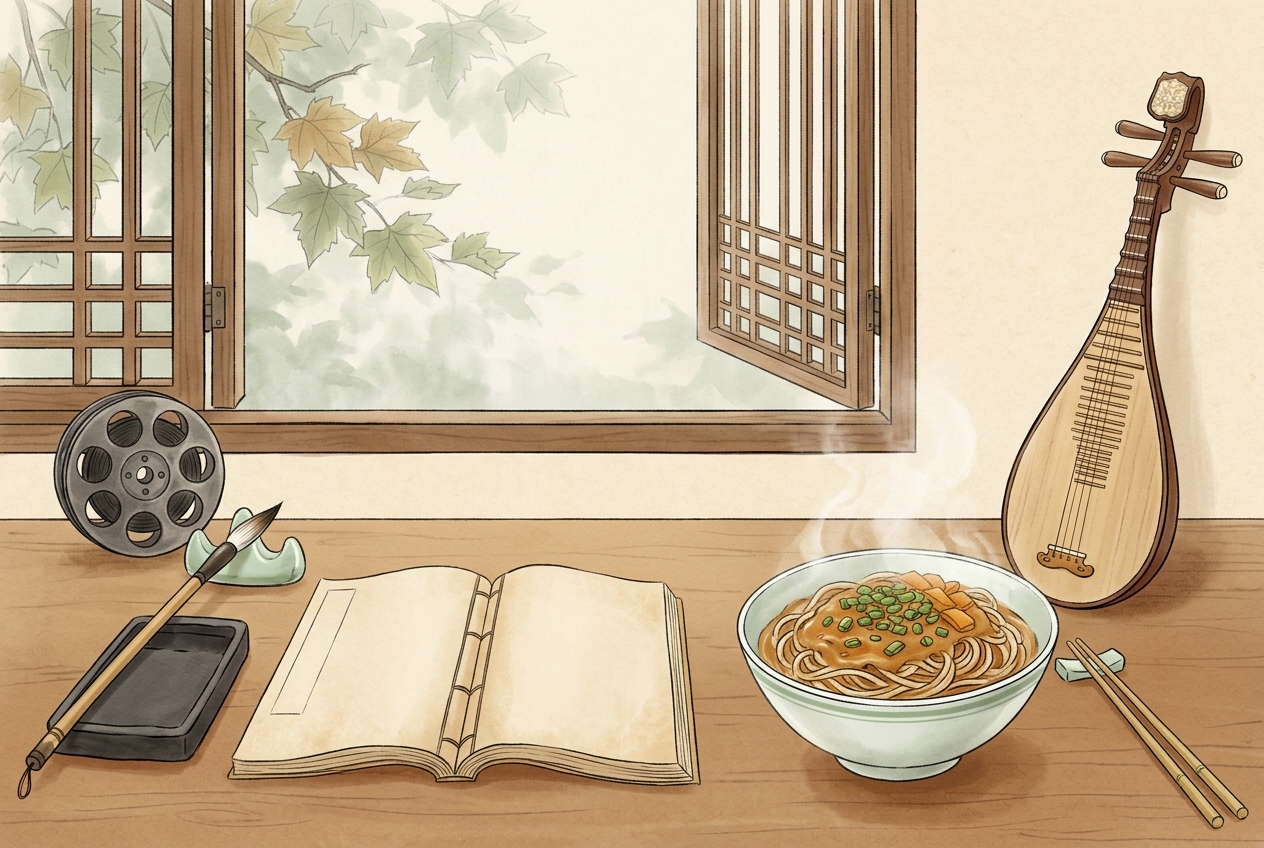
Fingerpicked Nostalgia: Feng Xiang and the Rise of Wuhan Urban Folk
For decades across China, Wuhan’s local dialect suffered from a reputation for sounding fierce, rapid-fire, and confrontational—the acoustic armor of dockworkers shouting over river winds. That perception shifted dramatically in the mid-2010s when Wuhan singer-songwriter Feng Xiang, a former clinical psychiatrist with an acoustic guitar and a warm baritone, began composing urban folk ballads entirely in gentle neighborhood Wuhanese.
Across songs like Hanyangmen Garden (Hanyangmen Huayuan, celebrating clay-pot lotus root soup simmering in old Wuchang alleys) and Liudu Bridge (Liuduqiao, mourning the vanishing commercial lanes of Old Hankou), Feng Xiang turned municipal memory into nationwide lullabies. In his beloved civic anthem Wuhan Ya (“Child of Wuhan”), he embeds a verbatim morning street-stall exchange right into the bridge:
“Give me a bowl of Reganmian—(Coming right up!) / Put a bit more sesame oil, go easy on the salt, / Plenty of green scallions, hold the garlic water, / And fresh bean-starch sheets stir-fried with cured pork…”
To anyone raised in Wuhan’s Three Towns, those four lines pack overwhelming sensory precision. Regulars at neighborhood windows never consult printed menus; they rattle off bespoke condiment calibrations—requesting extra small-mill sesame oil to lubricate the thick paste while skipping pungent crushed-garlic water (dasuanshui) before morning office meetings. By punctuating the line with a booming stallkeeper’s shout—“Hao!” (“Got it!”)—over warm nylon-string arpeggios, Feng Xiang revealed the deep tenderness hiding beneath Wuhan’s brusque exterior.
Hard-Edged Phonetics: Wuhan-Dialect Hip-Hop and Punk Lineage
Cross the Yangtze toward Wuhan’s university district around Lumo Road—home since the late 1990s to legendary indie venues like VOX Livehouse and pioneering punk bands such as SMZB—and Reganmian takes on a far rowdier sonic identity. Long hailed as mainland China’s “City of Punk” and a powerhouse of independent rock and hip-hop, Wuhan has inspired young rappers, beatmakers, and outfits like the local Reganmian Band (热干面乐队) to transform breakfast slang into high-octane street anthems.
From a phonetic standpoint, Wuhan dialect (classified under the Wu-Tian subgroup of Southwest Mandarin) could hardly be better engineered for hip-hop flow:
- Crisp Plosives and Steep Falling Contours: Historical entering-tone syllables merged into a rising second tone while fourth-tone syllables plunge sharply downward, giving everyday Wuhanese a built-in percussive bounce (qikou) that snaps cleanly onto 90–98 BPM boom-bap snares or double-time trap hi-hats.
- Colorful Four-Character Street Idioms: Expressions heard daily at noodle windows—guozao (morning feast), xufu (utterly satisfying), bu-fu-zhou (refusing to yield), and er-liang quanliao (100g bowl with the works)—supply natural multisyllabic internal rhymes.
- Numbered Street-Name Roll Calls: Echoing traditional folk patter, Wuhan rappers delight in chaining sequential Hankou street names—from Yiyuan Road (First), Eryao Road (Second), and Sanyang Road (Third) all the way through Qilimiao, Bayi Road, and Shilipu—before dropping into a chorus celebrating a midnight or 6:00 AM paper bowl of sesame noodles.
| Sonic / Musical Genre | Key Artists & Venues | Tempo & Timbral Feel | Signature Noodle Imagery & Sounds | Emotional Register |
|---|---|---|---|---|
| Wuhan Urban Folk | Feng Xiang (Wuhan Ya, Liudu Bridge, Hanyangmen Garden) | 68–80 BPM; warm fingerstyle acoustic guitar | Bespoke window orders (“Extra oil, light salt, no garlic”) | Intergenerational tenderness, childhood lanes & diaspora longing |
| Wuhan-Dialect Hip-Hop | Local hip-hop collectives & independent MCs | 90–140 BPM; heavy 808 bass & crisp snare syncopation | Cross-tossing paper bowls, numbered street roll calls, bu-fu-zhou pride | Wharf-born swagger, working-class candor & youth energy |
| Indie Rock & Punk | Reganmian Band, Lumo Rd livehouse circuit | 145+ BPM; overdriven guitars & gang vocals | 2:00 AM post-gig street stalls, plastic stools & chili oil | Unfiltered camaraderie, anti-elitist grit & nocturnal vitality |
| Dawn Stall Soundscape | Neighborhood alleys, Yangtze ferries & Hankou Bund | Organic 5:00–8:30 AM polyrhythm | Bamboo strainer triple-taps, sizzling oil, 1924 Customs bells | The living physiological pulse of a waking river metropolis |
Acoustic Ecology at 6:00 AM: Deconstructing the Dawn Soundscape
Even without a single guitar chord or drum machine, a Wuhan breakfast lane between 5:30 and 8:00 AM performs an intricate, unconducted percussion symphony. Applying Canadian composer R. Murray Schafer’s classic principles of soundscape ecology (keynote sounds, sound signals, and soundmarks), field recordists identify three distinct acoustic strata around a traditional Reganmian cauldron:
1. Keynote Sounds: Boiling Cauldrons and Sizzling Mianwo
Beneath all conversation hums a continuous thermal drone: thirty gallons of alkaline-tinted water rolling inside a wide steel cauldron (gudu-gudu), paired two feet away with the bright, high-frequency hiss (zila-zila) of rice-and-soybean batter hitting 200°C rapeseed oil in the mianwo donut wok. Together, steam roar and oil sizzle establish the comforting acoustic floor of a Wuhan morning.
2. Foreground Signals: The Bamboo Strainer’s Triple Tap
Cutting sharply through that ambient bed is the signature percussive motif of the noodle master: after plunging a conical woven bamboo basket into boiling water for six seconds, the artisan raps the bamboo rim briskly against the cauldron’s edge—tok! tok-tok!—shaking free excess water so the sesame paste will cling tight. Layered atop this wooden beat come the metallic scrape of an iron ladle circling an enamel sesame-paste basin, the soft velvety shhh-shhh of wooden chopsticks folding thick sauce inside a paper bowl, and overlapping bursts of dialect shorthand shouted from sidewalk to counter.
3. Civic Soundmarks: Customs House Bells and River Horns
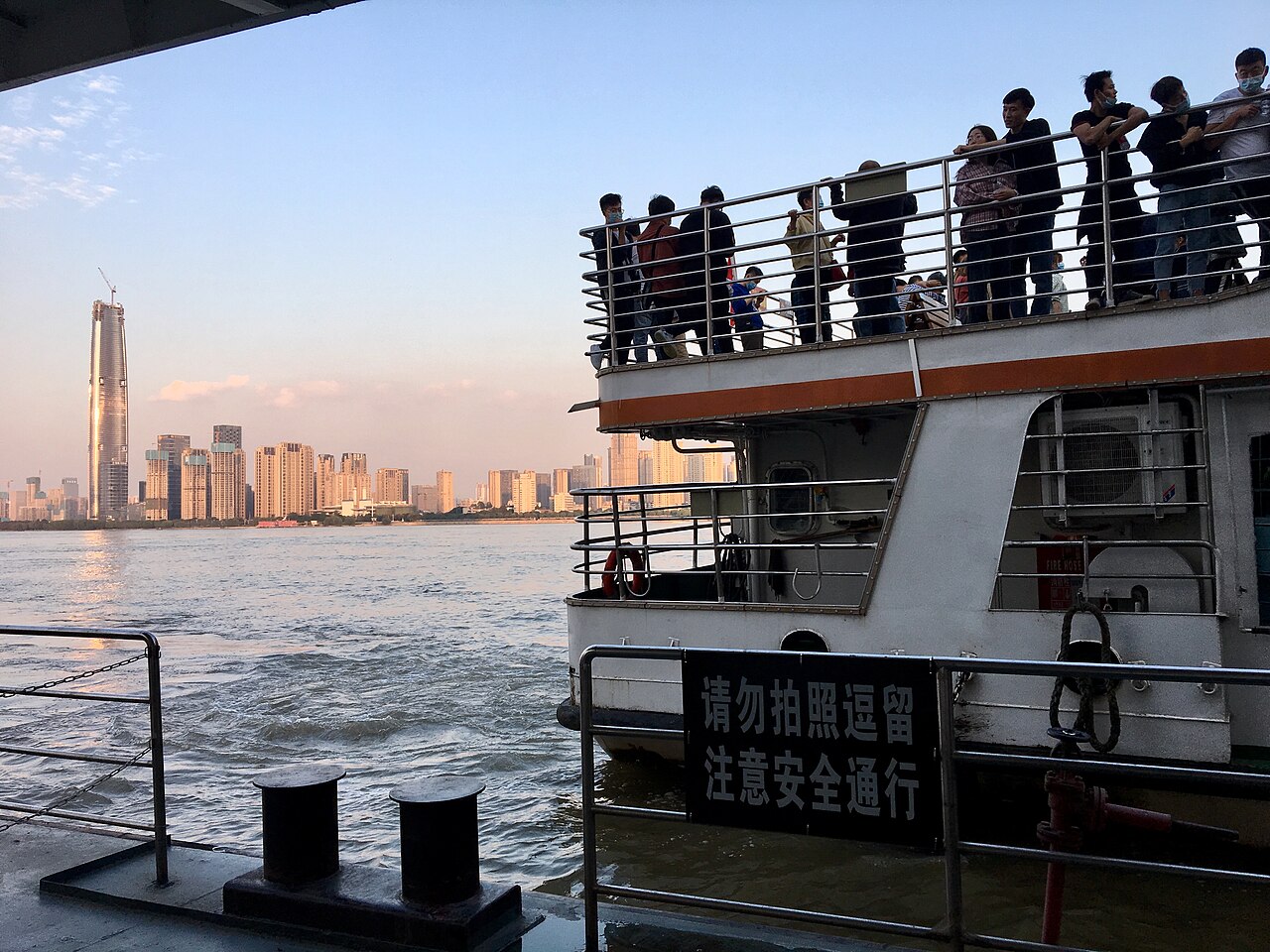
Zooming out across the Hankou skyline, two historic municipal soundmarks drift down into the noodle steam: the resonant Westminster chimes of the 1924 Hankou Customs House (Jianghanguan) marking the hour, answered seconds later by the deep, brassy foghorn of a commuter ferry pushing off across the Yangtze toward Wuchang. Where bronze clock-tower bells, riverboat horns, and bamboo noodle strainers harmonize in morning mist, Wuhan’s true civic anthem plays out anew every dawn.
- Feng Xiang, Hanyangmen Garden (Hanyangmen Huayuan), Wuhan Ya, and Liudu Bridge Discography
- Wuhan Indie & Hip-Hop Archives: Lumo Road VOX Livehouse, Reganmian Band & Dialect Rap Anthologies
- R. Murray Schafer, The Soundscape: Our Sonic Environment and the Tuning of the World, 1977
- Zhu Jiansong, Studies in Wuhan Dialect (Wuhan Fangyan Yanjiu), Wuhan Publishing House
❓ Frequently Asked Questions
How does folk singer-songwriter Feng Xiang weave Reganmian into his music?
A former psychiatrist turned Wuhan’s beloved folk troubadour, Feng Xiang sings entirely in gentle Wuhan dialect. In his signature anthem Wuhan Ya ('Child of Wuhan'), he incorporates an authentic spoken-sung breakfast order—'Give me a bowl of Reganmian: extra oil, light on salt, plenty of green onions, hold the raw garlic!'—evoking instant nostalgia for locals worldwide.
Why is Wuhan dialect especially prized in Chinese hip-hop and punk rock?
Linguistically part of the Wu-Tian branch of Southwest Mandarin, Wuhan dialect features punchy consonant attacks, dramatic pitch drops, and brisk street idioms like 'bu-fu-zhou' (never back down). Combined with Wuhan’s historic status as China’s punk-rock capital, the dialect locks naturally into syncopated rap flows.
What defines the acoustic soundscape of a Wuhan morning noodle stall?
Analyzed through R. Murray Schafer’s soundscape framework, a 6:00 AM Wuhan alley layers low-frequency boiling cauldrons and sizzling mianwo oil (keynotes), sharp triple taps of bamboo strainers against pot rims and rapid dialect orders (signals), and distant Yangtze ferry horns alongside Hankou Customs House chimes (soundmarks).
✦ Cross-Referenced Chapters
Wuhan "Guozao" Panorama: A Month Without Repeating Breakfast
Origins of the term "Guozao" and how Wuhan’s exuberant morning street-food universe revolves around Hot Dry Noodles.
Tourist Survival Guide & Local Ordering Slang
Spotting authentic neighborhood stalls versus tourist traps, plus decoding counter slang like "Er-liang Quanliao".
Spoken Folk Arts: Hubei Pingshu Storytelling & Wuhan Crosstalk
Humorous anecdotes and theatrical sketches about eating hot dry noodles from master Hubei storytellers and crosstalk performers.
Wuhan Dialect Glossary: From "Guozao" to "Xufu"
Pronunciation, etymology, and lively street dialogues for over twenty authentic Wuhanese expressions heard at noodle stalls.