Troubleshooting 20 Common Mistakes & Master Proverbs
A Diagnostic Clinic for Clumpy Strands, Bitter Alkali, Broken Sesame Emulsions, Watery Bottoms & Throat-Choking Dryness
The definitive clinical troubleshooting guide to Wuhan Reganmian. Diagnoses 20 classic home and commercial failures across boiling, Danmian cooling, sesame paste emulsification, and bowl assembly—explaining the exact cereal-chemistry or colloidal cause behind each mishap, prescribing instant kitchen rescues, and preserving ten traditional Hankou master proverbs.
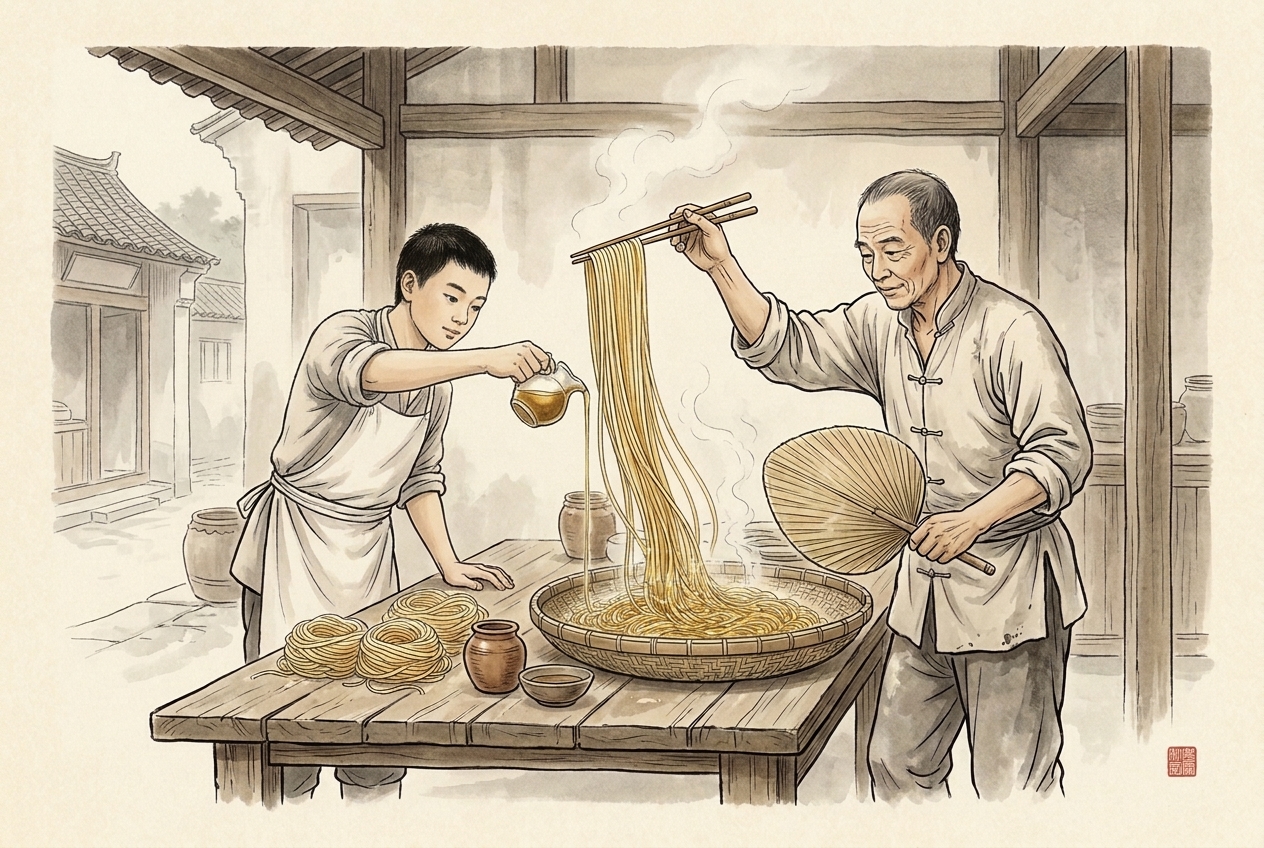
The Noodle Doctor Is In: Why Small Drifts Cause Big Failures
On paper, Reganmian looks disarmingly simple—alkaline wheat noodles, stone-ground sesame paste, spiced soy, and crunchy pickles. On the stove, however, brothless noodles have nowhere to hide. Unlike soup noodles where generous broth masks a 20-second overboil or slightly thick sauce, a five-degree drop in cauldron temperature or one impatient splash of cold water into sesame paste magnifies immediately into gummy bricks, broken curdled sauce, or throat-parching dryness.
Drawing on decades of Hankou shop-floor wisdom and food physics, this diagnostic manual catalogs 20 classic failure modes across four operational departments—complete with root-cause pathology, instant kitchen rescues, and ten rhymes passed down from master to apprentice.
“Read the cauldron’s clarity to judge the flame; feel the chopstick’s drag to gauge the water. Every ruined bowl has a diagnosis—blame neither the sesame seed nor the wheat.” — Apprenticeship creed of old Changdi Street noodle guilds
Department I: Noodle Selection & Initial Boil (Cases 01–05)
Case 01: Cloudy, Starchy Boil Water & Slimy Noodle Skin
- Pathology: Pot too small (<5:1 water-to-noodle ratio) or dropping noodles before a roaring 98°C boil, causing outer starch granules to slough off before gluten coagulates.
- Prescription: Enforce an ≥8:1 rolling boil; dust loose flour off raw strands before entry and swirl gently rather than thrashing during the first 15 seconds.
Case 02: Chalky, Gritty Center After Re-Blanching
- Pathology: Initial Danmian parboil stopped too early (<65% cooked, leaving a thick white band), too raw for a 6-second morning dip to gelatinize.
- Prescription: Nip a test strand at 60 seconds—pull only when the opaque core shrinks to a tiny pinhead (bai xin, 75%–80% cooked). Rescue under-parboiled batches by extending the re-blanch to 20–25 seconds.
Case 03: Limp, Mushy Strands That Snap When Tossed
- Pathology: Boiled to 100% full translucency during Danmian, or using low-protein all-purpose white noodles lacking cross-linked alkaline gluten.
- Prescription: Use ≥11.5%-protein alkaline noodles and pull the instant a pinhead core remains—better three seconds early than ten seconds late.
Case 04: Harsh Soapy Smell or Bitter Alkaline Burn
- Pathology: Excess sodium carbonate in raw dough (pH >9.2), boiling with the lid on, or re-blanching in stagnant, alkali-saturated parboil water.
- Prescription: Boil uncovered in wide water so volatile ammonia/alkali vents; always re-blanch in fresh clean boiling water; balance the bowl with 4ml aged black vinegar + 1g sugar.
Case 05: Baking-Soda Hack Noodles Turn Yellow Yet Mushy
- Pathology: Overdosing baking soda (>10g/L) or using fragile low-gluten flat noodles whose starch ruptures in high-pH water.
- Prescription: Pair 5–6g baking soda per liter strictly with high-protein round wheat noodles or
#3 durum spaghettini, pulling at 75% doneness.
Department II: Danmian Cooling & Storage (Cases 06–10)
Case 06: Parboiled Noodles Fuse Into a Solid Cake Within 30 Minutes
- Pathology: Pouring oil onto soaking-wet 95°C noodles right out of the pot—trapping steam underneath an oil seal where retrograding starch welds strands together.
- Prescription: Vent steam before oiling! Fan and toss bare hot noodles for 25–30 seconds until vapor clears (~60°C), then thread in oil and fan below 32°C.
Case 07: Slick, Slippery Strands That Shed Sesame Sauce
- Pathology: Rinsing parboiled noodles under cold tap water (waterlogging surface starch) or drowning them in >6% oil.
- Prescription: Zero cold-water rinsing—cool exclusively by forced air evaporation and cap oil strictly at 3%–4% of wet noodle weight.
Case 08: Stale, Heavy Rancid-Oil Odor After 3 Hours
- Pathology: Tossing with raw unrefined soybean/rapeseed oil, or holding 100%-sesame-oiled batches next to a hot summer stove.
- Prescription: Pre-heat neutral vegetable oil to 170°C and cool before blending 3:1 with toasted sesame oil; store summer batches below 10°C if held past 3 hours.
Case 09: Refrigerated Overnight Danmian Cracks & Shatters
- Pathology: Exposed refrigerator air dehydrates starch right inside the 0°C–4°C peak retrogradation window.
- Prescription: Lay a lightly dampened cloth over cooled strands inside an airtight container; give stiff chilled noodles a 15-second steam kiss before their 8-second boiling plunge.
Case 10: Bottom Layer of Commercial Tote Crushed Into Doughy Mats
- Pathology: Packing warm (>38°C) noodles deeper than 25cm, compressing bottom strands under heat and gravity.
- Prescription: Cool below 30°C before crating and never stack deeper than 15 cm in breathable gauze-lined totes.
Department III: Sesame Paste & Colloids (Cases 11–15)
Case 11: Pure Sesame Paste Seizes Into Concrete Putty
- Pathology: Adding cold water before oil and panicking at the peak viscosity of water-in-oil to oil-in-water phase inversion.
- Prescription: Whisk in 30% toasted sesame oil first, then add 45°C warm water in three stages clockwise—push past the stiff ball and it melts into silk.
Case 12: Curdled “Cottage-Cheese” Paste Weeping Oil (Broken Emulsion)
- Pathology: Dumping cold water all at once or reversing stirring directions mid-shearing.
- Prescription: Warm over a 55°C water bath, splash in 1 tbsp hot starchy noodle water, and whip clockwise for 40 seconds to re-emulsify.
Case 13: Runny, Watery Sesame Sauce Pooling at the Bottom
- Pathology: Over-thinning beyond a 1:1 water-to-paste ratio, dropping yield stress too low to cling.
- Prescription: Whisk in 1–2 teaspoons of undiluted pure sesame or smooth peanut paste until a lifted spoon trails a 1.5cm satin ribbon.
Case 14: Flat Aroma or Bitter Tannic Finish in Sesame Paste
- Pathology: Adulterated cheap paste bulked with soy flour, or over-charred sesame hulls.
- Prescription: Buy 100% stone-ground roasted sesame paste, blend 80/20 with smooth roasted peanut paste, and dissolve 1% sugar during thinning to round off hull bitterness.
Case 15: Sharp Sour Odor in Shelf-Stable Instant Wet Pouches
- Pathology: Un-neutralized food-grade lactic acid preservative (pH 4.2).
- Prescription: Boil wet-pouch noodles for 75 seconds with a 1-gram pinch of baking soda to neutralize sourness completely.
Department IV: Blanching, Seasoning & Tossing (Cases 16–20)
Case 16: Half an Inch of Murky Soy Soup Flooding the Bowl Bottom
- Pathology: Skipping the “three-toss, two-tap” wrist snap or adding water-weeping leafy greens.
- Prescription: Snap-drain sharply after blanching and stick to moisture-free dehydrated radish dices and dry-sautéed sour cowpeas.
Case 17: Bowl Turns Parched & Throat-Choking Halfway Through
- Pathology: Over-draining to zero moisture, omitting spiced soy Lushui and garlic water, or plating into an ice-cold ceramic bowl.
- Prescription: Scald serving bowls with boiling water first; include 18ml warm Lushui + 10ml garlic water; cross-toss completely within the first 10 seconds.
Case 18: One-Dimensional Salty Soy Flavor Without Depth
- Pathology: Pouring raw soy sauce straight from the bottle instead of botanical-infused Lushui and skipping fresh garlic water.
- Prescription: Simmer soy sauce for 3 minutes with star anise, cassia, bay leaf, and rock sugar, and always add freshly mashed raw garlic water.
Case 19: Limp, Soggy, Overly Salty Pickles
- Pathology: Scooping wet pickled radish or cowpeas straight out of their brine pouch.
- Prescription: Chop pickles, dry-sear in a hot skillet for 2 minutes to drive off brine moisture, and toss with a drop of sesame oil, sugar, and chili flakes.
Case 20: Tough, Gray, Rubbery Sliced Beef Topping
- Pathology: Slicing with the grain, skipping egg-white/starch velveting, or boiling past 20 seconds.
- Prescription: Slice tenderloin 2mm thin against the grain, velvet with soy, white pepper, egg white, cornstarch, and an oil seal, and swish in 98°C stock for just 8–12 seconds until blush-pink.
Master Quick-Reference Chart & Ten Hankou Guild Proverbs
| Symptom | Responsible Stage | Exact Corrective Benchmark |
|---|---|---|
| Clumpy, immovable brick | Overboil / oiling over steam | Pull at 75%–80% bai xin; vent steam 30s before 3.5% oil |
| Stiff putty or curdled paste | Phase-inversion mishandling | 30% sesame oil first, then 3 stages of 45°C water one-way |
| Watery soy puddle at bottom | Sloppy blanch drain | 6–8s at ≥98°C + “three tosses, two taps” (6g film only) |
| Dry, throat-choking second half | Cold bowl / missing Lushui | Pre-scald bowl; 18ml warm Lushui + 10ml garlic water |
| Bitter alkali / sour pouch | Excess pH / lactic acid | Wide uncovered boil + 4ml vinegar; 1g baking soda for wet packs |
Ten Traditional Hankou Noodle-Master Proverbs
- On Water Volume: “Better half a cauldron of spare boiling water than a crowded pot of glue.”
- On the White Core: “Snap the golden thread to spot a pinpoint of white; ten seconds longer breaks its spine.”
- On Cooling: “Cold tap water washes away the wheat’s soul; trust only fierce wind to chase the steam.”
- On Oiling: “Never pour oil while white vapor billows; wait for sixty degrees to seal the silk.”
- On Sesame Paste: “Oil before water, stir with the wind; beyond the stiff mountain lies flowing satin.”
- On Master Broth: “In ten spices never let clove play tyrant; one coin of rock sugar wakes natural umami.”
- On Garlic Water: “Fresh garlic crushed in cool boiled water—skip one spoonful and half the spirit sleeps.”
- On Blanching: “Six seconds in July, eight in January; three tosses and two taps leave six grams of dew.”
- On Tossing: “Lift crosswise from the bottom while steam rises; three turns and nine tosses dress every strand.”
- On Pairing: “Thick sesame paste is a forthright wharfman; pair him with tender egg-drop rice wine.”
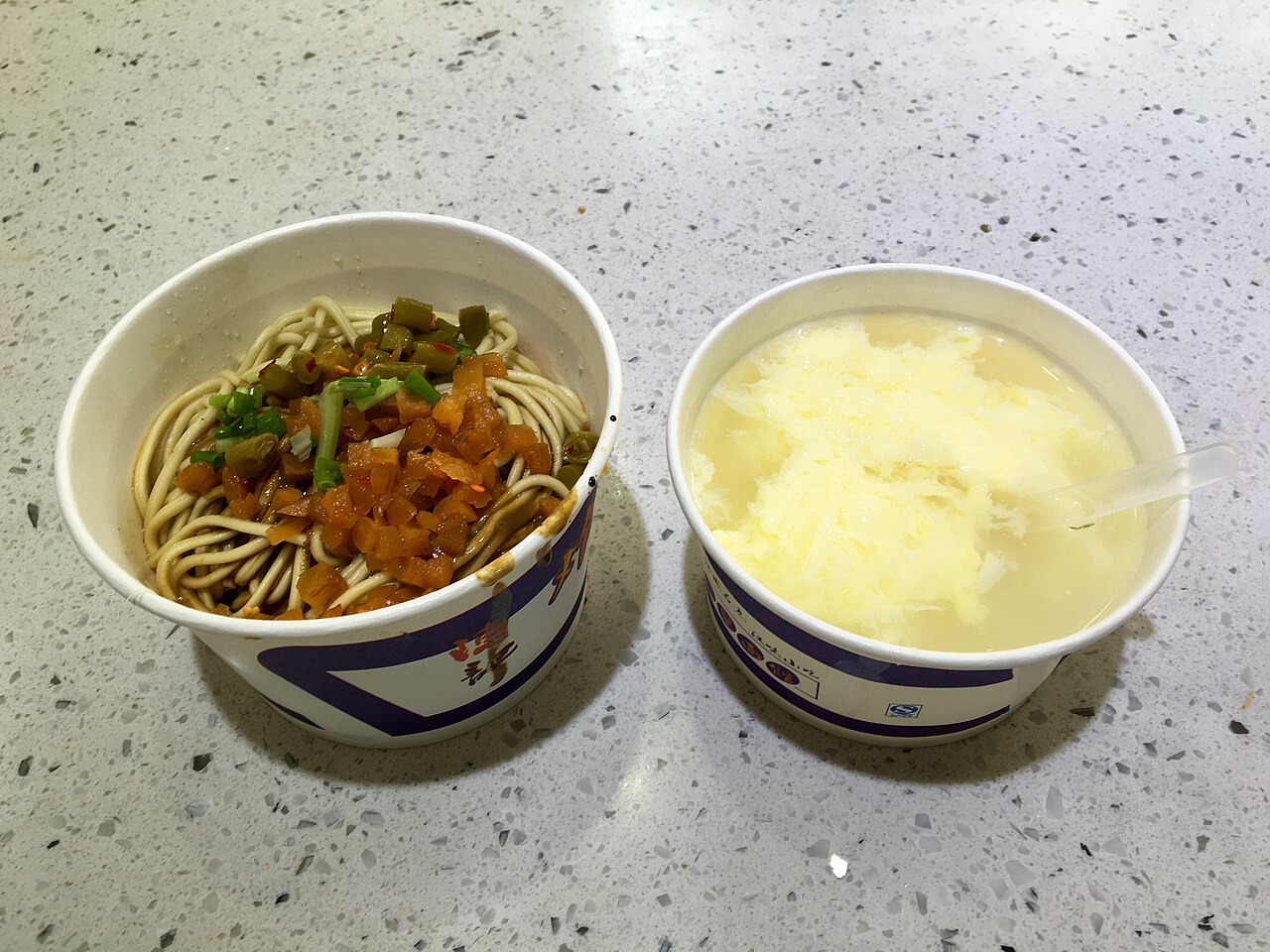
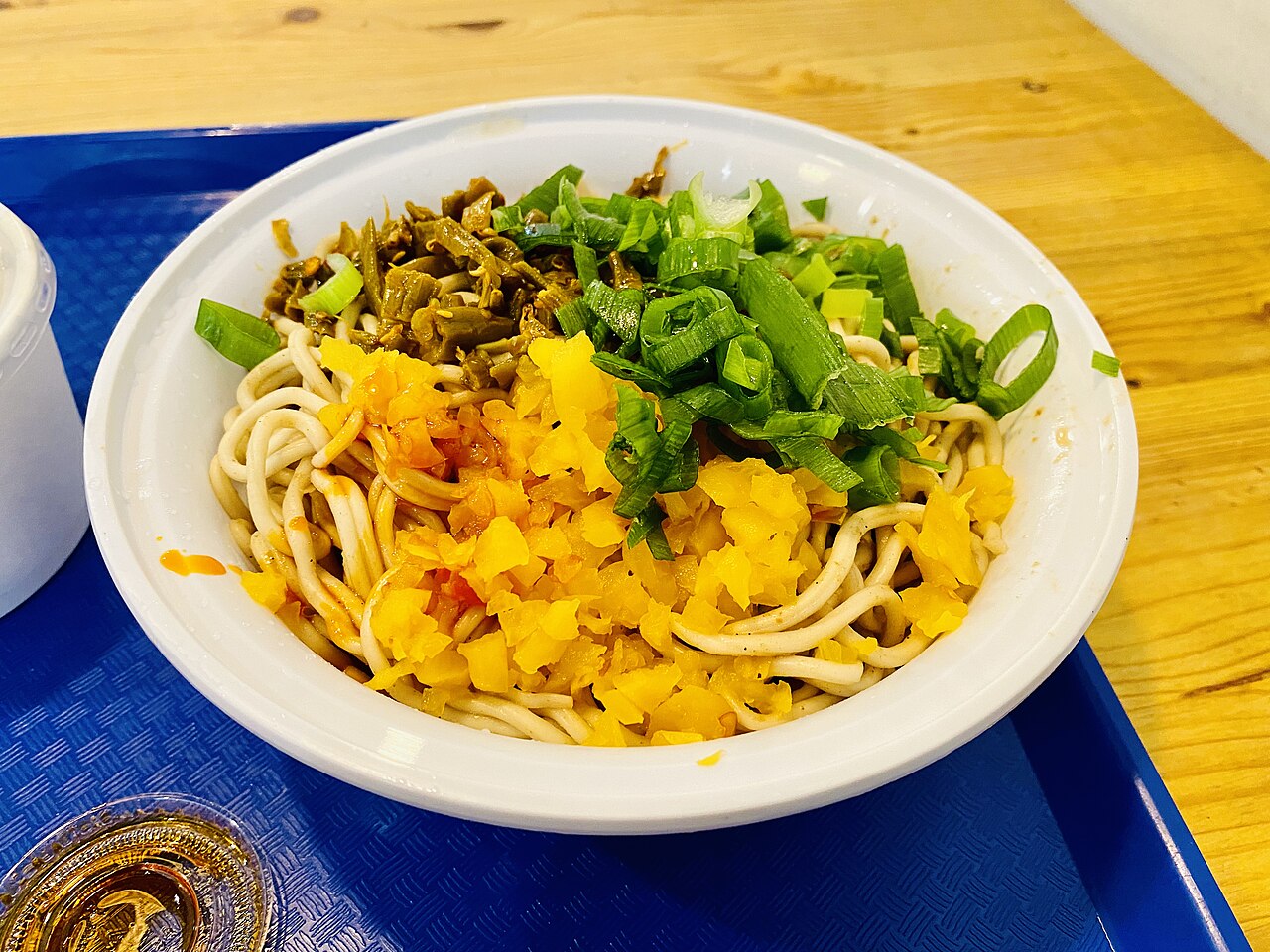
- DB 4201/T 699-2024 Quality Defect Prevention & Control Guidelines for Wuhan Reganmian
- Oral Apprenticeship Records of Hubei Provincial Intangible Cultural Heritage Reganmian Masters
- Cereal Chemistry & Colloid Science of Alkaline Starch Retrogradation and Sesame Protein Emulsion Stability
❓ Frequently Asked Questions
Why do my noodles weld into a solid, immovable brick within sixty seconds of hitting the bowl?
Three culprits conspire here: overboiling past the 80% pinhead white core (leaching sticky amylose glue), pouring oil onto steaming 95°C noodles before venting surface vapor, and spooning un-emulsified paste onto cool strands. Emergency rescue: drizzle 1 tablespoon of boiling noodle water plus 1/2 teaspoon toasted sesame oil around the rim and cross-lift briskly from the bottom.
My sesame paste separated into curdled meal and floating oil! Do I have to throw it away?
Never toss it—broken sesame paste is 100% salvageable! Curdling happens when cold water hits paste too fast or stirring reverses direction mid-emulsion. Set the bowl in a 55°C warm water bath, add 1 tablespoon of hot starchy noodle-boiling water (or 5g sesame oil), and whip aggressively in one direction for 40 seconds with a mini whisk until glossy satin returns.
Why do my fresh alkaline noodles smell harshly soapy or leave a bitter burn in the throat?
Either the factory dosed sodium carbonate too aggressively (pH >9.2) or you boiled them in a cramped, covered pot where volatile alkaline vapors condensed back into the dough. Boil uncovered in at least 10 parts water, re-blanch in fresh clean water rather than murky parboil water, and add 4ml dark vinegar plus a pinch of sugar to the bowl to neutralize bitterness instantly.
Why do the first three bites taste great, but the bottom half of the bowl turns parched and chokes my throat?
Hot alkaline gluten continues absorbing free moisture from the sauce at 70°C ('noodles drinking water'), compounded by skipping bottom spiced soy broth (Lushui) or serving in a cold ceramic bowl. Pre-warm your bowl with boiling water, leave a 6–8g hot moisture film when draining, include 18ml warm Lushui + 10ml garlic water, and toss thoroughly within the first 10 seconds.
Why did my overnight refrigerated Danmian turn dry, brittle, and shatter when re-blanched?
Uncovered fridge airflow dehydrates starch right in the 0°C–4°C peak retrogradation zone. Store cooled Danmian covered with a barely damp towel inside an airtight box; if strands feel stiff next morning, steam them over boiling water for 20 seconds to relax the gluten before their 8-second boiling dip.
Why does my homemade chili oil taste flatly hot without that deep, nutty Wuhan street aroma?
Single-temperature pouring! Authentic Wuhan red oil uses a three-temperature pour over coarse chili flakes, white sesame seeds, and a whisper of star-anise powder: one-third oil at 190°C for toasted char notes, one-third at 150°C for brilliant crimson pigment, and one-third at 120°C for fruity chili sweetness—finished with three drops of black vinegar to flash-bloom volatile esters.
✦ Cross-Referenced Chapters
Secrets of Alkaline Noodles (Jianshuimian)
High-gluten flour specifications, sodium carbonate ratios, 1.8mm round strand geometry, and signature springy chew.
Soul of the Bowl: Stone-Ground Sesame Paste Craft
Low-temperature roasting, stone-mill grinding, and the great culinary debate between 100% pure sesame vs. 80/20 sesame-peanut blends.
The Core Art of "Danmian": Parboiling & Oil-Tossing
Step-by-step mastery of 80%-cooked boiling, fan-cooling, and sesame-oil tossing that keeps alkaline noodles springy for hours.
Street Blanching & The Golden Ten-Second Bowl
Deconstructing the street master’s 6-second boiling dip, triple wrist-shake drain, and rapid sauce ladling.
Foolproof Home Kitchen Recipe (Plus Baking-Soda Hack)
Complete home recipe including homemade sesame sauce emulsion, spiced soy broth, and the baking-soda pantry hack for dried noodles.