Foolproof Home Kitchen Recipe (Plus Baking-Soda Hack)
Exact Gram Measurements, 5-Minute Spiced Soy Broth, Satin Sesame Emulsion, and Turning Pantry Pasta into Alkaline Noodles
A fail-safe home blueprint for authentic Wuhan Reganmian anywhere in the world. Includes gram-precise two-bowl ratios, foolproof sesame paste phase-inversion technique, quick stovetop ten-spice soy broth, and the food-science baking-soda hack that transforms ordinary dried wheat noodles or spaghettini into springy golden alkaline strands.
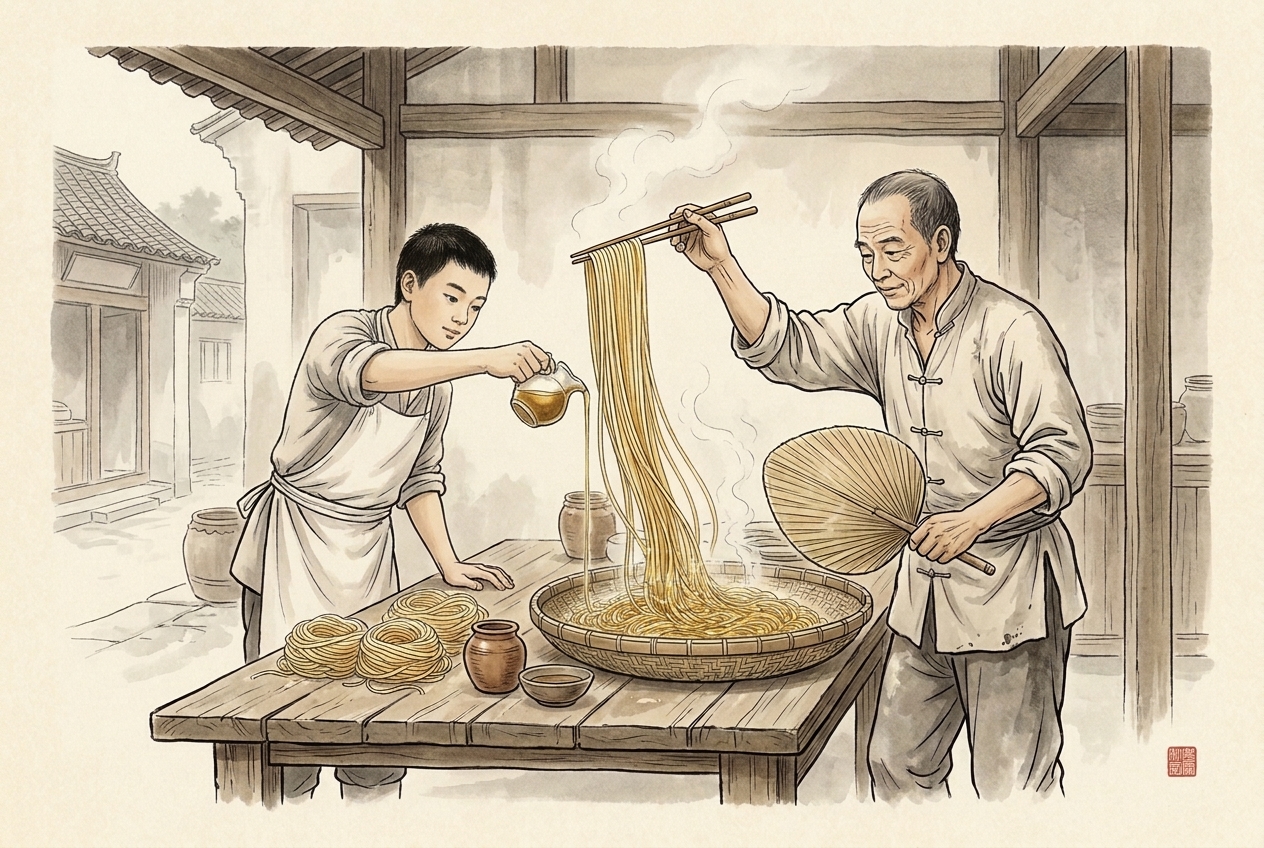
🍜 Standardized Culinary Formula Card
Ingredients
- Fresh Wuhan alkaline noodles: 280g (OR 200g dried round wheat noodles / #3 spaghettini + 6g baking soda per liter of boiling water)
- Chinese roasted white sesame paste (Zhimajiang): 60g
- Small-mill toasted sesame oil: 28g total (10g for noodle tossing, 18g for thinning sesame paste)
- 5-Minute Spiced Soy Broth (Lushui): 30ml light soy sauce, 6ml dark soy sauce, 50ml water, 5g rock or granulated sugar, 1 star anise pod, 1 small piece cassia cinnamon, 1 bay leaf
- Soul Garlic Water: 3 cloves fresh garlic (finely mashed into paste) + 25ml cooled boiled water
- Crunchy Pickles & Herbs: 30g spicy pickled radish dices, 30g pickled sour long beans (chopped), 15g finely sliced green scallions
- Finishing Seasonings: 1/4 tsp ground white pepper, 1/4 tsp fine salt, 1 tsp dark rice vinegar (optional), 1 tbsp Wuhan aromatic chili oil
Key Steps
- Infuse Quick Spiced Soy & Garlic Water: Simmer light soy, dark soy, water, sugar, star anise, cassia, and bay leaf in a small saucepan over low heat for 3 minutes until fragrant; strain and keep warm. Steep mashed garlic in 25ml room-temperature water for 10 minutes.
- Emulsify Satin Sesame Paste: Stir 60g pure sesame paste with 18g toasted sesame oil clockwise until glossy. Whisk in 25–30ml warm water (45°C) and a pinch of salt in 3 separate stages—keep stirring past the initial stiff clumping stage until it relaxes into a pourable ribbon like thick Greek yogurt.
- Home Danmian (or Baking-Soda Boil): Bring 2.5L water to a boil. For fresh alkaline noodles, boil 60 seconds until a pinhead white core remains. For dried wheat noodles or #3 spaghettini, carefully dissolve 15g baking soda into the 2.5L boiling water (watch for fizzing!), boil dried wheat noodles ~3.5 mins (or spaghettini ~6.5 mins) until al dente, drain sharply without cold rinsing, spread on a wide baking sheet, and toss with 10g sesame oil in front of a desk fan (or hairdryer on COOL setting) for 2 minutes.
- Eight-Second Re-Blanch: Return clean water to a rolling boil, warm two serving bowls with hot water and empty them, then dip the oiled noodles in a deep mesh spider for 8 seconds. Shake vigorously three times and divide into the hot bowls.
- Layer & Cross-Toss: Spoon 1.5 tbsp warm spiced soy broth, 1 tbsp garlic water, white pepper, pickled radish, sour long beans, and chili oil over each bowl. Crown with 2 generous tablespoons of satin sesame paste and green scallions. Toss immediately from the bottom up and devour hot.
Bringing a Hankou Alleyway Into Any Home Kitchen
Countless home cooks buy an expensive jar of Wuhan sesame paste, boil a pot of noodles, spoon the paste straight from the jar onto wet strands, and end up heartbroken: the sauce seizes into concrete clumps, watery soy pools at the bottom, and the noodles taste limp and floury. The problem isn’t your stove—it’s missing four small culinary mechanisms that street stalls execute automatically: alkaline strand elasticity, evaporative oil-coating, colloid phase inversion of the sesame paste, and aromatic spiced soy broth (lushui).
Follow the gram-calibrated blueprint below and you can turn out vibrant, deeply nutty, restaurant-grade Reganmian in 25 minutes using nothing exotic—just a stockpot, a baking sheet, and a small desk fan. Better yet, if you live thousands of miles from a Chinese grocery store with fresh jianshuimian, our Baking-Soda Thermal Alkalization Hack lets you engineer authentic springy yellow strands out of pantry dried noodles or Italian #3 spaghettini.
“Without alkali, noodles lack spine; without oil, paste refuses to cling; without spiced broth, the bowl lacks umami; without garlic water, richness turns heavy.” — Four pillars of home Reganmian mastery
Precision Two-Bowl Ratio Matrix
Ditch vague “drizzle to taste” guesswork. Here is the exact quantitative architecture for two classic Wuhan 2-liang bowls:
| Functional Layer | Ingredient | 2-Bowl Weight | Household Measure | Culinary Role |
|---|---|---|---|---|
| Noodle Spine | Fresh alkaline noodles (or dried round noodles) | 280g (200g dry) | 2 generous handfuls | Chewy alkaline bounce & wheat aroma |
| Danmian Film | Toasted sesame oil | 10g | 2 teaspoons | Anti-stick moisture barrier & base scent |
| Velvet Crown | Roasted sesame paste + sesame oil + warm water | 60g + 18g + 28g | 4 tbsp paste + 4 tsp oil + 2 tbsp water | Clinging, ribbon-smooth nutty emulsion |
| Umami Base | Light soy + dark soy + sugar + water + spices | 30ml+6ml+5g+50ml | 2 tbsp light + 1 tsp dark + 3.5 tbsp water | Replaces plain soy with sweet-savory depth |
| Aromatic Lift | Mashed raw garlic + cooled water | 12g garlic + 25ml | 3 cloves mashed + 1.5 tbsp water | Cuts lipid richness with sharp allicin bite |
| Crunch & Heat | Pickled radish + sour long beans + scallion + chili oil | 30g+30g+15g+15g | 2 tbsp each pickle + 1 tbsp chili oil | Acidic crunch & smoky chili warmth |
Conquering the Three Home-Kitchen Bottlenecks
1. The Satin Sesame Emulsion: Pushing Past Phase Inversion
Open a jar of 100% stone-ground sesame paste and stir from the very bottom to reincorporate separated oil. Spoon 60g into a mixing bowl:
- Oil First, Never Water First: Add 18g of toasted sesame oil and stir clockwise. Like dissolves like—the oil lubricates tightly packed roasted seed particles and traps volatile roasted pyrazines.
- Three-Stage Warm Water Addition: Measure 28ml of 45°C warm water and add one-third at a time. On the first splash of water, the paste will suddenly stiffen and ball up like putty. Do not panic! Hydrated seed proteins are forming temporary cross-bridges as the system flips from water-in-oil to oil-in-water. Keep stirring briskly in the same direction and add the second and third splashes of warm water with a pinch of salt. Within 30 seconds the paste surrenders into a glossy, pourable ribbon resembling thick Greek yogurt.
2. Sheet-Pan Danmian & Overnight Meal-Prep Magic
No giant bamboo tray? No problem. Spread parboiled, sharply shaken-dry noodles across a wide rimmed baking sheet and aim a small USB desk fan—or even a clean hairdryer switched strictly to its unheated COOL setting—across the pan while lifting the strands high with chopsticks and drizzling 10g of sesame oil.
Weekday 3-Minute Breakfast Secret: Perform Danmian the night before! Once completely cool (<30°C), seal the oiled noodles in an airtight container in the fridge (good for up to 36 hours). At 7:00 AM, dunk them into boiling water for 8 seconds, toss with pre-made sauce, and eat faster than toast pops from a toaster.
3. The Diaspora Pantry Hack: Baking Soda + Dried Noodles (or #3 Spaghettini)
Cannot find fresh alkaline noodles? Ordinary baking soda (sodium bicarbonate, $\text{NaHCO}_3$) has a mild pH of ~8.3 at room temperature—too weak on its own. However, above 60°C and rapidly at 100°C, baking soda undergoes thermal decomposition right inside your boiling pot:
$$2\text{NaHCO}_3 \xrightarrow{100^\circ\text{C}} \text{Na}_2\text{CO}_3 + \text{H}_2\text{O} + \text{CO}_2\uparrow$$
That reaction converts pantry baking soda into sodium carbonate ($\text{Na}_2\text{CO}_3$)—the exact jianshui alkali used in Wuhan noodle factories!
- Direct Boiling-Pot Method: Add 5 to 6 grams (about 1 level teaspoon) of baking soda per liter of boiling water slowly (it will fizz vigorously!). Drop in round dried Chinese wheat noodles (~1.6–1.8mm thick; avoid flat ribbons). Within 30 seconds the white noodles turn luminous canary yellow and release that unmistakable earthy-alkaline Wuhan fragrance. Boil to 75%–80% doneness (~3 to 3.5 minutes), drain, fan-cool, and oil-toss.
- The Overseas
#3 SpaghettiniMiracle: Living far from any Asian market? Grab a box of 100% durum semolina#3 Spaghettini(approx. 1.6mm diameter). Because durum wheat boasts ~13% protein, boiling it in water alkalized with 8g baking soda per liter for 6.5 minutes (2 minutes shy of package directions), giving it a 2-second warm-water splash to remove excess surface soda, and tossing with sesame oil yields a jaw-droppingly snappy, authentic Reganmian chew. - Pro Baked-Soda Upgrade: Bake a thin layer of baking soda on foil at 200°C (400°F) for 25 minutes to convert 100% of it into pure anhydrous sodium carbonate ahead of time. Store in a tightly sealed jar and use just 2.5–3g per liter of boiling water for crystal-clean alkaline snap with zero metallic aftertaste.
Final Pro Detail: Pre-Warm Your Porcelain Bowls
Street vendors serve in thin insulated paper bowls that steal zero heat; thick ceramic home bowls sitting on a winter counter suck 15°C straight out of your noodles, causing sesame paste to stiffen before you finish tossing. Always ladle boiling noodle water into your serving bowls for 15 seconds and dump it dry right before plating. Hot porcelain + 8-second blanched noodles + satin paste = pure Wuhan morning bliss.
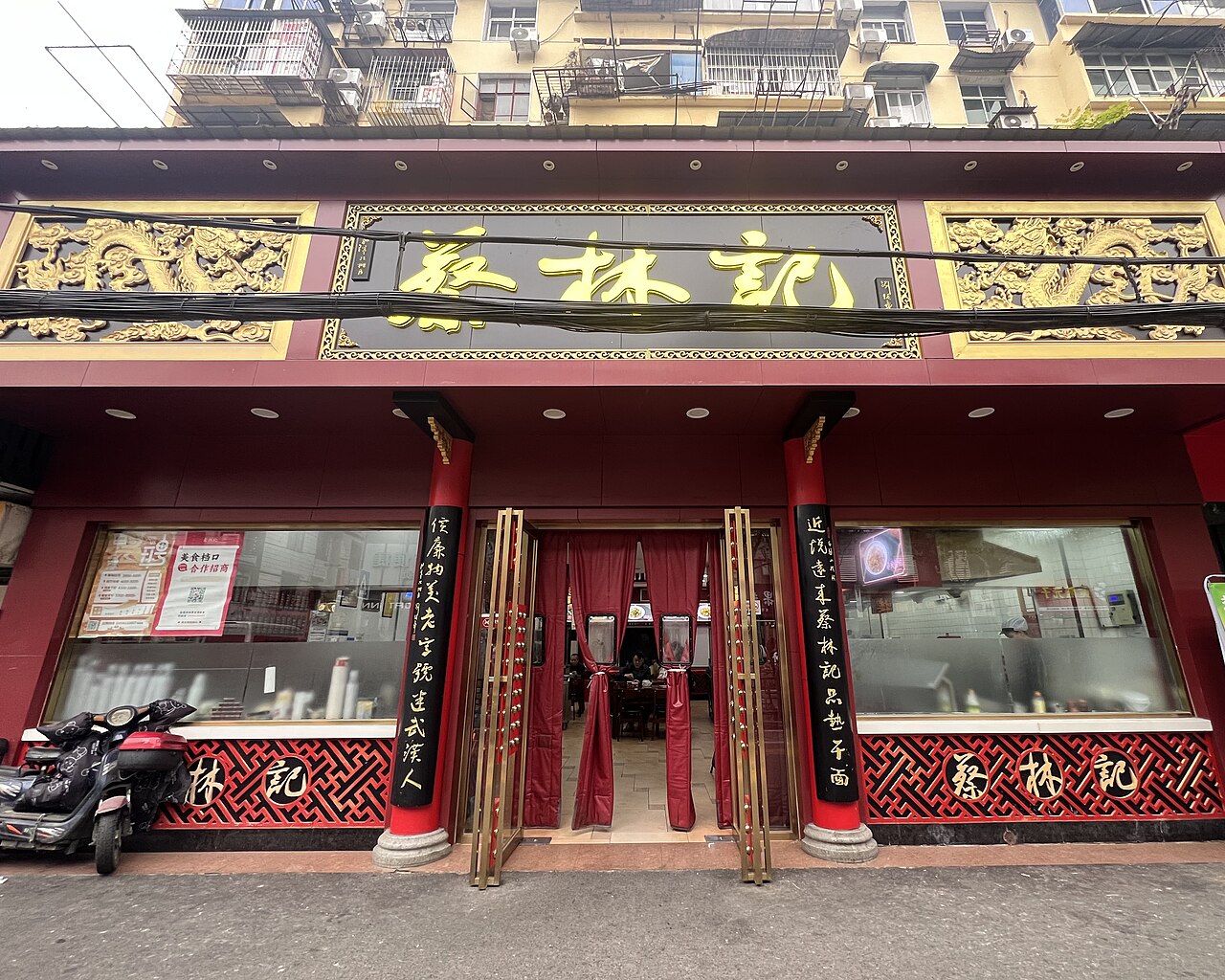
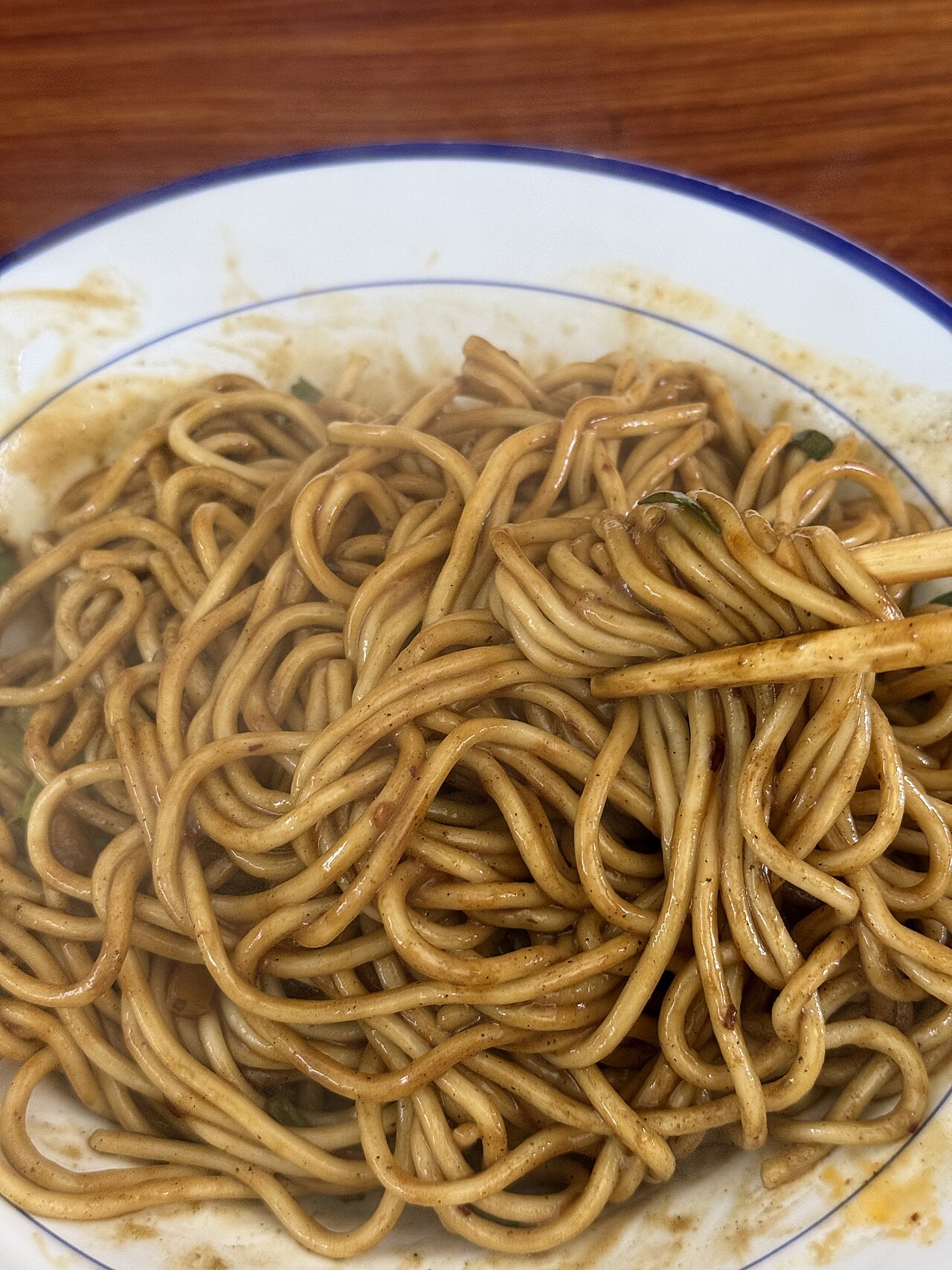
- Hubei Intangible Cultural Heritage Domestic Adaptation Guidelines: Cai Lin Ji Craft
- Harold McGee, On Food and Cooking: The Science and Lore of the Kitchen (Alkaline Salts & Noodle Chemistry)
- DB 4201/T 699-2024 Sensory & Physicochemical Benchmarks for Wuhan Reganmian
❓ Frequently Asked Questions
Can I really make authentic Reganmian if I cannot buy fresh Wuhan alkaline noodles?
Yes—you can get remarkably close (85%–90% fidelity) using ordinary round dried Chinese wheat noodles or #3 Italian spaghettini boiled in alkalized water. Dissolving 5–6g of baking soda (sodium bicarbonate) per liter of boiling water triggers thermal decomposition (2NaHCO₃ → Na₂CO₃ + H₂O + CO₂↑), raising the water's pH near 9.5–10.0. Wheat flavones instantly turn canary yellow, gluten tightens with signature alkaline bounce, and that unmistakable Wuhan aroma fills the kitchen.
Why does my pure sesame paste seize into a stiff, crumbly ball the moment I add water?
You are witnessing colloid phase inversion! Pure sesame paste is a dispersion of roasted seed solids suspended in sesame oil. Adding a splash of water hydrates proteins that bridge particles together, causing viscosity to spike dramatically. Never stop there—first loosen the paste with toasted sesame oil (about 30% by paste weight), then whisk in warm water in three small additions in one direction. Push past the stiff peak and it will suddenly relax into glossy, pourable satin.
Can I substitute Middle Eastern tahini for Chinese stone-ground sesame paste?
Only with an important adjustment: Middle Eastern tahini is ground from hulled, raw or very lightly toasted sesame seeds, whereas Wuhan zhimajiang (Chinese roasted sesame paste) uses deeply roasted whole white sesame seeds. If using tahini, whisk in 1.5 tablespoons of dark Chinese toasted sesame oil plus a teaspoon of smooth roasted peanut butter per 60g of tahini to restore the missing roasted pyrazine depth.
✦ Cross-Referenced Chapters
Secrets of Alkaline Noodles (Jianshuimian)
High-gluten flour specifications, sodium carbonate ratios, 1.8mm round strand geometry, and signature springy chew.
Soul of the Bowl: Stone-Ground Sesame Paste Craft
Low-temperature roasting, stone-mill grinding, and the great culinary debate between 100% pure sesame vs. 80/20 sesame-peanut blends.
The Ten-Condiment Flavor Matrix & Layering Order
Exact gram ratios and sequencing of light/dark soy, rice vinegar, white pepper, sugar, and spiced sesame salt.
The Core Art of "Danmian": Parboiling & Oil-Tossing
Step-by-step mastery of 80%-cooked boiling, fan-cooling, and sesame-oil tossing that keeps alkaline noodles springy for hours.
Troubleshooting 20 Common Mistakes & Master Proverbs
Fixing clumpy strands, bitter alkali aftertaste, broken oil-separated sesame paste, and overly dry bowls.