In Writers’ Ink: Chi Li, Fang Fang, Yi Zhongtian & Wuhan Literary Prose
From New Realist Morning Ferries to Comparative Urban Anatomy in Contemporary Chinese Letters
Close readings of Wuhan novelists Chi Li and Fang Fang alongside cultural scholar Yi Zhongtian, exploring how Hot Dry Noodles became Chinese literature’s most vivid emblem of working-class grit, street egalitarianism, and urban vitality.
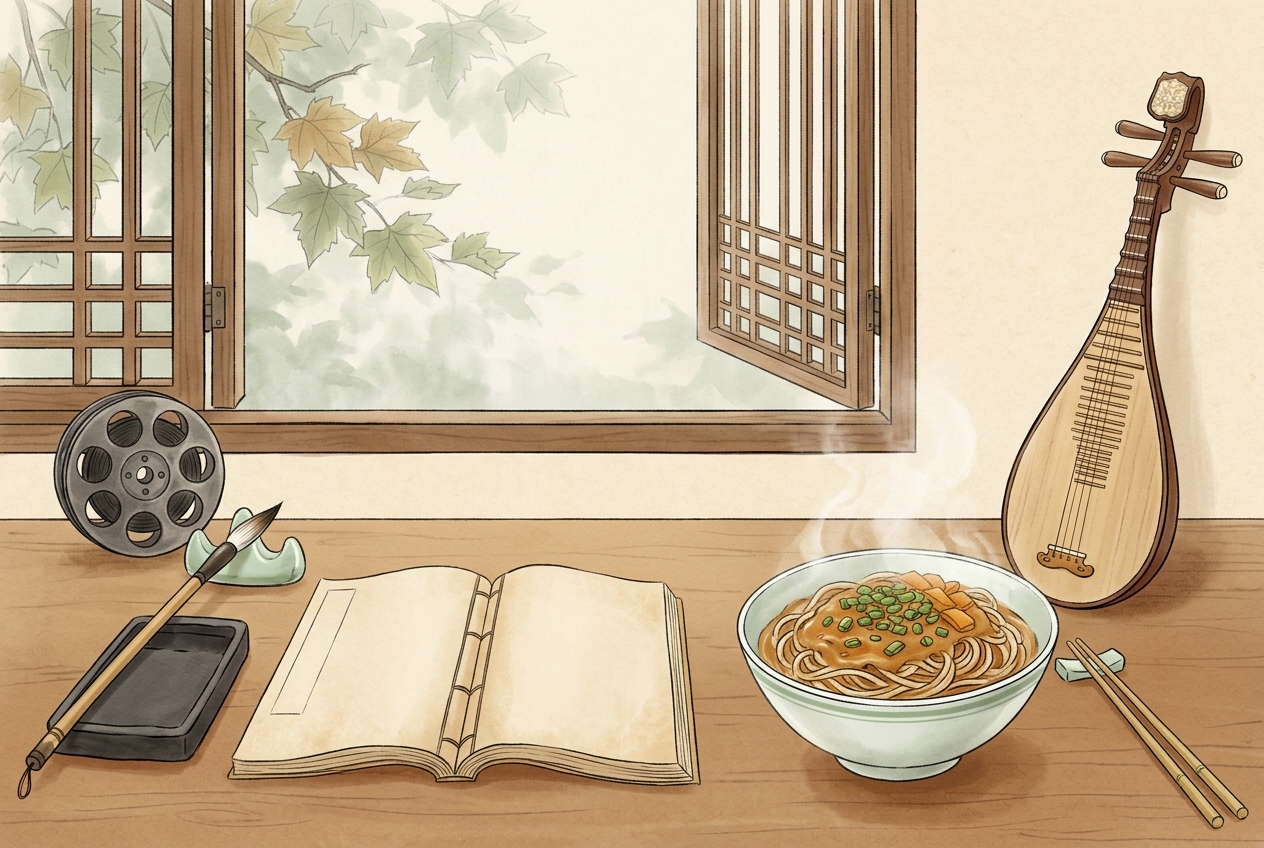
Morning Fog and New Realism: Chi Li’s Secular Sanctuary
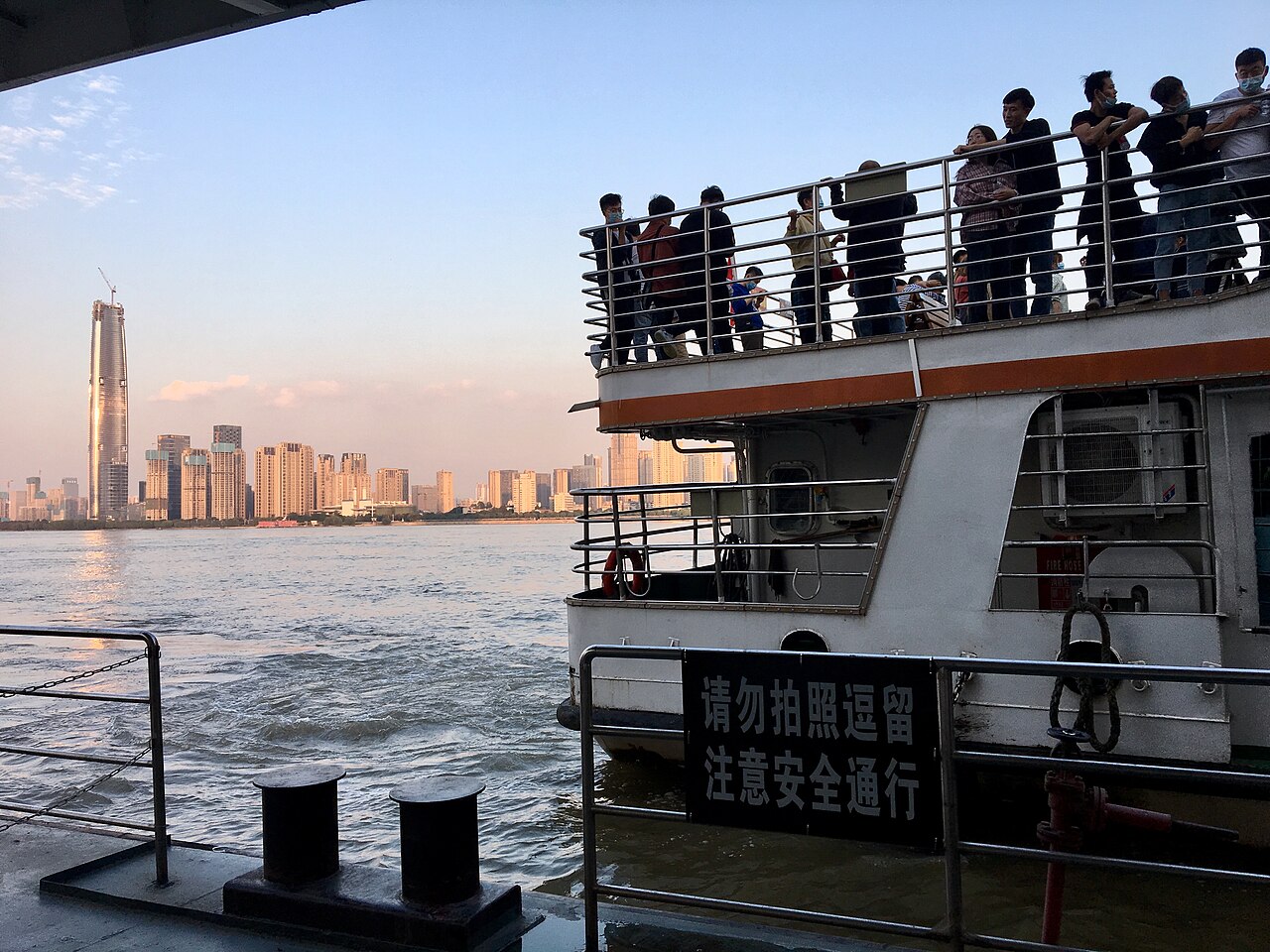
When literary historians trace the birth of Xin Xieshi Zhuyi (Chinese New Realism) in the late 1980s, the trail leads directly into the morning steam of Wuhan’s street stalls. In 1987, Wuhan novelist Chi Li published her breakthrough novella Trials and Tribulations (Fannao Rensheng). Its protagonist, Yin Jiahou, is an ordinary steel-plant technician living in a cramped Hankou tenement. His day begins before dawn when his toddler tumbles out of bed, triggering domestic bickering in suffocating quarters—until Yin steps outside into the cool river mist, boards the cross-Yangtze commuter ferry, and surrenders himself to the collective morning ritual of Guozao (Wuhan’s exuberant street breakfast).
Refusing both the ideological heroism of earlier socialist fiction and the aloof avant-garde experimentalism of the mid-1980s, Chi Li discovered profound literary truth in the texture of everyday sustenance. Across her celebrated “Life Trilogy”—Trials and Tribulations, Apart from Love (Bu Tan Aiqing), and Sun Was Born (Taiyang Chushi)—as well as Hot or Cold, It’s Good to Be Alive (Leng Ye Hao Re Ye Hao Huozhe Jiu Hao, 1990) and her essay collection Hankou Scenes, Hot Dry Noodles (Reganmian) operate as a secular sacrament.
“Wuhan’s Guozao arrives like an unstoppable tide. When you cradle a bowl of Hot Dry Noodles—dark soy sauce, thick amber sesame paste, bright green scallions, and ruby dices of pickled radish—and plunge chopsticks in to toss it crosswise, the rising fragrance sweeps away half the night’s grievances. Whatever trouble heaven sends, eat your fill first.”
For Chi Li, the physical architecture of Reganmian mirrors the psychology of the city that invented it. Springy alkaline noodles (jianshuimian) resist turning mushy under heat and friction, much like Hankou’s townsfolk endure broiling summers and bone-chilling winters without self-pity. Stone-ground sesame paste clings tenaciously to every strand, symbolizing a community bound by thick, unvarnished loyalty rather than polite distance. So long as the neighborhood cauldron boils at 5:30 AM, Chi Li suggests, ordinary life retains its dignity and momentum.
Dockworker Grit and Extreme Climate: Fang Fang’s Unsparing Lens
Where Chi Li bathes Wuhan’s breakfast alleys in robust, sensual warmth, her contemporary Fang Fang—the other towering figure of Wuhan’s modern literary renaissance—excavates a sterner, more tragic stratum beneath the bowl. In her landmark novella Landscape (Fengjing), set among impoverished dockworker families in Hankou’s “Henan Sheds” (Henan Pengzi), food is stripped of romanticism: brothless, oil-glistening, calorie-dense alkaline noodles are sheer biological fuel for men hauling freight along the Yangtze wharves.
That unsentimental realism reaches its dramatic peak in Fang Fang’s novella Feng Shui (Wan Jian Chuan Xin), where Hanzheng Street vendor Li Baoli shoulders a bamboo carrying-pole after her husband’s suicide to raise her son alone. In Fang Fang’s non-fiction cultural portrait Wuhanese (Wuhan Ren), she connects the city’s culinary preferences directly to meteorology and geography. Positioned on the Jianghan Plain without municipal winter heating and notorious as one of China’s summer “Furnace Cities,” Wuhan punishes delicacy. Its dockland heritage demanded speed, caloric staying power, and bold seasoning—qualities crystallized in a six-second blanched bowl of Reganmian downed squatting on a curb before work.
The Scholar’s Comparative Gaze: Yi Zhongtian’s Reading Cities
In 1998, scholar and essayist Yi Zhongtian—who earned his master’s degree at Wuhan University and taught there for more than a decade—published Reading Cities (Du Cheng Ji), a witty comparative anatomy of Chinese urban personalities. Placing Wuhan alongside imperial Beijing, cosmopolitan Shanghai, and leisurely Chengdu, Yi famously characterized Wuhan as China’s quintessential “plebeian metropolis” (shiming duhui): candid, muscular, egalitarian, and allergic to pretension.
To illustrate this civic temperament, Yi pointed global and domestic readers toward Wuhan’s signature morning choreography—eating Reganmian at a brisk walk. In Shanghai, image-conscious commuters would balk at carrying an open bowl of dark sesame sauce down Huaihai Road; in Chengdu, noodle-eating requires a bamboo chair and unhurried gossip. In Wuhan alone, bank executives in tailored suits, high-schoolers in tracksuits, and retirees in cotton singlets stride side by side, cradling a grease-proof paper bowl in the left palm while deftly lifting and folding strands with chopsticks in the right.
| Author | Key Works | Literary Mode & Perspective | Portrayal of Reganmian & Guozao | Distilled Civic Ethos |
|---|---|---|---|---|
| Chi Li | Trials and Tribulations, Hot or Cold, It’s Good to Be Alive, Hankou Scenes | New Realist novellas & lyrical urban essays (Insider warmth) | Sensory morning refuge on ferries and alleys; rich sesame paste coating resilient strands | Secular Vitality: Finding earthy joy and poise amid domestic friction |
| Fang Fang | Landscape, Feng Shui, Wuhanese | Gritty social realism & cultural history (Unsparing insider) | High-calorie fuel for wharf laborers and shoulder-pole women enduring harsh seasons | Defiant Grit: The unyielding bu-fu-zhou (“never say die”) backbone |
| Yi Zhongtian | Reading Cities (Du Cheng Ji: Wuhan Chapter) | Comparative urban sociology & cultural essay (Insider-outsider scholar) | The democratic street spectacle of walking-and-tossing paper bowls across class lines | Plebeian Egalitarianism: Pragmatism, candor, and zero social airs |
| Dong Hongyou | Old Streets of Hankou (Hankou Laojie) | Nostalgic local prose & oral-history sketches (Native chronicler) | Dawn sesame oil perfume drifting over Changdi Street cobblestones and chipped porcelain bowls | Ancestral Memory: Preserving century-old neighborhood warmth |
According to Yi Zhongtian, this kinetic dining habit encodes two foundational Wuhan values. First is radical street-level equality: before a steaming five-yuan bowl of sesame noodles, social hierarchy evaporates. Second is pragmatic velocity: Wuhanese refuse to sacrifice culinary pleasure to rush-hour schedules, yet equally refuse to let eating slow their forward march.
From Local Nostalgia to Modern Literary Totem
Beyond this celebrated trio, generations of Hubei writers have enriched the literary archive of Reganmian. Hankou-born writer Dong Hongyou, in his Old Streets of Hankou essays, documented the sensory world of 1950s and 1960s Changdi Street—when rapeseed and small-mill sesame oil perfumed narrow flagstone lanes before sunrise, and children begged stallkeepers for an extra half-ladle of spiced soy broth (lushui) and crunchy Huangpi radish dices at the bottom of chipped ceramic bowls.
In twenty-first-century fiction and essays—by Lu Xun Literary Prize laureates Zhang Zhihao and Liu Xinglong, as well as younger diaspora essayists—Reganmian has evolved from a realist backdrop into an emotional compass. When protagonists step off bullet trains at Hankou Station or reminisce from overseas apartments, the act of stirring thick sesame paste until every golden strand glistens stands in ink for homecoming itself: a tangible, edible covenant with the turbulent, generous city where the Yangtze and Han rivers meet.
- Chi Li, Trials and Tribulations (Fannao Rensheng) & Hankou Scenes (Hankou Qingjing), Writers Publishing House
- Fang Fang, Landscape (Fengjing), Feng Shui (Wan Jian Chuan Xin), and Wuhanese (Wuhan Ren)
- Yi Zhongtian, Reading Cities (Du Cheng Ji), Shanghai Literature and Art Publishing House, 1998
- Dong Hongyou, Old Streets of Hankou (Hankou Laojie) Essay Collection
❓ Frequently Asked Questions
How did Chi Li’s fiction put Wuhan street breakfast on China’s literary map?
Beginning with her 1987 novella Trials and Tribulations (Fannao Rensheng), Chi Li pioneered Chinese New Realism by grounding human dignity in everyday material rituals—ferry rides across the Yangtze, bustling Jiqing Street stalls, and steaming morning bowls of Reganmian.
What did cultural scholar Yi Zhongtian observe about Wuhan’s character through Reganmian?
In his 1998 bestseller Reading Cities, Yi Zhongtian—who taught at Wuhan University for over a decade—described Wuhan as forthright, egalitarian, and fiercely practical, pointing to the spectacle of citizens from every walk of life tossing paper bowls of Reganmian while walking briskly to work.
How do Chi Li and Fang Fang differ in portraying Wuhan’s noodle culture?
Chi Li portrays Reganmian with earthy, sensual warmth as a balm against everyday frustrations, whereas Fang Fang frames the calorie-dense bowl against Wuhan’s harsh climate and dockworker history as vital fuel for survival and defiance.
✦ Cross-Referenced Chapters
Wuhan "Guozao" Panorama: A Month Without Repeating Breakfast
Origins of the term "Guozao" and how Wuhan’s exuberant morning street-food universe revolves around Hot Dry Noodles.
Classical Bamboo-Branch Lyrics, Couplets & Modern Verse
Selected Qing-era Hankou folk quatrains, shopfront calligraphic couplets, and modern poems celebrating the bowl.
Silver-Screen Cameos: Reganmian in Contemporary Chinese Cinema
Analyzing pivotal scenes in Feng Shui (Wan Jian Chuan Xin), The Wild Goose Lake, and Lighting Up the Stars.
Mirror of the Wharf: Directness, Warmth & Nine-Province Openness
How brisk blanching, generous sesame richness, and north-south condiment fusion embody Wuhan’s forthright civic character.