Documentary Lenses: A Bite of China, Breakfast in China & Culinary Archives
High-Speed Cinematography, Neighborhood Artisans, and Morning Steam on Screen
A comprehensive viewing archive and visual analysis of landmark documentaries featuring Wuhan Reganmian—including A Bite of China Season 2, Breakfast in China Episode 35, Flavorful Origins: Hubei, and A City, A Taste.
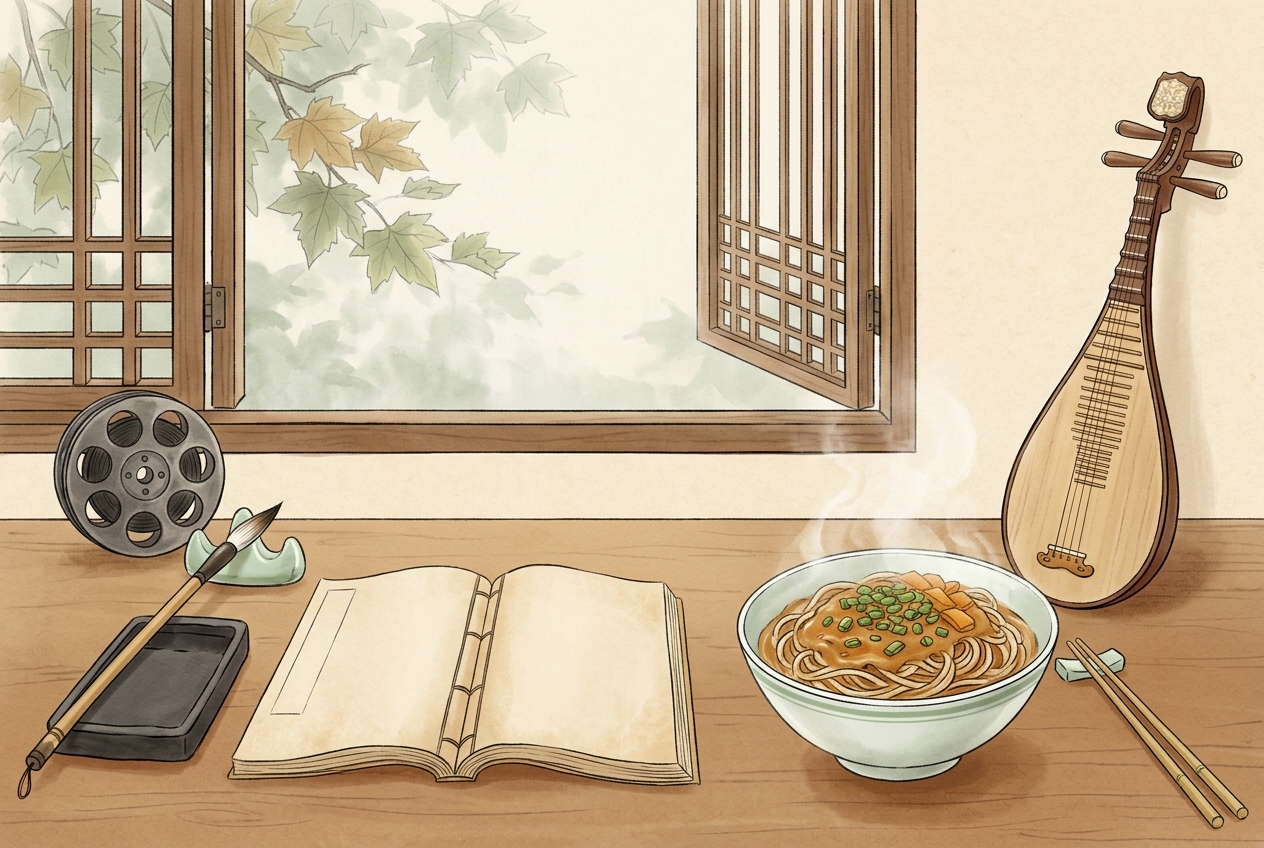
National Coronation on Screen: A Bite of China Season 2 (“Three Meals”)
On the evening of May 30, 2014, China’s most influential culinary documentary series, A Bite of China (Shejian Shang de Zhongguo), aired the finale of its second season: Episode 7, “Three Meals” (San Can). Guided by executive director Chen Xiaoqing and narrator Li Lihong’s resonant baritone, the episode opened by surveying how hundreds of millions of Chinese citizens greet the morning. Right after lingering over the unhurried bamboo steamers and newspaper-reading retirees of a Guangzhou dim sum teahouse, the editing tempo abruptly doubled—cutting to the confluence of the Yangtze and Han rivers.
“In central China’s Wuhan, eating breakfast is called Guozao. Every morning at daybreak, tens of thousands of street stalls rouse this metropolis—and the undisputed protagonist is a bowl of Hot Dry Noodles.”
That sequence established the definitive visual grammar for filming Wuhan’s signature dish. Rather than staging pristine studio bowls, the CCTV crew plunged into narrow Hankou lanes at 6:00 AM. Shooting at 1,000 frames per second with macro lenses, cameras froze the kinetic poetry of street blanching: a conical bamboo strainer (zhuzhaoli) surging out of rolling boiling water, jewel-like droplets flinging off springy golden strands in slow motion, and a long iron ladle pouring glossy, stone-ground sesame paste in a thick amber ribbon over bright green scallions and ruby-red pickled radish dices.
Equally influential was the sequence’s sociological montage. By cutting rapidly between commuters tossing paper bowls mid-stride, students gulping noodles before school bells, and vendors executing six-second boils with percussive precision, A Bite of China introduced nationwide viewers to Wuhan as China’s supreme “carbohydrate carnival”—a city where breakfast is fierce, democratic, and propulsive. During that same Wuhan shoot, Chen Xiaoqing’s crew also visited neighborhood legends like Wang Shifu Doupi on Gaoxiong Road, igniting a nationwide culinary pilgrimage boom to Wuhan’s old residential alleys.
Five-Minute Street Intimacy: Breakfast in China (Episode 35)
Where A Bite of China framed Reganmian on an epic civilizational canvas, the 2019 micro-documentary hit Breakfast in China (ZaoCan Zhongguo, directed by Wang Shengzhi for Tencent Video and Strait TV) lowered its tripod to the height of a roadside plastic stool. Built around a deceptively simple five-minute formula—one traditional breakfast, one characterful family stall, a crowd of absorbed regulars, and the stallkeeper’s life philosophy—the series reserved Episode 35 of Season 1 for Wuhan Reganmian.
Bypassing tourist food streets entirely, the filmmakers embedded themselves at Bazi Reganmian (疤子热干面), a weathered neighborhood shop near Baoyu Road in Hankou’s old Qiaokou District run by proprietress Gu Hongying and her husband. Having honed her craft in Wuhan for well over a decade, Gu presides over the morning cauldron with brisk Wuhanese warmth. Viewers watch the pre-dawn ritual of simmering a fragrant herbal soy lushui broth infused with star anise, cinnamon, and fennel, followed by the 7:00 AM rush when neighbors shout shorthand customizations—“Two liang, extra scallions, light chili!”—without breaking stride.
| Documentary & Year | Episode / Segment | Director & Studio | Featured Location / Artisan | Visual Signature & Editorial Focus |
|---|---|---|---|---|
| A Bite of China S2 (2014) | Ep. 7: Three Meals (San Can) | Dir. Chen Xiaoqing / CCTV-9 | Old Hankou morning alleys & heritage danmian workshops | High-speed macro water-shake shots; contrasting Wuhan’s brisk Guozao with Cantonese dim sum |
| A City, A Taste (2014) | Wuhan Episode (Yi Cheng Yi Wei) | CCTV-9 Documentary | Jiqing Street, Changdi Street, Cai Lin Ji masters | 48-minute deep dive into stone-mill sesame grinding, afternoon parboiling, and wharf history |
| Breakfast in China S1 (2019) | Ep. 35: Hubei Wuhan · Reganmian | Dir. Wang Shengzhi / Tencent & Strait TV | Bazi Reganmian, Baoyu Rd, Qiaokou (Gu Hongying) | Intimate 5-minute portrait of neighborhood regulars, herbal lushui, and nostalgic pop soundtrack |
| Flavorful Origins: Hubei (2021) | Alkaline Wheat & Sesame Episodes | Prod. Chen Xiaoqing / Daolai Media | Jianghan Plain farms & Wuhan veteran stalls | Food-science lens unpacking alkaline gluten elasticity and Hubei white sesame oil aromatics |
| Days and Nights in Wuhan (2021) | Theatrical Documentary Feature | Dir. Cao Jinling / CCTV6 Film Channel | Neighborhood breakfast stalls across Wuhan’s Three Towns | Poignant chronicle of post-lockdown recovery anchored by the emotional return of morning Reganmian |
Scored at the close with a nostalgic Mandopop ballad—the series’ signature emotional hook—Episode 35 captures retirees tearing crispy mianwo savory donuts to wipe clean the last streaks of sesame paste at the bottom of their bowls. For millions of young Wuhanese working in Shenzhen, Shanghai, or overseas, those five minutes crystallized homesickness better than any travelogue.
Craft Ethnography & Terroir Science: A City, A Taste and Flavorful Origins
Two longer-form documentary projects rounded out the audiovisual canon by looking behind the morning counter. CCTV-9’s 48-minute A City, A Taste: Wuhan (Yi Cheng Yi Wei) devoted extensive screen time to the unseen afternoon labor of danmian (parboiling and oil-tossing). Cameras followed veteran noodle makers at 3:00 PM as they boiled high-gluten alkaline strands to an exact 80% doneness—leaving a hairline white core (baixin) at the center—then spread them across wide wooden tables before roaring industrial fans while tossing high arcs of noodles coated in small-mill sesame oil. For global audiences puzzled by how a noodle cooked in six seconds can taste so springy, the film provided the definitive visual explanation.
Years later, Daolai Media’s Flavorful Origins: Hubei (Fengwei Yuanchandi) zoomed in even closer, pairing agricultural fieldwork across central Hubei’s white-sesame belt with microscopic food photography. By visualizing how stone-mill grinding preserves volatile roasted pyrazines and prevents bitter scorching, and how sodium carbonate crosslinks wheat proteins into a resilient yellow matrix, contemporary documentaries elevated a five-yuan street staple into a masterclass of culinary engineering.
Cinematographer’s Notes: How Filmmakers Shoot a Brothless Bowl
Among professional food directors, Reganmian is notoriously tricky yet thrilling to light. Unlike clear-broth beef noodles or crimson Sichuan soup noodles that shimmer naturally under top light, Reganmian has zero broth and a deep earthy palette of amber sesame paste and dark soy. Left untouched for thirty seconds, hot alkaline noodles absorb surface lipids and turn matte.
Veteran documentary crews rely on three technical principles to make Reganmian leap off the screen:
- Dawn Backlighting Against Cool Street Shadows: Shooting between 6:00 and 7:00 AM, cinematographers position the cauldron between the camera and low morning light. Cool blue alley shadows make rising white steam glow like theatrical mist while catching specular golden highlights along every oiled strand.
- Filming the Marbled Mid-Toss: Rather than shooting a finished, uniformly brown bowl, operators roll high-frame-rate cameras during the first three seconds of chopstick cross-tossing—when dark soy, velvety beige-brown sesame paste, scarlet chili oil, and emerald scallions swirl together in dynamic marble ribbons.
- Tactile Street ASMR: Boom and lavalier mics isolate three acoustic layers: the hollow tok-tok-tok of bamboo basket rims rapping the cauldron edge to shake off water, the velvety shhh-shhh suction of thick paste coating warm strands, and the bright crunch of fermented cowpeas and Huangpi radish dices between the diner’s teeth.
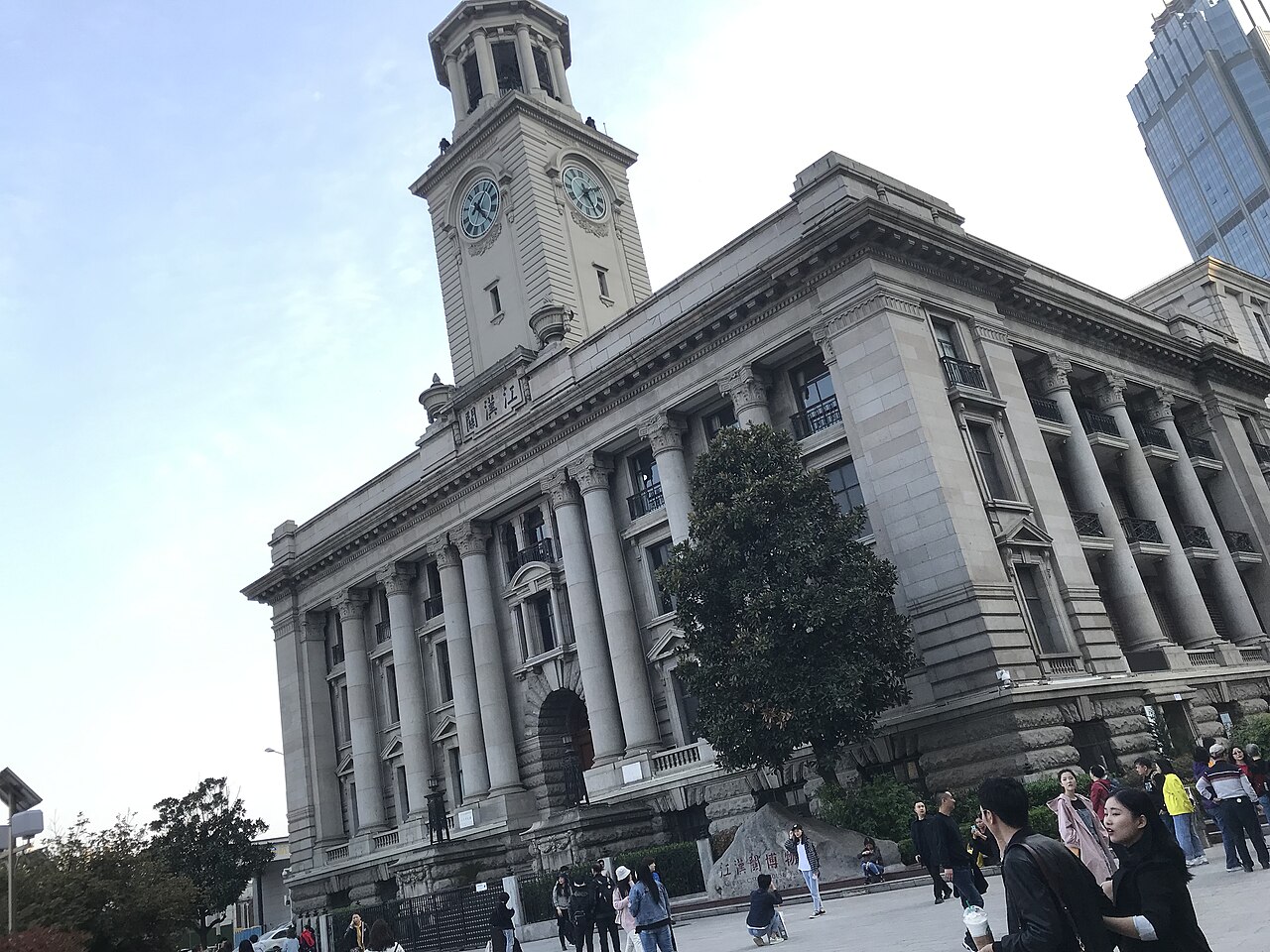
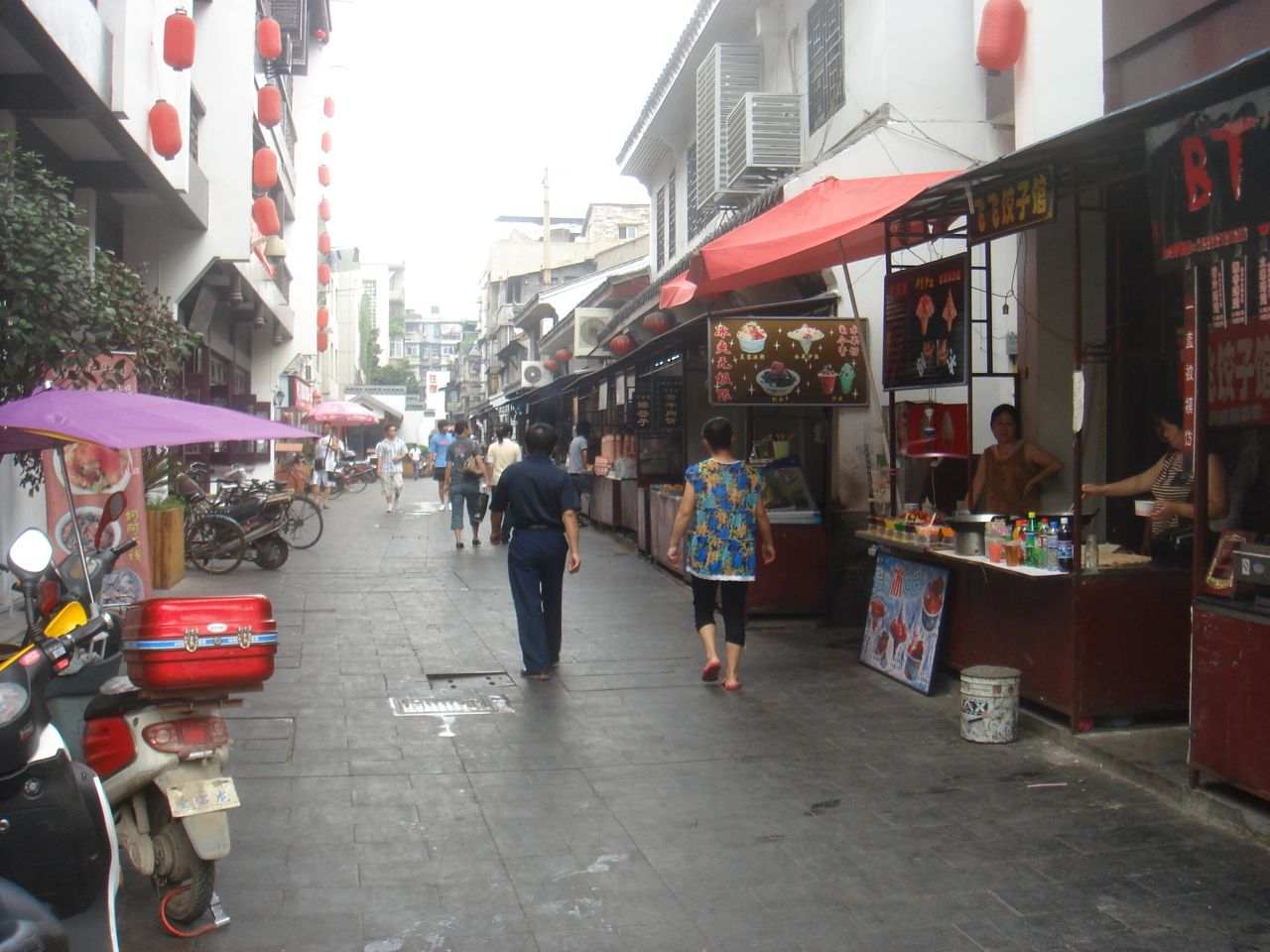
- CCTV Documentary Channel, A Bite of China Season 2, Episode 7: Three Meals (San Can), 2014
- Tencent Video & Strait TV, Breakfast in China Season 1, Episode 35: Wuhan Reganmian, 2019
- CCTV-9 Documentary, A City, A Taste (Yi Cheng Yi Wei): Wuhan Episode, 2014
- Netflix & Daolai Media, Flavorful Origins: Hubei (Fengwei Yuanchandi), 2021
❓ Frequently Asked Questions
Which episode of A Bite of China featured Wuhan Reganmian?
Wuhan’s Hot Dry Noodles starred in Season 2, Episode 7 ('Three Meals' / San Can), broadcast in May 2014. Directed by Chen Xiaoqing’s team, the sequence juxtaposed Wuhan’s brisk, carb-driven street 'Guozao' against leisurely Cantonese dim sum to illustrate regional rhythms across China.
Which neighborhood shop appeared in Breakfast in China’s Wuhan episode?
Episode 35 of Breakfast in China Season 1 (2019) spotlighted Bazi Reganmian, a beloved neighborhood stall near Baoyu Road in Qiaokou District run by proprietress Gu Hongying and her husband, celebrating their spiced herbal broth and loyal community regulars.
How do documentary cinematographers make a brothless brown-sauced noodle look luminous on camera?
Because thick sesame paste can look flat under overhead lighting, crews film at dawn using low-angle backlighting to illuminate rising steam and oil highlights on golden alkaline strands, paired with directional microphones capturing the crisp crunch of pickled radish.
✦ Cross-Referenced Chapters
The Core Art of "Danmian": Parboiling & Oil-Tossing
Step-by-step mastery of 80%-cooked boiling, fan-cooling, and sesame-oil tossing that keeps alkaline noodles springy for hours.
Street Blanching & The Golden Ten-Second Bowl
Deconstructing the street master’s 6-second boiling dip, triple wrist-shake drain, and rapid sauce ladling.
Wuhan "Guozao" Panorama: A Month Without Repeating Breakfast
Origins of the term "Guozao" and how Wuhan’s exuberant morning street-food universe revolves around Hot Dry Noodles.
Cult Neighborhood Stalls Across Hankou, Wuchang & Hanyang
An insider’s dossier on beloved alley shops—Luo Shi Raw-Blanched Beef, Zhao Shifu Oil-Pie & Reganmian, Changzi, and Xiaoqiu.