Hubei’s Noodle Constellation: Xiangyang, Yichang & Jingzhou
Beyond Wuhan: Beef-Tallow Cauldrons on the Han River, Dawn Eel Broths in Shashi, Three Gorges Red Oil, and Wetland Fish Noodles
Stepping beyond Wuhan’s three towns to map Hubei Province’s remarkable regional noodle ecosystem—profiling Xiangyang Beef-Tallow Noodles with sweet rice wine, Jingzhou Shashi’s 1895 Zaotangmian ('Dalian' triple-topping soup), Yichang Red-Oil Xiaomian, Qianjiang Snakehead Fish Noodles, and heritage Yunmeng Fish-Paste Strands.
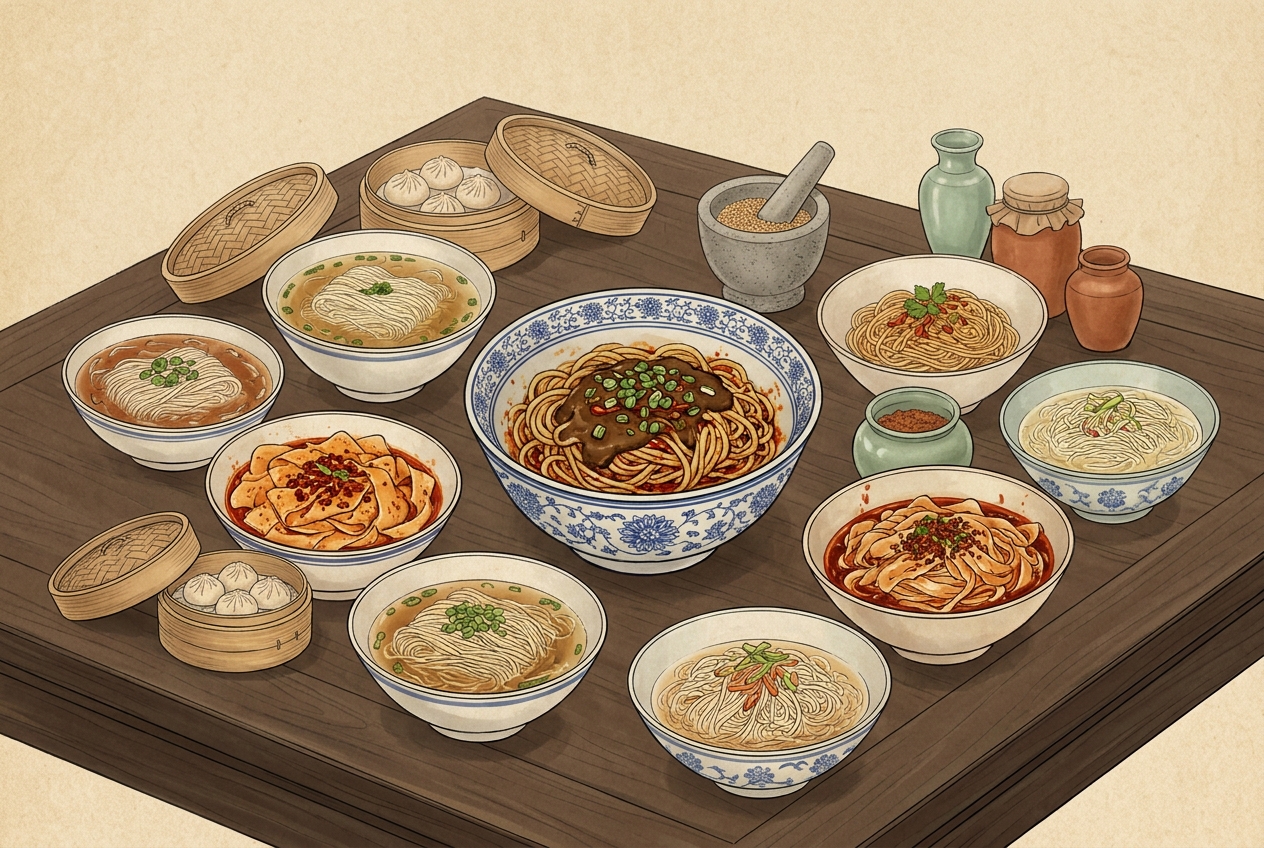
A Province of Two Rivers and a Thousand Cauldrons
To outsiders, Wuhan Reganmian looms so large over central China that it often eclipses the rest of its home province. Many visitors assume that once you leave Wuhan’s urban orbit, Hubei—famed as a “Land of Fish and Rice” (Yumi zhi Xiang)—reverts exclusively to steamed paddy rice. Yet geographically, Hubei is an extraordinary ecological amphitheater: bordered on the north by Henan’s winter-wheat plains, flanked on the west by Sichuan’s misty gorges, bisected by the rushing Han and Yangtze rivers, and jeweled across its center with the wetlands of the ancient Yunmeng Marsh.
Where northern wheat meets southern waterways and riverport labor, morning noodles flourish. Wuhan Reganmian is no isolated fluke; it is the brothless metropolis at the center of a vibrant Jingchu Noodle Constellation. Travel two hours in any compass direction from Wuhan at 6:00 AM, and you encounter sibling bowls of astonishing individuality—from beef-tallow infernos in the northwest to milky eel consommés on the middle Yangtze and delicate fish-dough threads in the central lakes.
“Down the Han River rolls the tallow fire of the northern marches; across the Jianghan plain simmers the ivory bone-and-eel broth of old treaty ports. Before sunrise in Hubei, every river town wakes to its own boiling pot.”
Scarlet Tallow vs. Ivory Broth: Xiangyang and Jingzhou Shashi
Hubei’s two most celebrated regional counterweights to Wuhan Reganmian stand at opposite poles of flavor architecture: Xiangyang Beef Noodles in the northwest and Jingzhou (Shashi) Zaotangmian along the middle Yangtze.
At dawn beside Fancheng’s First Hanjiang Bridgehead (Yiqiaotou) in Xiangyang—a storied fortress city straddling the cultural border of Henan and Shaanxi—breakfast is a visceral ceremony governed by six characters: Yi La, Er Ma, San Xian (“First fiery, second numbing, third deeply savory”). Local alkaline noodles are pre-steamed and coiled into individual fist-sized nests called wozimian. When an order is called, a cook grabs one golden nest alongside a handful of crisp mung-bean sprouts, plunges them into boiling water inside a long-handled bamboo basket for twenty seconds, and ladles over roaring crimson broth sealed beneath a thick cap of rendered spiced beef tallow (niuyou) simmered overnight with star anise, cassia, amomum tsao-ko, dried chilies, and numbing peppercorns. Topped with braised yellow-cattle beef cubes or honeycomb tripe (niuza), the bowl is never eaten solo. Locals order “Yi Tao” (“A Set”), pairing the volcanic noodles with raw garlic cloves and a porcelain bowl of Xiangyang Huangjiu—a cloudy, milky-white, low-alcohol (~2% ABV) fermented glutinous rice drink whose cool, sweet-tart effervescence tames the molten beef fat on the tongue.
Follow the waterways south to Shashi in Jingzhou, opened as a bustling Yangtze river port in 1895, and northwestern bravado gives way to merchant-port refinement. Shashi Zaotangmian (“Early-Hall Noodles”) takes its name from shops that lit their stoves at midnight to welcome dockworkers and tea drinkers at 4:30 AM. If Wuhan abolished broth, Shashi apotheosized it. Every night, massive cauldrons simmer pork femur bones, aged hens, live swamp-eel spines (shanyugu), and wild crucian carp for five hours until collagen and fish proteins emulsify into an opaque, ivory-white consommé of breathtaking depth.
Step up to the counter at Shashi institutions like Xiyuan or Fushou, and regulars bark a code word that baffles newcomers: “One bowl of Dalian!” Despite identical characters, Dalianmian has nothing whatsoever to do with the northern port city of Dalian. In Shashi wharf parlance, toppings (mazi) ascend from Xiaolian (single) and Zhonglian (double) to Dalian—the grand-slam trio of crispy deep-fried swamp-eel shreds, hand-pulled chicken slivers, and velveted lean pork slices. As the fried eel crackles softly into the milky bone broth, diners sip three spoonfuls of pure soup before lifting a single alkaline strand—a dawn ritual as poised and luxurious as any Suzhou noodle house.
Six Signature Bowls of the Hubei Noodle Constellation
| Regional Dish | Hubei Hub | Noodle Base | Broth / Sauce Medium | Signature Toppings | Local Ritual & Pairing |
|---|---|---|---|---|---|
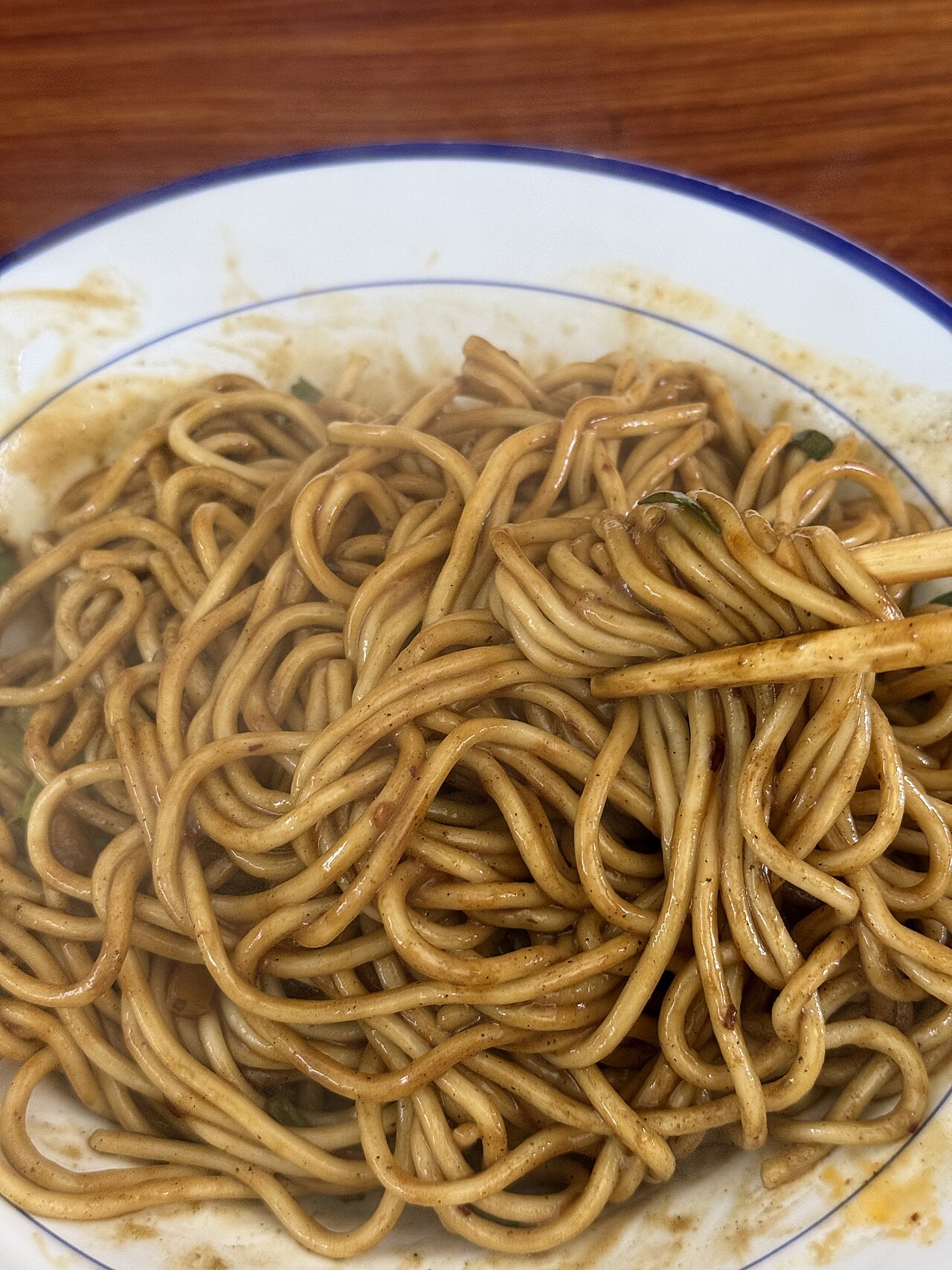
| Wuhan Reganmian | Wuhan Three Towns | 1.8mm alkaline round, oil-parboiled (Danmian) | Brothless oil-thinned sesame paste | Stone-ground white sesame, 10-spice soy卤, pickled radish & sour cowpeas | Paired with sweet egg rice wine (Danjiu) & crispy Mianwo |
| Xiangyang Beef Noodles | Xiangyang (Han River) | Pre-steamed coiled alkaline wozimian + bean sprouts | Heavy spiced red beef-tallow soup | Braised beef chunks or beef offal (niuza), green garlic shoots | Eaten as “A Set” with cool milky Xiangyang Huangjiu & raw garlic |
| Shashi Zaotangmian | Jingzhou (Shashi) | Fine, springy fresh alkaline strands | Milky-white pork, hen, eel-bone & carp broth | Dalian trio: crispy fried eel shreds, chicken slivers, lean pork | Dawn 5:00 AM seating; savor three spoonfuls of broth first |
| Yichang Red-Oil Xiaomian | Yichang (Three Gorges) | Delicate, thin fresh alkaline noodles | Pork-bone broth + aromatic mild-heat chili oil | Minced pork zhajiang, tender braised soybeans, fried egg or chitterlings | Ordered alongside juicy steamed pork buns (Baozi-mian) & iced Liangxia |
| Qianjiang Caiyumian | Qianjiang Wetlands | Chewy fresh cut wheat or light alkaline | Snowy pan-seared snakehead fish-bone soup | Paper-thin live snakehead fillets (caiyu) + crisp white water-celery | Cooked individually to order in a blazing small wok |
| Yunmeng Fish Noodles | Xiaogan (Yunmeng) | Dried silver threads of pounded carp flesh + wheat flour | Clear chicken broth, pork-rib soup, or stir-fried | 30%+ pure freshwater fish protein kneaded inside the noodle itself | Qing Daoguang-era provincial heritage “longevity noodles” |
Gorge Red Oil, Wetland Fish Threads, and Mining-Town Comfort
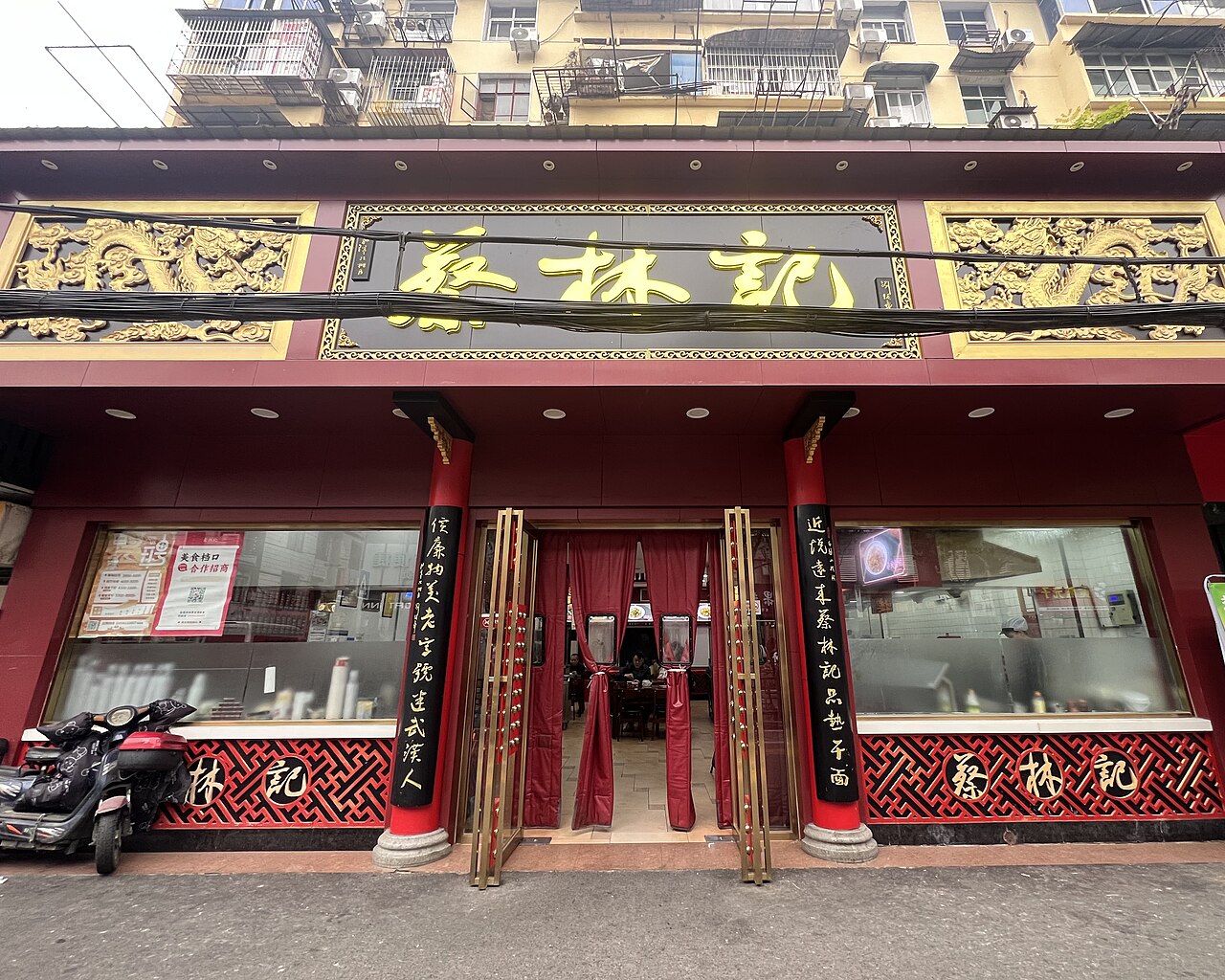
Venture deeper into Hubei’s corners and local geography continues to reshape the bowl. At the eastern mouth of the Three Gorges in Yichang, river migration fused Sichuan spice with central plains gentleness to create Yichang Red-Oil Xiaomian. Unlike Chongqing’s aggressively numbing dry-tossed xiaomian, Yichang cushions ultra-thin alkaline strands in sweet pork-bone broth, floating a fragrant layer of toasted-sesame chili oil, savory minced pork酱, and melt-in-your-mouth braised soybeans—almost always accompanied by two pillowy steamed pork buns (baozi).
Across the watery heartland of Qianjiang and Yunmeng, freshwater fish step directly into the spotlight. In Qianjiang Snakehead Fish Noodles (Caiyumian—locals auspiciously rename black Channa argus “wealth fish”), cooks fillet live fish to order into translucent “butterfly wings,” sear the bones in lard to boil an instant snowy broth, boil chewy noodles with fragrant local water-celery, and poach the boneless fillets for mere seconds until curled like jade petals. North in Xiaogan’s Yunmeng County, Yunmeng Fish Noodles (a provincial intangible heritage craft born in the Qing Daoguang reign) go further still: pounding deboned carp flesh into a smooth paste, kneading it directly with wheat flour, steaming thin sheets, and sun-drying fine threads that boast “fish umami in every bite without a fin in sight.” And in the iron-and-copper mining hills of southeastern Hubei, Daye Humian slow-simmers starch-dusted fresh noodles with shredded pork, diced potatoes, dried bean curd sticks, and sweet-potato vermicelli until leached wheat starch thickens the pot into a velvety, rib-sticking savory porridge.
Placed back inside this vibrant provincial family portrait, Wuhan Reganmian makes newfound sense: it is the bustling commercial elder sibling that distilled Hubei’s mastery of alkaline wheat, aromatic oils, and dockside dawn energy into ten seconds of brothless perfection.
- Hubei Provincial Chorography Committee, Chronicles of Hubei: Commerce & Catering Volume, Hubei People’s Publishing House
- Breakfast in China (Zaocan Zhongguo) Documentary Archives: 'Jingzhou Shashi Zaotangmian' & 'Xiangyang Beef Noodles'
- Hubei Intangible Cultural Heritage Registry: 'Yunmeng Fish Noodle Craft' & 'Xiangyang Beef Noodle Craft'
❓ Frequently Asked Questions
Does Jingzhou Shashi’s famous 'Dalianmian' come from Dalian in northeastern China?
Not at all. In the century-old wharf slang of Shashi (Jingzhou), Zaotangmian toppings are tiered into Xiaolian (single), Zhonglian (double), and Dalian ('grand combo'). Ordering a 'Dalianmian' brings fine alkaline noodles swimming in milky eel-chicken-pork bone broth, crowned simultaneously with crispy deep-fried swamp-eel shreds, poached chicken slivers, and tender pork slices.
Why do locals in Xiangyang always drink yellow wine at 6:00 AM with their beef noodles?
Xiangyang’s breakfast 'huangjiu' is not aged Shaoxing cooking wine, but a fresh, cloudy, milky-white fermented glutinous rice brew with very low alcohol (~1–3% ABV) and bright sweet-tart lactic acidity. Its cool, floral sweetness acts as the ultimate palate foil to the blistering spice, Sichuan peppercorn numbness, and thick beef tallow of Xiangyang beef noodles.
What makes Yunmeng Fish Noodles (Yunmeng Yumian) unique in Chinese noodle craft?
Dating back to the Qing Daoguang era (1821–1850) in Xiaogan’s Yunmeng County, artisans bone fresh silver or grass carp, pound the white flesh into a fine mousse, and knead it directly into wheat flour before steaming, slicing into fine threads, and sun-drying—creating 'fish noodles where no fish is seen, yet every strand breathes river umami.'
✦ Cross-Referenced Chapters
Hubei Agricultural Terroir: Jianghan Wheat & Xiangyang Sesame
Tracing geographic-indication raw materials across Northern Hubei wheat belts and central Hubei high-oil white sesame farms.
Regional Schools: Wuhan, Xiangyang, Jingsha & Xinyang Styles
Comparing classic Wuhan dry style with Xiangyang beef-tallow chili, Jingzhou sweet-savory notes, and Xinyang’s bean-sprout broth adaptation.
Wuhan "Guozao" Panorama: A Month Without Repeating Breakfast
Origins of the term "Guozao" and how Wuhan’s exuberant morning street-food universe revolves around Hot Dry Noodles.
Mirror of the Wharf: Directness, Warmth & Nine-Province Openness
How brisk blanching, generous sesame richness, and north-south condiment fusion embody Wuhan’s forthright civic character.
Panoramic Matrix: Comparing All Ten of China’s Famous Noodles
Side-by-side structural comparison against Shanxi knife-cut, Sichuan Dandan, Beijing Zhajiang, Lanzhou beef, and Henan braised noodles.