Panoramic Matrix: Comparing All Ten of China’s Famous Noodles
Mapping Dough Rheology, Broth Architecture, and Street Velocity Across China’s Ten Canonical Bowls
Anchored by the landmark 2013 'China’s Top Ten Noodles' evaluation in Hangzhou, this comparative study places Wuhan Reganmian side by side with Beijing Zhajiangmian, Shanxi Knife-Cut, Lanzhou Beef, Sichuan Dandan, Henan Huimian, Hangzhou Pian’erchuan, Kunshan Aozao, Zhenjiang Pot-Lid, and Yanji Cold Noodles.
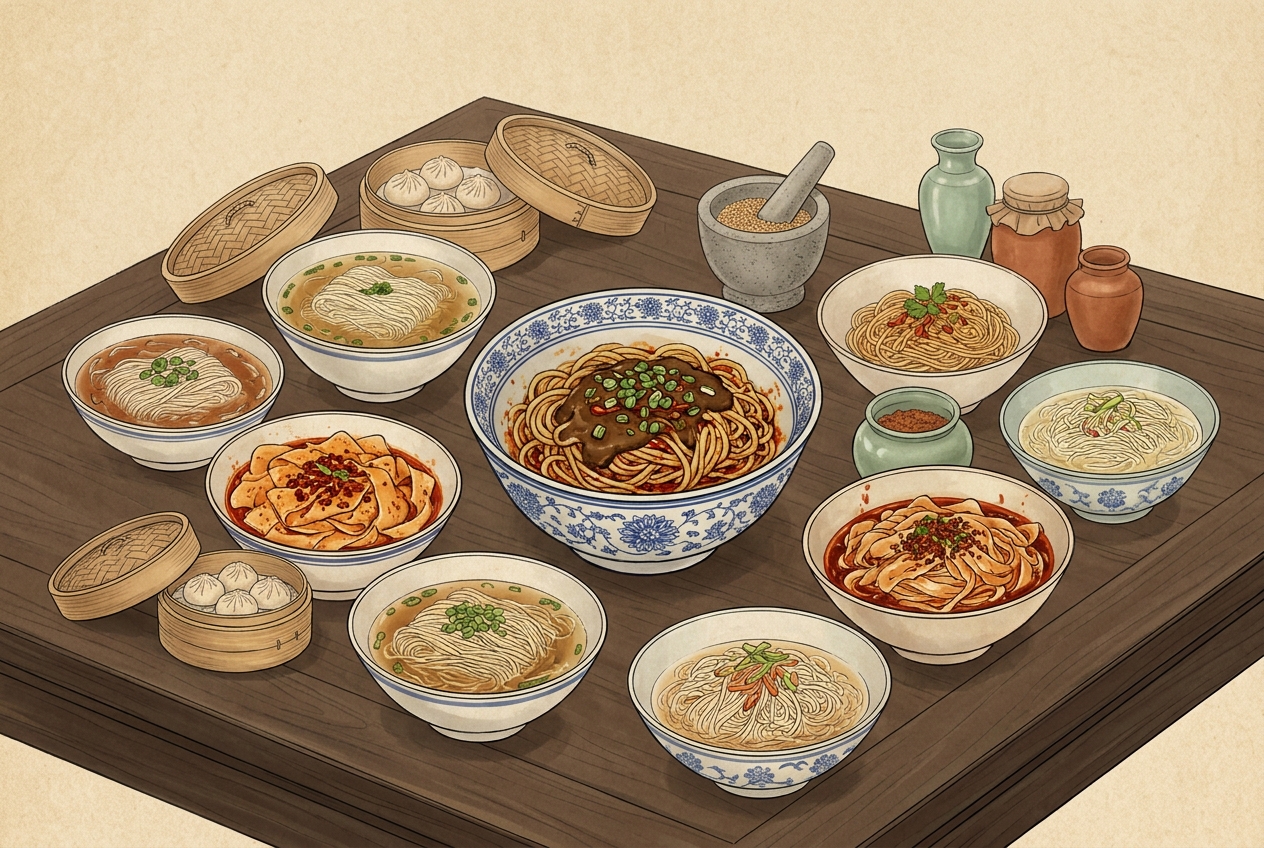
Ten Bowls That Mapped a Continent
In July 2013, at the First China Noodle Culture Festival in Hangzhou—jointly convened by the Ministry of Commerce’s Circulation Industry Promotion Center and the China Hospitality Association—culinary historians and industry judges unveiled the first national canon of China’s Top Ten Noodles (Zhongguo Shida Miantiao). Crowned at the top of that inaugural roster was Wuhan Reganmian (Hot Dry Noodles), joined by nine regional titans: Beijing Zhajiangmian, Shanxi Knife-Cut Noodles (Daoxiaomian), Lanzhou Pulled Beef Noodles, Sichuan Dandanmian, Henan Braised Mutton Noodles (Huimian), Hangzhou Pian’erchuan, Kunshan Aozaomian, Zhenjiang Pot-Lid Noodles (Guogaimian), and Jilin Yanji Chilled Buckwheat Noodles.
At the time, the roster ignited spirited nationwide debate—most famously over how Jiangsu Province claimed two slots while noodle-obsessed Shaanxi (home to Biangbiang and Qishan Saozi noodles) went unrepresented. Yet viewed through the lens of food science and economic geography, those ten bowls form an extraordinary cross-section of Chinese civilization. Stretching from the Korean borderlands of Jilin at 43°N to the Yangtze delta and Sichuan basin, they document how local water chemistry, wheat protein levels, lipid availability, and labor rhythms sculpted radically different answers to the same culinary question: how to turn grain flour and boiling water into daily sustenance.
“Northern noodles prize structural bone—chewed with the force of mountain wind; Jiangnan noodles worship liquid clarity—sipped slowly beside canal mist. Only Wuhan, where nine provinces collide, marries northern gluten steel with southern sesame velvet, banishing the broth to let pure aroma cling.”
Wuhan’s position atop this hierarchy is no accident of civic pride. Geographically poised where China’s northern winter-wheat belt meets the high-oil white sesame plains of central Hubei, Reganmian is a masterwork of culinary synthesis: northern flour muscularity, southern alkaline preservation craft, and dockside ergonomic speed.
Four Schools of Dough Mechanics
To understand where Reganmian sits among its nine peers, one must begin inside the dough matrix—specifically how gliadin and glutenin proteins crosslink under mechanical stress and electrolyte manipulation. Across the Top Ten, four distinct structural paradigms emerge:
- Alkaline Extruded & Bamboo-Pressed Strands (Wuhan, Zhenjiang, Kunshan, Hangzhou): In humid Yangtze river ports, untreated wheat dough sours rapidly in summer heat and turns mushy in boiling cauldrons. Wuhan solves this by dosing high-gluten wheat flour with ~0.5% sodium carbonate ($Na_2CO_3$), cutting 1.8mm round strands, and executing Danmian—parboiling to 80% gelatinization, blast-cooling with fans, and coating every strand in sesame oil. Downriver in Zhenjiang, Guogaimian artisans bounce rhythmically atop a giant bamboo pole (tiaomian) to press micro-porous sheets that drink up soy-braised broth, while Kunshan Aozaomian relies on hair-thin alkaline “dragon beard” strands cooked to snappy precision, and Hangzhou Pian’erchuan drops fresh, mildly alkaline wet noodles (chaomian) raw into wok-emulsified soup so leached starch thickens the broth.
- Extensional Hand-Pulled Networks (Lanzhou & Henan): Lanzhou Beef Noodles harness penghui (potassium/sodium carbonate originally derived from burned desert Halogeton plants) to toggle disulfide (
-S-S-) bonds, enabling a master to stretch a single log of dough into thousands of filaments in seconds. Henan Huimian omits alkali in favor of heavy salt (~2–3%) and resting oil, relaxing gluten sheets until they can be flicked and stretched by hand into wide, velvety ribbons capable of surviving roiling mutton bone soup. - Low-Hydration Sheared & Hand-Cut Wheat (Shanxi, Beijing, Sichuan): Shanxi Daoxiaomian pushes hydration down near 30%, yielding a dense block of dough pared with a curved steel blade directly into boiling water; each prism-shaped shard boasts translucent, fluttering edges and an al dente spine. Beijing Zhajiangmian favors hand-rolled or hand-pulled plain wheat noodles—served either straight from the pot (guotiao’er) or plunged into cold well water (guoshui’er)—while Sichuan Dandanmian uses delicate fresh strands built to capture chili oil and minced pork.
- Gelatinized Buckwheat Extrusion (Jilin Yanji): Because buckwheat lacks gluten-forming proteins, Yanji Naengmyeon blends buckwheat with wheat and potato or sweet-potato starch, partially scalds the dough to pre-gelatinize starch granules, and extrudes strands under immense mechanical pressure straight into boiling water before shocking them in ice water—creating springy, dark strands so elastic that tables keep scissors on hand.
The Complete Ten-Noodle Comparative Matrix
| Dish Name | Origin | Dough & Electrolyte System | Liquid Medium | Signature Flavor Engine | Serving Temp | Ticket Time |
|---|---|---|---|---|---|---|
| Wuhan Reganmian | Wuhan, Hubei | 1.8mm alkaline round, oil-parboiled (Danmian) | Brothless dry toss | Stone-ground white sesame paste, sesame oil, 10-spice soy卤, pickled radish | Piping hot (75°C+) | 10–15 sec |
| Beijing Zhajiangmian | Beijing | Hand-pulled/cut plain wheat | Brothless dry toss | Pork belly cubed & slow-fried in fermented yellow soybean paste + 8 raw juliennes | Warm or rinsed cool | 3–4 min |
| Shanxi Daoxiaomian | Datong / Taiyuan | Stiff ~30% hydration dough, blade-shaved | Ladled gravy / semi-soup | Spiced braised pork or mutton gravy, aged Shanxi black vinegar, chili oil | Piping hot | 2–3 min |
| Lanzhou Beef Noodles | Lanzhou, Gansu | Hand-pulled with Penghui alkali | Clear spiced broth | Clear beef-chicken-liver consommé, white radish, cilantro, garlic chives, chili oil | Piping hot | 45–60 sec |
| Sichuan Dandanmian | Zigong / Chengdu | Fine fresh wheat (light alkali or plain) | Scant chili-oil sauce | Roasted chili oil, Sichuan peppercorn, Yibin yacai preserved greens, minced pork | Hot | 60–90 sec |
| Henan Huimian | Zhengzhou, Henan | Salted, oiled hand-stretched wide ribbons | Rich emulsified broth | 5-hour milky mutton bone soup, kelp, mung-bean glass noodles, quail eggs | Piping hot | 3–5 min |
| Hangzhou Pian’erchuan | Hangzhou, Zhejiang | Fresh mildly alkaline wet chaomian | Wok-emulsified soup | Stir-fried pickled mustard greens (xuecai), winter bamboo shoots, sliced pork | Piping hot | 3–4 min |
| Kunshan Aozaomian | Kunshan, Jiangsu | Ultra-fine alkaline Longxu strands | Dual red or white broth | Black-carp/snail spiced soy broth with crispy fried fish, or white duck soup | “Five-Hot” scalding | 45–60 sec |
| Zhenjiang Guogaimian | Zhenjiang, Jiangsu | Bamboo-bounced alkaline strands | Soy-forward broth | Boiled beneath a floating cedar pot lid; shrimp-roe soy reduction, eel & yaorou | Piping hot | ~2 min |
| Yanji Cold Noodles | Yanji, Jilin | Extruded buckwheat & potato starch | Slushy iced broth | Skimmed icy beef consommé, sweet-tangy rice vinegar, kimchi, crisp apple/pear | Ice-cold (0–4°C) | ~60 sec |
Broth Luxury vs. Wharf Ergonomics
Beyond flour chemistry, the sharpest divide across China’s Top Ten lies in service rituals and urban tempo. In Jiangnan’s affluent canal towns, Kunshan Aozaomian codifies the doctrine of Wu Re Yi Ti (“Five Heats in Unison”: scalding bowl, scalding broth, scalding oil, scalding noodles, scalding topping). A diner must sit undisturbed at a wooden table, sipping complex carp-and-snail broth sealed beneath a slick of aromatic oil. Even Beijing Zhajiangmian is fundamentally domestic theater: spooning xiaowan’er galian (small-batch dry-fried pork酱) alongside seven or eight tiny porcelain dishes of julienned radish, cucumber, blanched edamame, and raw garlic cloves.
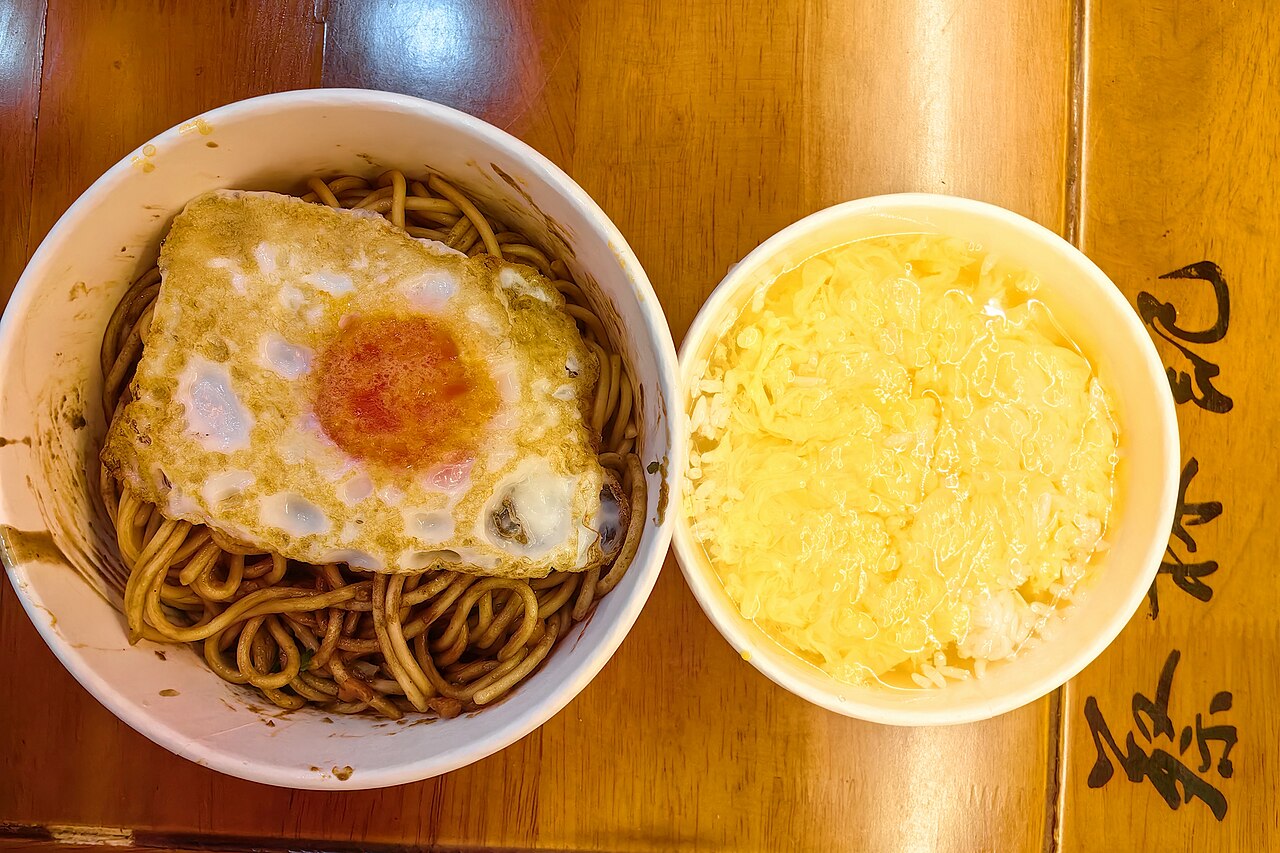
Wuhan Reganmian belongs to a fiercer, kinetic world. Forged along 1930s Hankou river wharves where stevedores hauled cargo between steamships and railcars, broth was an encumbrance—heavy to carry, slow to cool in Wuhan’s 39°C summers, and quick to turn noodles soggy. By splitting cooking into two temporal halves—completing 80% of starch gelatinization before dawn via Danmian, then finishing each order in a six-to-ten-second boiling dip—Wuhan artisans achieved fast-food throughput decades before modern quick-service restaurants existed. Packed into a grease-proof paper bowl, devoid of sloshing soup yet delivering 500+ kilocalories of nutty sesame lipids, wheat protein, and crunchy pickled cowpeas, Reganmian stands alone among China’s ten champions as a culinary marvel you can toss—and devour—at a brisk city stride.
- China Hospitality Association & Ministry of Commerce Circulation Promotion Center, 'First China Noodle Culture Festival Official Roster', Hangzhou, July 2013
- Huang, S., & Morrison, W. R. (1988). 'Aspects of proteins in Chinese and British common (hexaploid) wheats related to quality of white and yellow alkaline noodles.' Journal of Cereal Science
- DB42/T 1168 Hubei Provincial Food Safety Standard: Wuhan Reganmian
❓ Frequently Asked Questions
What are the official 'Top Ten Noodles of China' selected in 2013?
The 2013 roster comprises Wuhan Reganmian (Hot Dry Noodles), Beijing Zhajiangmian, Shanxi Daoxiaomian (Knife-Cut Noodles), Lanzhou Lamian (Beef Noodles), Sichuan Dandanmian, Henan Huimian (Braised Mutton Noodles), Hangzhou Pian’erchuan, Kunshan Aozaomian, Zhenjiang Guogaimian (Pot-Lid Noodles), and Jilin Yanji Naengmyeon (Cold Noodles).
How does Wuhan Reganmian differ structurally from Beijing Zhajiangmian and Sichuan Dandanmian?
Though all three eschew deep soup, their coating mechanics diverge sharply. Beijing Zhajiangmian relies on pork-fat-fried fermented soybean paste tossed over water-rinsed non-alkaline noodles; Sichuan Dandanmian uses aromatic chili oil and preserved Yibin greens over fine strands; Wuhan Reganmian coats steaming, pre-oiled alkaline noodles in high-viscosity stone-ground sesame paste thinned exclusively with sesame oil.
Why were Shaanxi noodles absent from the 2013 Top Ten list?
Because evaluation criteria weighted formal association submissions, standardized chain footprint, and municipal cultural nominations alongside culinary heritage, Shaanxi classics like Biangbiang and Qishan Saozi noodles missed the final ten—sparking a nationwide culinary debate that paradoxically cemented the list in popular memory.
✦ Cross-Referenced Chapters
Crowned First Among China’s Top Ten Noodles
The full story behind the 2013 national evaluation that ranked Wuhan Reganmian atop China’s ten greatest regional noodles.
Secrets of Alkaline Noodles (Jianshuimian)
High-gluten flour specifications, sodium carbonate ratios, 1.8mm round strand geometry, and signature springy chew.
The Core Art of "Danmian": Parboiling & Oil-Tossing
Step-by-step mastery of 80%-cooked boiling, fan-cooling, and sesame-oil tossing that keeps alkaline noodles springy for hours.
China’s Sesame-Sauce Noodle Lineage: Hot, Chilled & Tossed
Contrasting Wuhan’s hot oil-emulsified alkaline strands with Beijing chilled sesame noodles, Sichuan Liangmian, and Shaxian peanut noodles.
Atlas of Asian Alkaline Noodles: Jianshui, Kansui & Penghui
Tracing alkaline salt chemistry across Wuhan Reganmian, Cantonese bamboo-pressed wonton noodles, Lanzhou pulled noodles, and Japanese Ramen.