Global Brothless Noodles: Reganmian Meets Cacio e Pepe & Abura Soba
Cross-Cultural Culinary Physics: Comparing Wuhan’s Sesame Suspension with Roman Starch Emulsions, Tokyo Oil Noodles, and Javanese Mie Goreng
A global inquiry into the science and sociology of brothless tossed noodles—placing Wuhan Reganmian in dialogue with Roman Cacio e Pepe, 1950s Tokyo Abura Soba, and Indonesian Mie Goreng to uncover why distant culinary cultures converged on chewy strands, high-lipid micro-coatings, and bright acidic counterpoints.
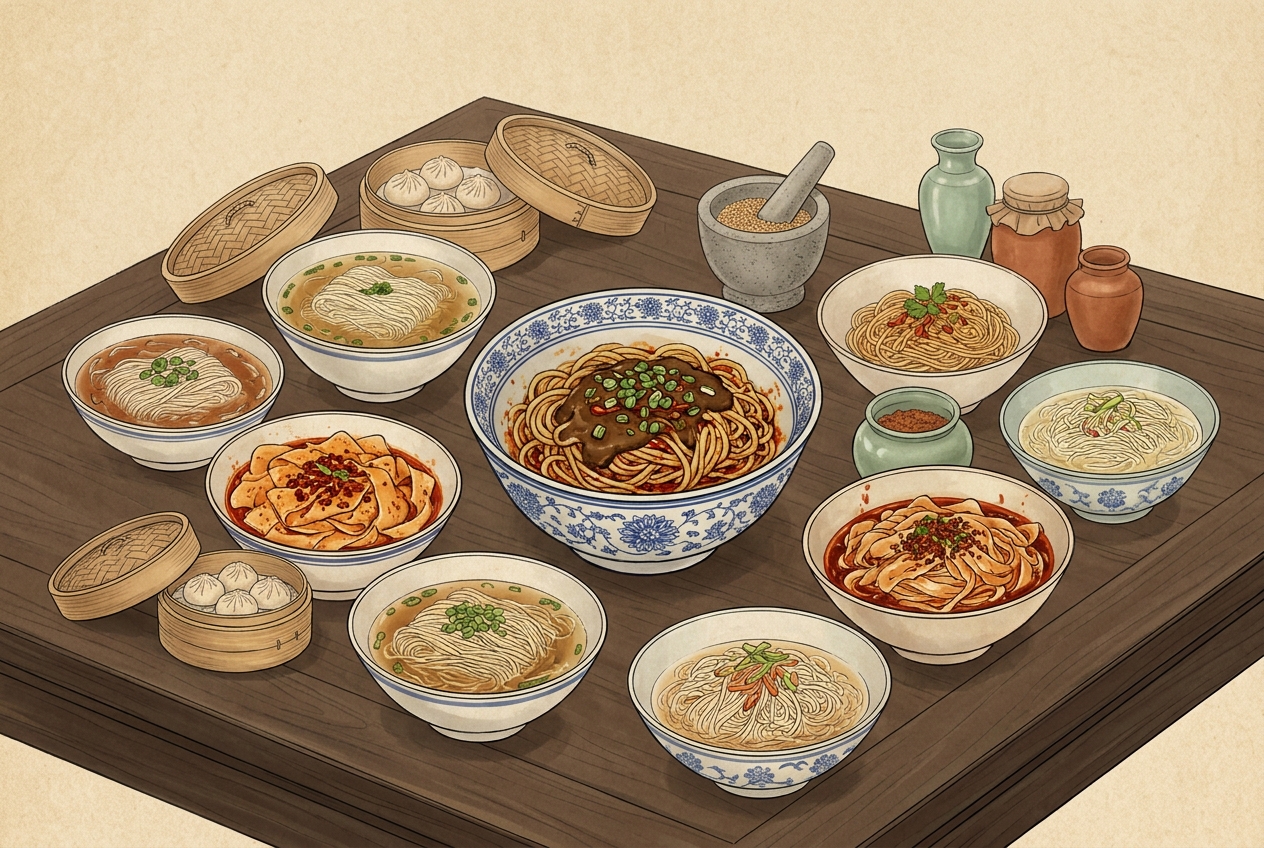
Abolishing the Broth: Why Brothless Noodles Captivate the World
In the global architecture of noodle cookery, removing the soup is never a mere act of subtraction—it is an act of radical amplification. Soup noodles disperse salt, fat, and volatile aromatics across 400 milliliters of hot water, offering gentle warmth and hydration. Brothless tossed noodles, by contrast, strip away the aqueous buffer. Every strand of wheat must stand on its own structural integrity while carrying a concentrated, micrometer-thin glaze of lipid, umami, and spice directly onto the tongue.
Travel across Eurasia and maritime Southeast Asia, and four towering monuments of brothless noodle craft emerge from vastly different landscapes: Wuhan Reganmian on the middle Yangtze, Roman Cacio e Pepe and Carbonara along the Tiber, Tokyo Abura Soba in Japan’s Tama suburbs, and Indonesian Mie Goreng across Java. Though separated by thousands of miles, all four converged upon an identical triad of culinary physics: a high-tensile noodle spine, an engineered lipid-protein emulsion, and a sharp acidic or pungent counterpoint to slice through richness.
“A Roman trattoria chef wrist-flips a skillet of starchy water to keep sheep’s cheese from seizing; a Wuhan commuter cross-lifts bamboo chopsticks to fold spiced soy broth into oil-thinned sesame paste. Different continents, identical colloid science.”
Rome Meets Hankou: Starch-Stabilized Casein vs. Oil-Suspended Sesame
When international culinary journalists introduce Wuhan Reganmian to Western readers, they almost instinctively reach for Roman pasta: “China’s answer to Cacio e Pepe” or “Sesame Carbonara.” Beneath that catchy metaphor lies a fascinating lesson in thermodynamic phase behavior.
Consider Rome’s Cacio e Pepe—nothing more than extruded durum-wheat tonnarelli, aged Pecorino Romano cheese, and cracked black pepper. Deceptively austere, it is notorious for catastrophic kitchen failure: overheat the pan by a few degrees or misjudge the pasta water, and the cheese separates into greasy puddles and rubbery strings. In 2025, an international team of physicists led by Giacomo Bartolucci and Daniel Maria Busiello published a landmark study in Physics of Fluids (“Phase behavior of Cacio e Pepe sauce”, later honored with an Ig Nobel Prize) mapping the exact phase diagram of this failure. Above ~65°C, dairy casein proteins denature and aggregate via hydrophobic attraction into what the physicists dubbed the “Mozzarella Phase.” Only when gelatinized amylopectin starch—at a critical threshold of 2% to 3% relative to cheese weight—coats the protein micelles during vigorous pan-tossing (mantecatura) does the mixture lock into a stable, velvety oil-in-water emulsion.
Now step onto a misty Hankou sidewalk at 6:30 AM and watch how Reganmian conquers the exact same clumping hazard through inverse colloid engineering:
- Pre-Denatured Plant Proteins & Anhydrous Lipid Flow: Unlike delicate raw dairy casein, the storage proteins (α-globulin) inside Wuhan’s stone-ground sesame paste have already been roasted at 120°C–140°C prior to milling. Thermally pre-denatured and suspended in ~55% sesame oil—further loosened with small-mill sesame oil (you xie)—the paste cannot curdle from heat alone. What would seize it is uncontrolled free water, which causes dry sesame solids to hydrate unevenly and weld hot starch strands together. Hence Wuhan’s iron commandment: shake the bamboo blanching basket three times to banish free boiling water before the noodles ever touch the bowl.
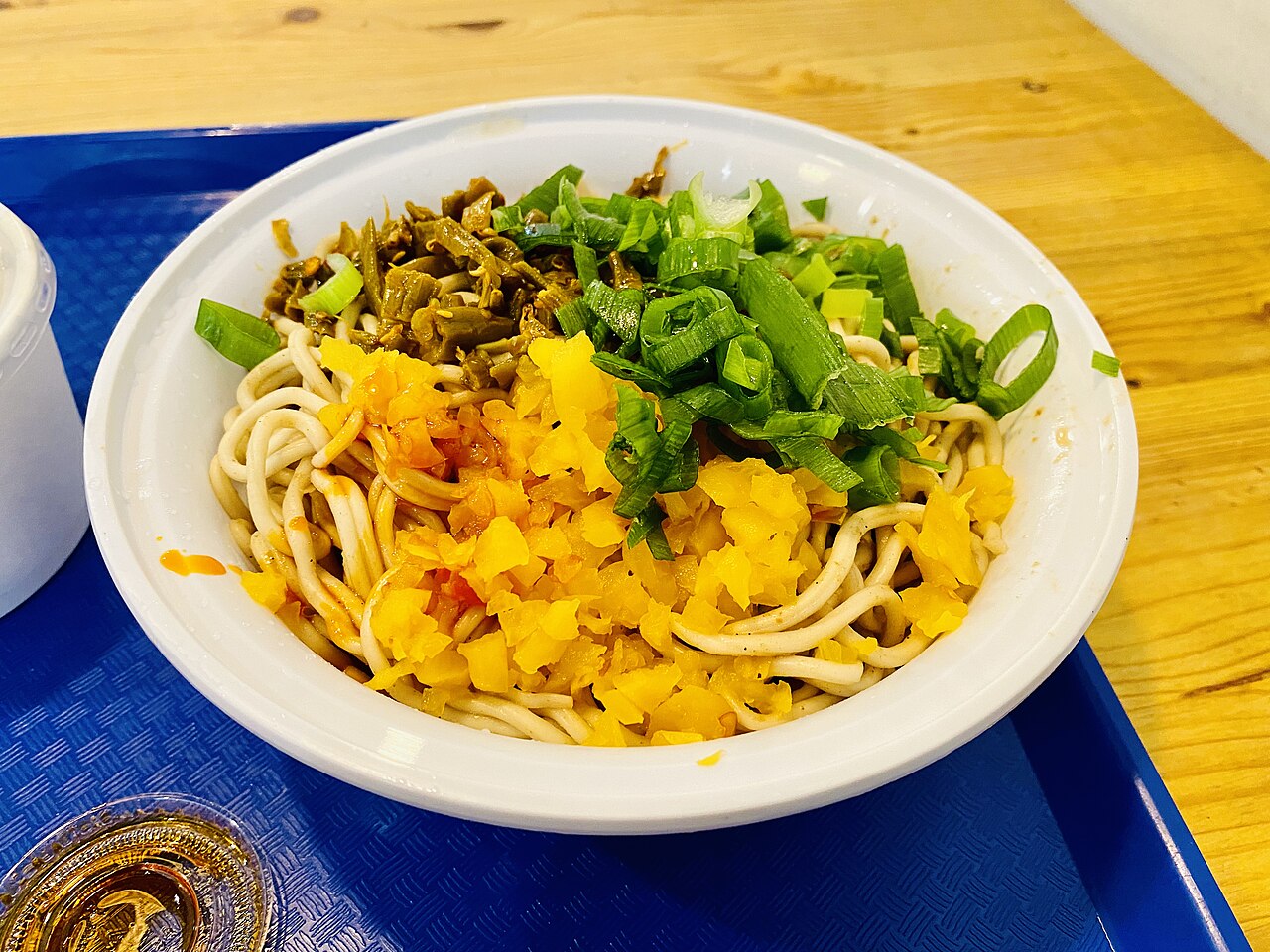
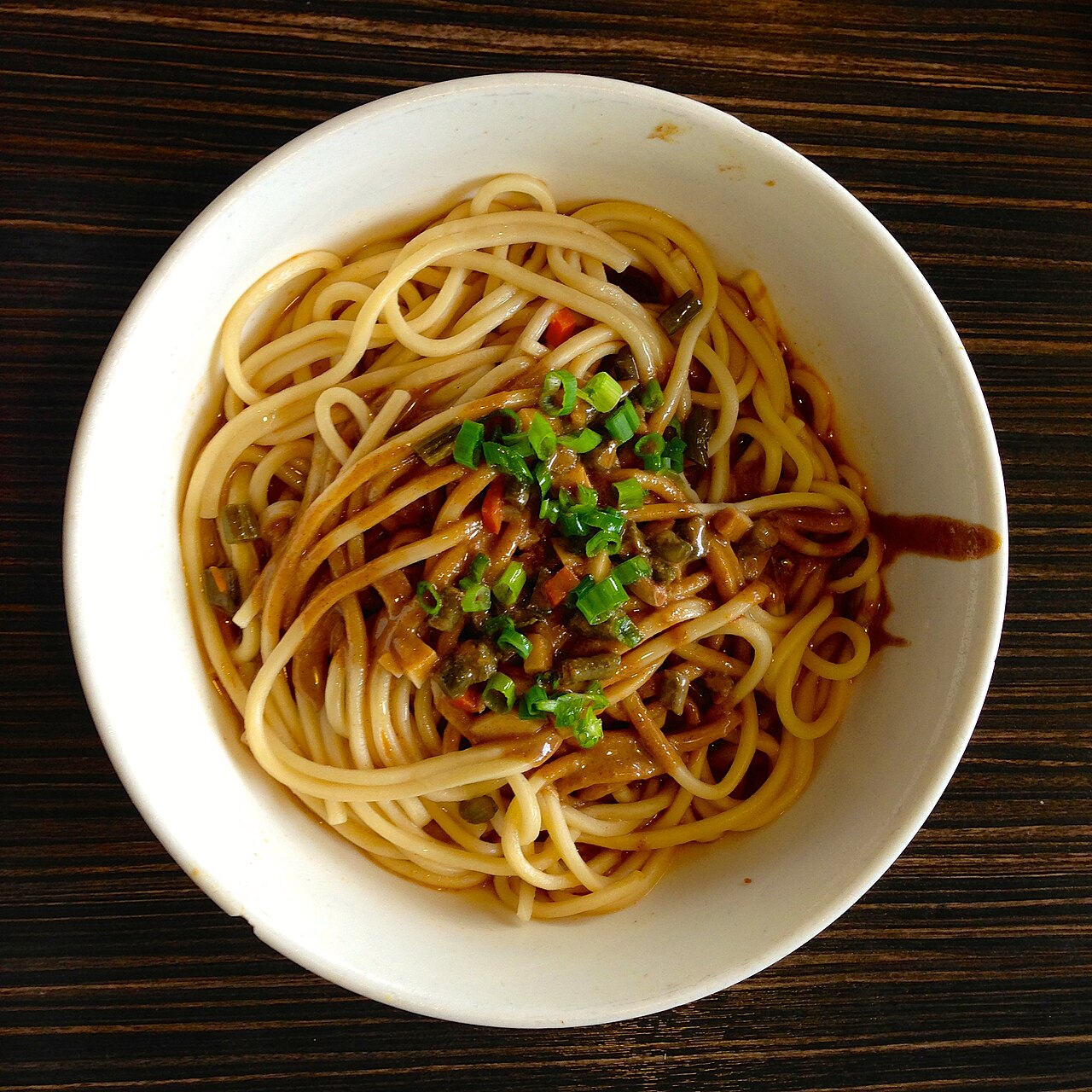
- In-Bowl Micro-Emulsification by the Diner: Yet Reganmian is not dressed in oil alone. At the bottom of the paper bowl waits ~8 ml of aqueous ten-spice soy lushui, garlic water, and rice vinegar. When steaming, oil-filmed Danmian strands land on top and receive a generous ladle of oil-thinned sesame paste, the diner becomes the mantecatura engine. Lifting and folding rapidly with bamboo chopsticks (shizi banmian) applies shear force that disperses those few milliliters of savory soy broth into microscopic aqueous droplets trapped inside the continuous sesame-oil-and-particle matrix—tightening the sauce just enough to cling to every 1.8mm strand without leaving a drop at the bottom of the bowl.
Four World Dry-Noodle Archetypes Compared
| Culinary Parameter | Wuhan Reganmian (China) | Roman Cacio e Pepe (Italy) | Tokyo Abura Soba (Japan) | Javanese Mie Goreng (Indonesia) |
|---|---|---|---|---|
| Historical Birthplace | 1930s Hankou river wharves & alleys | 18th–19th c. Lazio shepherd trails | 1950s Musashino university district (Chin Chin Tei) | 19th–20th c. Hokkien-Javanese street markets |
| Noodle Chemistry | Bread wheat + $Na_2CO_3$ alkali; parboiled & oil-fanned (Danmian) | 100% durum wheat semolina + water (no alkali; bronze-die rough surface) | High-protein wheat + kansui ($K_2CO_3 / Na_2CO_3$) thick strands | Fresh yellow alkaline-egg Mie Kuning |
| Emulsion / Glaze Engine | Stone-ground white sesame paste + sesame oil + bottom soy lushui | Aged Pecorino Romano fat/casein + gelatinized pasta-water starch | Bottom-loaded soy tare + rendered pork lard/sesame oil (+ raw yolk) | Caramelized palm-sugar soy (Kecap Manis) + candlenut-shallot oil |
| Texture Target | Springy elastic snap via starch retrogradation | Firm al dente core via dense durum gluten | Muscular, chewy high-alkali bite | Blanched then blistered over roaring wok heat |
| Acidity & Crunch Cutter | Pickled Huangpi radish dices, sour fermented cowpeas, rice vinegar | Coarsely crushed toasted black peppercorn (piperine bite) | Diner-drizzled white vinegar & rayu chili oil; crisp menma shoots | Tangy Acar pickled cucumber/shallot + crispy fried shallots |
Tokyo’s Abura Soba and Java’s Mie Goreng: Alkaline Cousins Abroad
If Rome shares Wuhan’s physics, Japan and Indonesia share Wuhan’s alkaline bloodline—and its working-class street ethos.
In the mid-1950s, in the western Tokyo suburb of Musashino near Asia University, a tiny shop named Chin Chin Tei (珍々亭) pioneered Abura Soba (“oil noodles”). Despite the word soba, no buckwheat is involved; the name descends from Shina soba / Chūka soba, Japan’s early term for Chinese-style alkaline wheat noodles made with kansui. Seeking a hearty, affordable meal for cash-strapped students and postwar laborers—while sparing the time and fuel of simmering massive pork-bone soup cauldrons—the proprietors placed a concentrated pool of soy tare and seasoned pork lard/sesame oil at the bottom of a bowl, piled on freshly boiled thick alkaline noodles, chashu pork, and fermented bamboo shoots (menma), and instructed diners to circle the bowl twice with rice vinegar and chili oil before tossing vigorously from the bottom up. Decades later in 2008, Nagoya’s Hanabi pushed the genre further with Taiwan Mazesoba, deliberately roughing up thick alkaline noodles with a metal strainer so leached surface starch binds with raw egg yolk, garlic, and spicy minced pork. Any Wuhan native sitting at a Tokyo Abura Soba counter immediately recognizes the choreography: hot alkaline strands, hidden bottom seasoning, aromatic lipid glaze, a splash of vinegar, and chopsticks working against rising steam.
Sail south to Java, and Chinese diaspora alkaline noodles undergo a tropical metamorphosis in Mie Goreng. In humid Jakarta night markets, parboiled yellow alkaline noodles hit a blazing carbon-steel wok alongside pounded candlenut, garlic, and shrimp paste (bumbu), glazed in thick, molasses-dark Kecap Manis (sweetened palm-sugar soy sauce). Served dry and glistening, every plate arrives with crispy fried shallots (bawang goreng) and a spoonful of bright, vinegar-pickled cucumber and carrot dices (acar)—an unmistakable equatorial echo of the crunchy pickled radish and sour long beans crowning a bowl of Wuhan Reganmian. Across oceans and centuries, human palates arrived at the same verdict: when the broth disappears, texture and emulsion become king.
- Bartolucci, G., Busiello, D. M., Ciarchi, M., et al. (2025). 'Phase behavior of Cacio e Pepe sauce.' Physics of Fluids, 37(4), 044122
- Solt, George (2014). The Untold History of Ramen: How Political Crisis in Japan Spawned a Global Food Craze. University of California Press
- McGee, Harold (2004). On Food and Cooking: The Science and Lore of the Kitchen. Scribner
❓ Frequently Asked Questions
Why do Western food writers often call Wuhan Reganmian 'Sesame Carbonara' or 'Wuhan’s Cacio e Pepe'?
Because both traditions reject watery soup or tomato purées in favor of a tight, glossy, high-fat protein emulsion clinging directly to firm wheat strands. Just as Pecorino Romano or egg yolk wraps Roman tonnarelli in rich savory velvet, stone-ground sesame paste and spiced soy卤 coat Wuhan’s springy alkaline noodles with extraordinary caloric and aromatic density.
How does the 2025 Physics of Fluids paper on Cacio e Pepe illuminate Wuhan Reganmian’s sauce mechanics?
Physicists Bartolucci et al. (2025) demonstrated that Pecorino cheese proteins clump into rubbery curds above ~65°C unless stabilized by a precise concentration of gelatinized starch water. Reganmian solves high-heat clumping from the opposite direction: because sesame proteins are already heat-denatured during seed roasting, Wuhan cooks exclude free water altogether and suspend the paste in sesame oil, allowing it to hit 80°C noodles without seizing.
Does Japanese Abura Soba use buckwheat noodles?
No. Despite the word 'soba', Abura Soba ('oil noodles') uses 100% wheat alkaline ramen noodles ('chūkamen', historically called 'Shina soba'). Invented in 1950s western Tokyo for hungry students and laborers, it hides concentrated soy tare and aromatic oil under hot noodles for the diner to toss with vinegar and chili oil—strikingly parallel to Reganmian’s ritual.
✦ Cross-Referenced Chapters
Small-Mill Sesame Oil, Blending Fats & Chili Oil
Why oil-thinned sesame paste coats every strand superiorly to water-thinned paste, plus aromatic Wuhan chili oil infusion.
The Core Art of "Danmian": Parboiling & Oil-Tossing
Step-by-step mastery of 80%-cooked boiling, fan-cooling, and sesame-oil tossing that keeps alkaline noodles springy for hours.
The Art of Eating While Walking & Cross-Tossing Etiquette
Mastering the Wuhan commuter’s signature one-handed bowl cradle and rapid cross-lifting chopstick toss without spilling a drop.
Food Chemistry: Alkaline Gluten Crosslinking & Sesame Phase Inversion
How sodium carbonate strengthens disulfide gluten bonds and tints flavonoids yellow, plus the rheology of sesame paste emulsion.
Global Palate Reactions & Official English Culinary Nomenclature
How international diners experience Wuhan’s "Sesame Carbonara" and standardizing English menu translations for Reganmian craft.