Small-Mill Sesame Oil, Blending Fats & Chili Oil
Water-Substitution Extraction, Oil-Phase Paste Rheology, and Three-Stage Wuhan Chili Oil
Uncovering the three-oil architecture behind Wuhan Reganmian: how heritage water-substitution (Shuidai) sesame oil preserves delicate aromatics, why Wuhan shops thin sesame paste with oil rather than water, and how three-temperature charred chili oil is brewed.
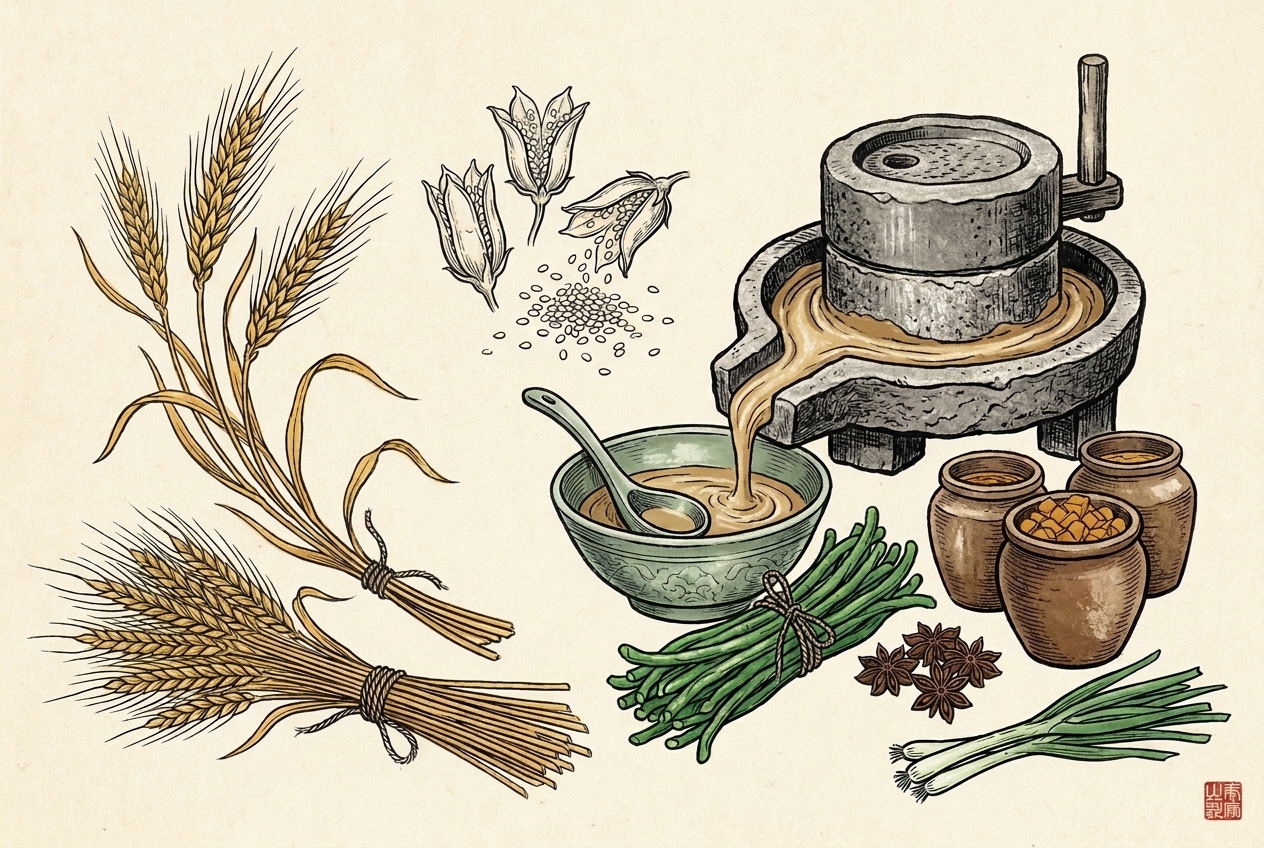
The Liquid Bridge in a Brothless Bowl
First-time visitors staring into a freshly assembled bowl of Reganmian often wonder how a brothless tangle of wheat noodles and thick roasted seed paste can possibly toss into something glossy and lush rather than dry and pasty. Ten brisk strokes of the chopsticks answer the question: every golden strand emerges cloaked in a satin sheen that glides across the palate without a drop of free soup in sight.
Behind this sleight of hand stands a disciplined three-oil culinary architecture: (1) neutral-plus-aromatic tossing oil (danmian you) applied after parboiling to seal moisture inside the noodles, (2) blending oil used to thin stone-ground sesame paste in the master crock, and (3) a finishing drizzle of water-substituted small-mill sesame oil (xiaomo xiangyou), crowned—for spice lovers—with smoky Wuhan charred-aroma chili oil.
“Not a drop of plain water touches the crock; fragrant oil alone builds the golden bridge. Three drops from the small stone mill outshine a hundred pots of simmered bone broth.” — Old Manchun Road shopkeepers’ rhyme
Heritage Extraction: The Magic of Water-Substituted Small-Mill Oil
Under China’s national Sesame Oil standard (GB/T 8233-2018), Xiaomo Xiangyou (small-mill fragrant sesame oil) occupies a category apart from industrial expeller-pressed sesame oil. Mechanical screw presses subject seeds to immense pressure and frictional heat above 200°C, muting delicate top-notes. By contrast, authentic xiaomo xiangyou relies on an ancient, physics-driven craft known as the Water-Substitution Method (Shuidaifa, 水代法).
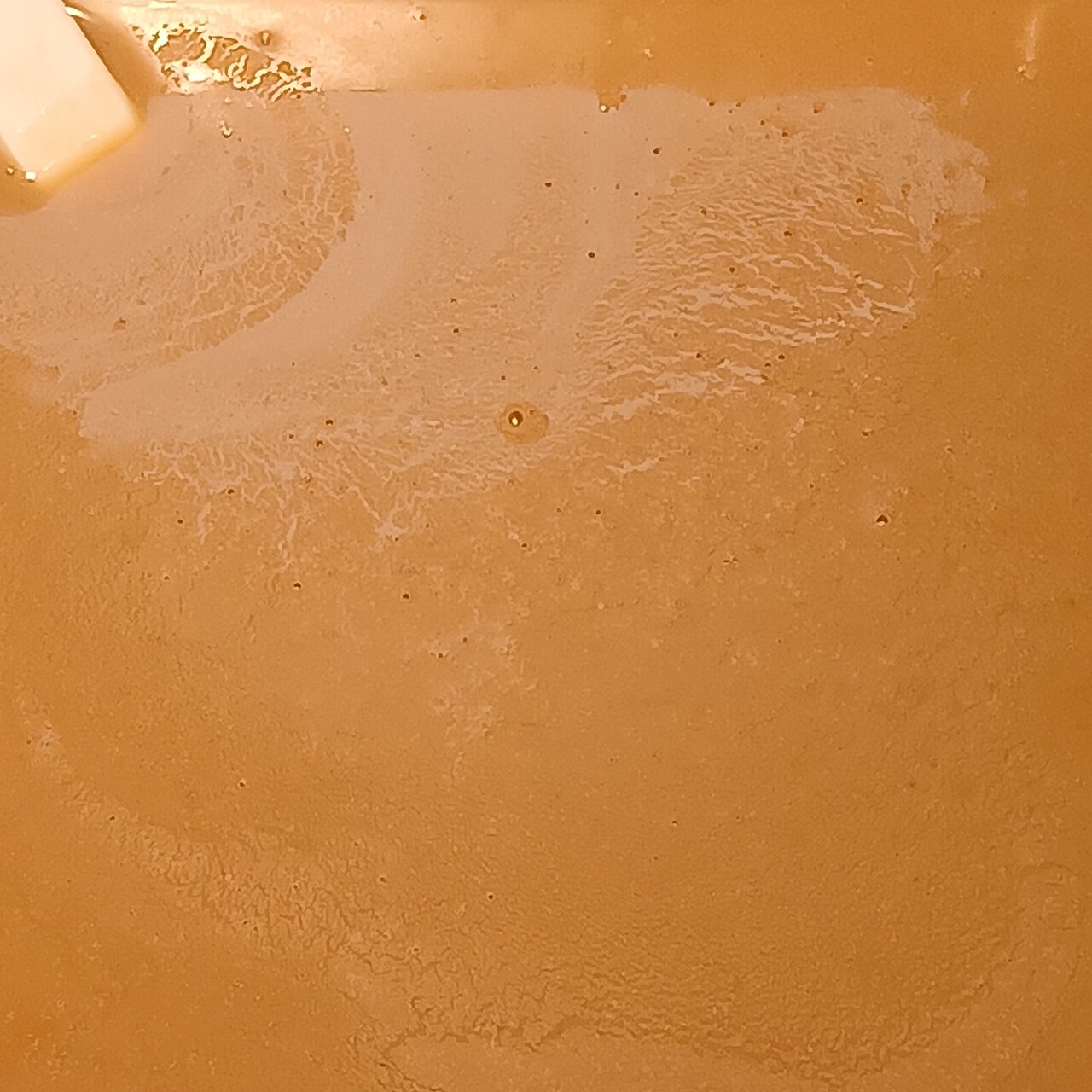
Artisans first roast Hubei white sesame seeds and grind them between slow bluestone wheels into warm, fluid sesame slurry. Transferred into a wide copper cauldron, the slurry receives precisely measured additions of 85°C–95°C water while a wooden paddle stirs rhythmically. At the molecular level, hydrophilic sesame globulins and cell-wall polysaccharides exhibit a far stronger affinity for water molecules than for non-polar triglycerides. As proteins hydrate and swell, they gently crowd microscopic oil droplets out of suspension. Rhythmic tapping with a gourd-shaped mallet (dunyou) coaxes the freed droplets to coalesce and rise into a luminous, ruby-amber layer skimmed from the top.
Because extraction never exceeds the boiling point of water, xiaomo xiangyou retains over seventy volatile pyrazines, furans, and thiazoles alongside high levels of sesamol—a potent natural phenolic antioxidant that both deepens roasted aroma and protects the oil against rancidity.
Oil-Thinning vs. Water-Thinning: Colloidal Science in the Noodle Shop
Across northern China—from Beijing chilled sesame noodles to mutton hotpot dipping bowls—cooks thin sesame paste with cold water (shuixie). In Wuhan’s professional noodle stalls, however, pouring water into the sesame vat is heresy. Authentic Wuhan shops thin their master paste strictly with oil (youxie).
| Attribute | Wuhan Commercial Oil-Thinning (Youxie) | Home Hybrid Thinning (Oil First, Warm Water Second) | Northern Water-Thinning (Shuixie) |
|---|---|---|---|
| Typical Formula | 100g raw paste + 35g–45g oil blend | 100g raw paste + 20g sesame oil + 40g 50°C water | 100g raw paste + 80g–110g cold water |
| Colloidal Phase | Continuous lipid suspension; flows like melted praline | Semi-emulsified yogurt-like cream | Oil-in-water dispersion; seizes stiff before thinning |
| Adhesion to Hot Noodles | Hydrophobic match with oiled strands; instant 360° cling | Good cling if eaten immediately | Hot alkaline strands drink water fast, leaving chalky paste |
| Subtropical Shelf Life | Zero free water; stable all day at 35°C+ stall temps | Must be refrigerated or used within 3–4 hours | Ferments and sours within hours in summer humidity |
| Best Culinary Context | Authentic Wuhan street stalls & heritage chains | Lighter-calorie home kitchen single bowls | Beijing chilled noodles & hotpot dips |
The science is unmistakable. Raw stone-ground sesame paste contains roughly 53% oil dispersed around dry protein and fiber particles. Introducing water directly causes proteins to hydrate and cross-link into a stiff, concrete-like lump (seizing) until excess water finally breaks the matrix into a pale, diluted emulsion. Worse, water-thinned paste breeds bacteria rapidly in Wuhan’s steamy mornings and loses its grip when poured over oil-coated danmian noodles.
By slowly stirring 35 to 45 grams of oil into every 100 grams of raw paste—purist flagships use 100% xiaomo xiangyou, while savvy neighborhood legends blend 30% xiaomo xiangyou with 70% cooked low-erucic rapeseed or soybean oil so the aroma sings without overwhelming the palate—the continuous phase stays purely lipidic. Only inside the diner’s bowl, when chopsticks whip the oil-thinned paste together with 15g of spiced soy broth and 15g of garlic water, does a split-second in-bowl micro-emulsion form right before eating.
Three Temperatures, Three Pours: Wuhan Charred-Aroma Chili Oil
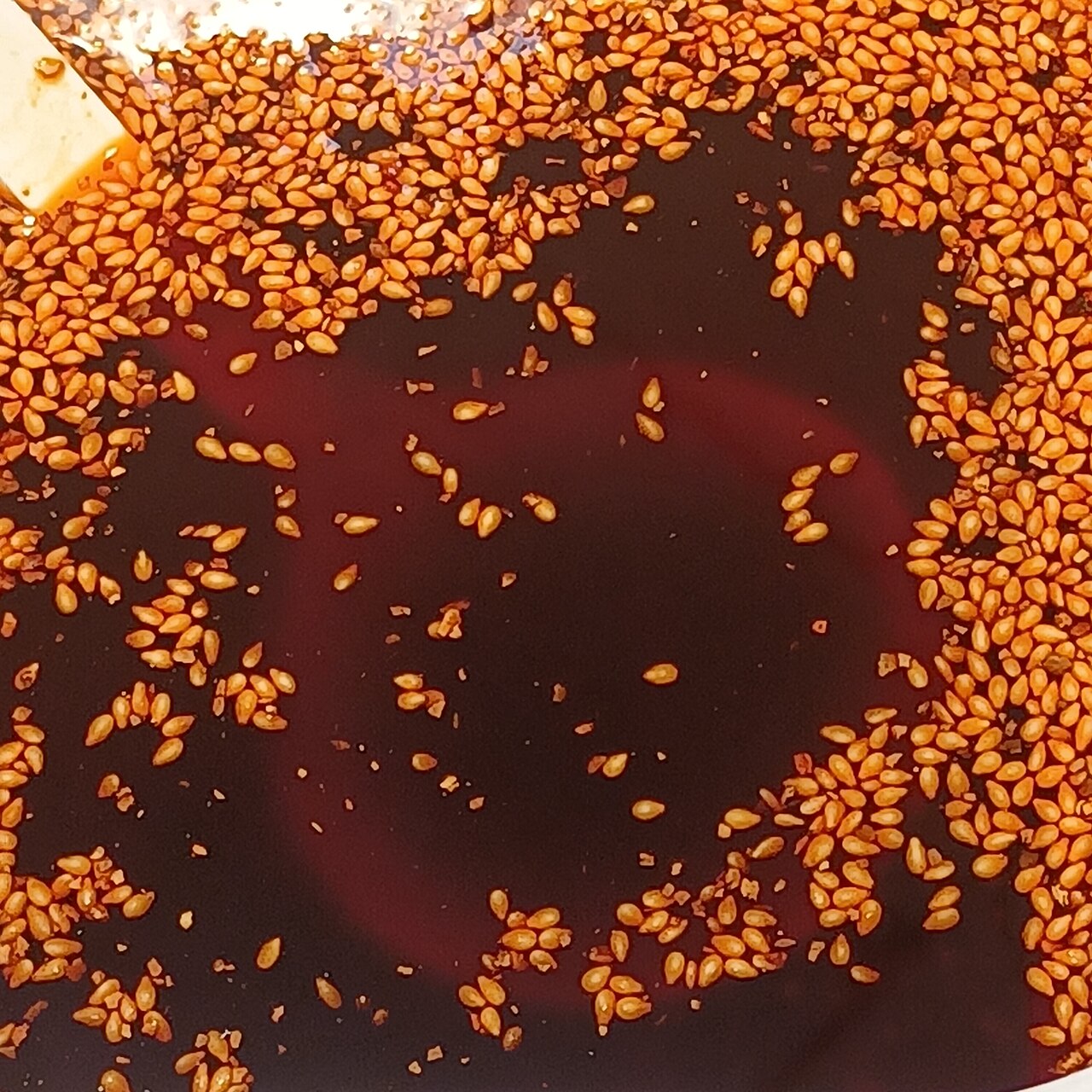
“Want chili?” (Yao bu yao lazi?) is the final cadence of every Wuhan breakfast order. Unlike Sichuan red oil—which strains out solids to leave a clear, spice-perfumed crimson oil—Wuhan’s Hongyou Lazi celebrates toasty, smoky chili crisp sediment.
Stallkeepers blend 70% fragrant Erjingtiao dried chilies for aroma and color with 30% fiery Chaotianjiao bird’s-eye chilies for front-palate punch, pounding them into uneven flakes mixed with toasted white sesame seeds. Local rapeseed oil is heated to 220°C to banish raw brassica notes, then cooled and ladled in three thermal stages:
- First Pour at 190°C (Charred Aroma): One-third of the oil hits the top layer, flash-toasting outer flakes to a nutty mahogany edge with an unmistakable smoky perfume.
- Second Pour at 155°C (Capsaicin Extraction): The second ladle extracts deep heat without burning the core flakes.
- Third Pour at 125°C (Ruby Hue): The gentler final pour draws out vivid carotenoid red pigments, sealed with a splash of black rice vinegar that sends a dramatic cloud of tangy chili steam skyward.
- National Standard of the People's Republic of China, Sesame Oil (GB/T 8233-2018)
- Wuhan Catering Service Corporation, Technical Compendium of Wuhan Flavor Snacks
- Journal of the Chinese Cereals and Oils Association, Volatile Fingerprinting of Water-Substituted Sesame Oil
- Hubei Culinary Association, Traditional Chu Cuisine Condiment Archives
❓ Frequently Asked Questions
Why do Wuhan noodle masters thin sesame paste with oil instead of water?
Adding water directly to roasted sesame paste hydrates proteins into a stiff, chalky mass before breaking into a thin watery liquid that slides off oiled noodles and sours rapidly in Wuhan's summer heat. Thinning with oil preserves a continuous lipid phase that stays shelf-stable all morning and bonds seamlessly to oil-tossed alkaline strands.
What is 'small-mill sesame oil' (Xiaomo Xiangyou) and the water-substitution method?
Instead of crushing seeds in high-heat mechanical expellers, artisans grind roasted sesame on slow stone wheels and stir in measured boiling water. Because sesame proteins bind water more strongly than oil, the water gently displaces clear amber oil to the surface at low temperature, preserving fragile pyrazines and natural sesamol antioxidants.
How does Wuhan Reganmian chili oil differ from Sichuan red chili oil?
Sichuan red oil prizes clarify-strained crimson oil infused with star anise, cassia, and alkannet root. Wuhan street chili oil favors bold 'charred-aroma chili crisp' (jiaoxiang lazi): medium-coarse Hubei and Erjingtiao chili flakes hit first with 190°C rapeseed oil for a smoky edge, served generously with crunchy sediment.
✦ Cross-Referenced Chapters
Soul of the Bowl: Stone-Ground Sesame Paste Craft
Low-temperature roasting, stone-mill grinding, and the great culinary debate between 100% pure sesame vs. 80/20 sesame-peanut blends.
The Ten-Condiment Flavor Matrix & Layering Order
Exact gram ratios and sequencing of light/dark soy, rice vinegar, white pepper, sugar, and spiced sesame salt.
The Core Art of "Danmian": Parboiling & Oil-Tossing
Step-by-step mastery of 80%-cooked boiling, fan-cooling, and sesame-oil tossing that keeps alkaline noodles springy for hours.
Food Chemistry: Alkaline Gluten Crosslinking & Sesame Phase Inversion
How sodium carbonate strengthens disulfide gluten bonds and tints flavonoids yellow, plus the rheology of sesame paste emulsion.
Food Safety Standards & Fresh Alkaline Noodle Storage
Modern food-grade alkali regulations, microbial shelf-life windows for oil-tossed fresh noodles, and aflatoxin screening.
China’s Sesame-Sauce Noodle Lineage: Hot, Chilled & Tossed
Contrasting Wuhan’s hot oil-emulsified alkaline strands with Beijing chilled sesame noodles, Sichuan Liangmian, and Shaxian peanut noodles.