Urban Legends: Balancing Bowls on Wuhan Buses & Mass Records
From 'Formula-One' Bus Acrobatics on Route 521 to Mainland China's First Subway Food Ban
Exploring the colorful urban folklore of old Wuhan commuters balancing hot sesame noodles aboard famously spirited city buses, how Reganmian directly inspired mainland China's first statutory subway food ban in December 2012, and open-air festivals where thousands toss bowls in unison.
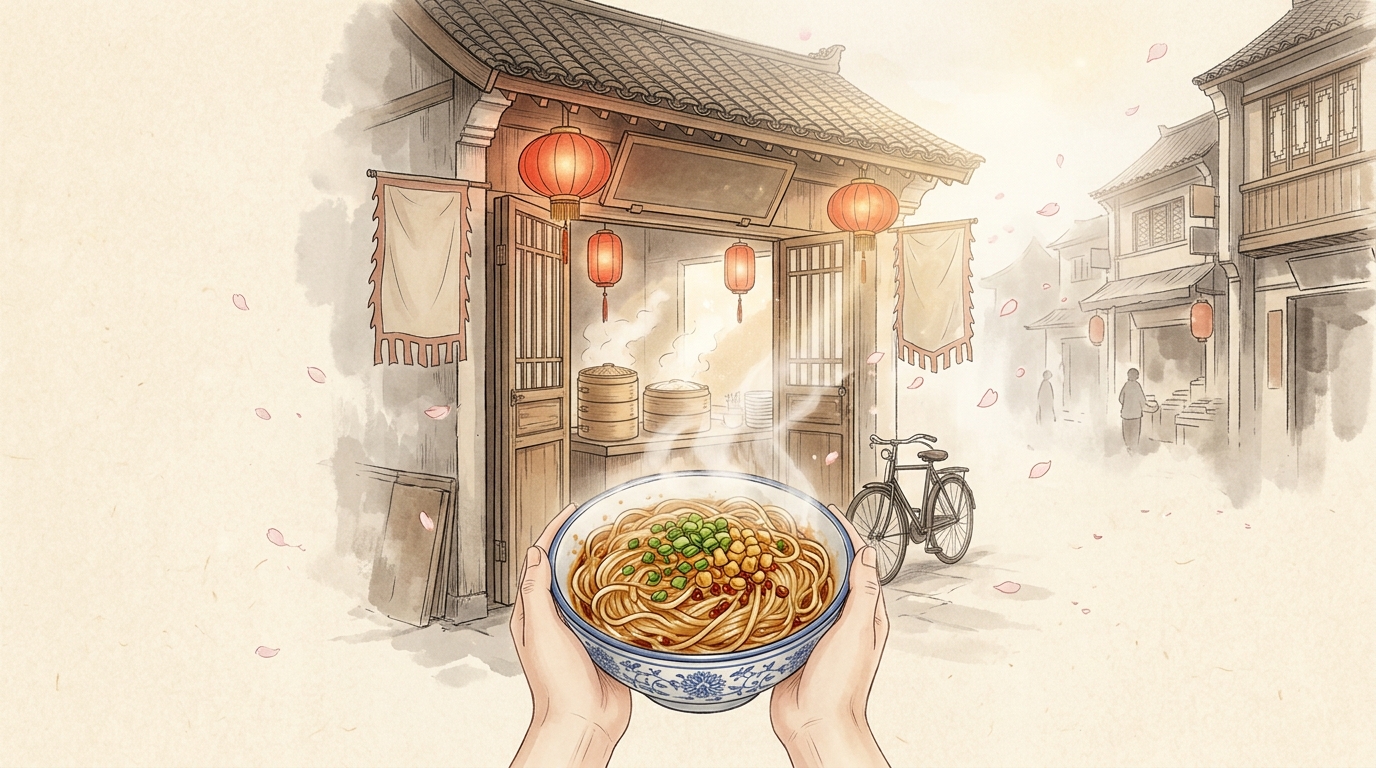
The “Land Flight” Acrobats of Old Route 521
Browse university bulletin boards from turn-of-the-millennium Wuhan—when hundreds of thousands of students crowded along Luoyu Road in Wuchang and Jiefang Avenue in Hankou—and one piece of urban comedy outshines all others: the fearless drivers of Bus Route 521 and the even more fearless passengers who ate Reganmian standing in their aisles.
In the late 1990s and early 2000s, before subways tunneled under the Yangtze, crossing Wuhan’s sprawling Three Towns meant boarding fleet-footed diesel buses equipped with heavy manual clutches and open sliding windows. Veteran drivers threaded morning bottlenecks with brisk lane-changes known in dialect as shuai panzi (“whipping the wheel”), earning Routes 521, 546, and 508 affectionate student nicknames like “Land Flights” and “the Formula One of Public Transit.” Campus wags joked that seeing a 521 overtake a taxi was ordinary; true spectacle was watching one 521 overtake another 521.
Yet inside those lurching morning carriages stood practitioners of an everyday martial art. A commuter running late would hop aboard cradling a grease-proof paper bowl of freshly blanched Reganmian. Planting feet shoulder-width apart in a subtle tai-chi horse stance, hooking a single forearm around a vertical steel stanchion, and using a loose wrist as a human gimbal, the rider would deftly cross-toss sesame paste with bamboo chopsticks through sharp corners and sudden stops—finishing the last glossy strand three stops later without leaving a speck of red chili oil on a neighbor’s jacket.
“Iron handrails groan and brakes hiss sharp, yet chopsticks dance unshaken—never claim martial masters have vanished until you’ve ridden a 7:30 AM Wuhan bus.”
Beneath the humor lay sound culinary physics. Unlike Lanzhou beef noodles or Cantonese wonton noodles swimming in hot broth, authentic Wuhan Reganmian is rigorously drained of free water (kongshui). Once oil-thinned stone-ground sesame paste emulsifies with hot surface starch on 1.8-millimeter alkaline strands, it develops a remarkably high yield stress—clinging stubbornly to the wheat rather than sloshing over the rim. Born on 1930s Hankou wharves for dockworkers who had no tables, the brothless bowl proved uncannily suited to bumpy twentieth-century commutes.
December 28, 2012: How Reganmian Inspired China’s First Subway Food Ban
Folklore belongs to open-windowed yesterdays; underground rapid transit demands new civic compacts. As Wuhan prepared to open Metro Line 2—the first subway tunnel ever bored beneath the Yangtze River—urban planners confronted an awkward question: what happens if half a million morning riders bring Guozao underground?
On December 28, 2012, the very day Line 2 welcomed its first passengers, the newly enacted Wuhan Rail Transit Management Regulations took effect. With that statute, Wuhan became the first city in mainland China to explicitly outlaw eating and drinking inside subway carriages by local legislation, empowering transit inspectors to levy fines of 50 to 200 RMB on offenders who refused to comply.
At the time, commentators in Beijing and Shanghai marveled that China’s most breakfast-obsessed metropolis had passed the nation’s strictest transit food ban. In truth, only a city that truly understood Reganmian could appreciate why the law was indispensable:
- Olfactory Intensity in Sealed Tunnels: Roasted sesame paste, raw crushed garlic water, and fermented sour cowpeas smell heavenly on a breezy boulevard—and overpowering when multiplied by fifty bowls inside a pressurized, air-conditioned subway car twenty meters underground.
- Slip Hazards and Track Safety: A single dropped bowl of sesame-oil-coated noodles turns polished train flooring into an instant skating rink during rush hour, while food crumbs lure rodents toward sensitive signaling cables.
| Transit Era | Dominant Commuter Mode | Status of On-Board Reganmian | Evolution of Civic Space & Etiquette |
|---|---|---|---|
| 1990s–Mid 2000s | Open-window manual diesel buses (e.g., Route 521) | Commonplace; spawned legendary bowl-balancing lore | Wharf “walk-and-eat” habit extended onto breezy buses |
| Dec 28, 2012 | Opening of Yangtze-crossing Metro Line 2 | Statutory ban enforced (fines of 50–200 RMB) | Mainland China’s first legislated subway food prohibition |
| 2013–2014 | Rapid metro expansion & air-conditioned bus fleet | Viral public debates & volunteer “bag-it” campaigns | Brief cultural growing pains yield strong civic consensus |
| 2015–Present | 12+ metro lines & smooth electric transit | Sealed takeaway allowed; eating stops at station doors | Brisk curbside meals preserve both tradition and clean trains |
Cultural habits rarely shift overnight without friction. In late March 2013, a heated altercation on Metro Line 2—in which a commuter eating Reganmian splashed her bowl after being photographed by a fellow rider—sparked over three million online comments nationwide. Rather than breeding resentment, the controversy catalyzed rapid civic reflection. By 2014, air-conditioned public buses joined the no-eating pledge, with red-vested volunteers handing out small takeaway bags at major bus stops.
Today, step outside busy metro entrances like Xunlimen, Jiedaokou, or Wangjiawan at 8:00 AM and you witness Wuhan’s pragmatic compromise in action: clusters of well-dressed office workers standing beside tidy sidewalk wastebins, tossing and devouring a bowl of Reganmian in three brisk minutes, dropping the empty paper bowl into the bin, wiping their lips, and swiping calmly through the turnstiles.
Ten Thousand Chopsticks Raised as One
Banished from cramped transit aisles, Wuhan’s love of communal noodle eating has found grander expression under open skies. Rooted in the city’s neighborhood banquet heritage—most famously Jiang’an District’s Baibuting Wanjiayan (Ten-Thousand-Family Potluck), a Guinness World Record community feast—large-scale “Thousand-Person and Ten-Thousand-Person Reganmian Feasts” have become signature spectacles of Wuhan cultural tourism festivals along the Hankou Riverbank and Garden Expo plazas.
At these open-air gatherings, dozens of meter-wide cauldrons roar in unison while master chefs in tall white toques plunge bamboo strainers through clouds of white steam. Long wooden tables stretch parallel to the Yangtze. At the strike of a brass gong, thousands of locals, returning alumni, and curious travelers plunge bamboo chopsticks into paper bowls simultaneously, sending a warm tide of toasted white-sesame aroma drifting across the riverfront—celebrating in sunlight what once balanced precariously on a morning bus.
- People's Daily Online: 'Wuhan Becomes Mainland China's First City to Legislate Subway Eating Ban', December 2012
- Standing Committee of the Wuhan Municipal People's Congress: 'Wuhan Rail Transit Management Regulations' (Effective Dec 28, 2012)
- China News Service: 'From Eating on the Move to Finishing Before the Gate: How One Bowl Reshaped Wuhan Transit Etiquette'
- China National Radio (CNR): 'Fond Memories of Legendary Bus Route 521 and Thirty Years of Wuhan Public Transit'
❓ Frequently Asked Questions
What was the famous 'Route 521 Bus Reganmian' legend in Wuhan?
During the late 1990s and early 2000s, before Wuhan built its subway network, high-frequency manual-transmission buses like Route 521 in Wuchang were jokingly dubbed 'Formula One buses' by university students for their brisk driving style. Morning commuters became famous in local lore for wedging one elbow around a pole while tossing and eating hot Reganmian without spilling a drop.
Why did Wuhan become the first city in mainland China to ban eating on subways by law?
When Wuhan Metro Line 2—the first subway tunnel beneath the Yangtze—opened on December 28, 2012, municipal legislators knew residents might naturally bring steaming Reganmian underground. Because roasted sesame paste, raw garlic water, and sour beans have powerful aromas in sealed tunnels, Wuhan passed mainland China's first statutory rail-transit food ban (fines up to 200 RMB).
Are passengers allowed to carry packaged Reganmian onto Wuhan subways today?
Yes, tightly bagged or sealed takeaway portions may be carried aboard, provided they are not opened or eaten inside stations or train cars. Commuters routinely finish eating beside trash bins placed conveniently outside station entrances before descending the escalators.
✦ Cross-Referenced Chapters
Utensil & Cart Evolution: Poles, Bamboo Strainers & Paper Bowls
A material history from wooden shoulder-poles and conical bamboo baskets to iconic grease-proof paper bowls.
The Art of Eating While Walking & Cross-Tossing Etiquette
Mastering the Wuhan commuter’s signature one-handed bowl cradle and rapid cross-lifting chopstick toss without spilling a drop.
Food Chemistry: Alkaline Gluten Crosslinking & Sesame Phase Inversion
How sodium carbonate strengthens disulfide gluten bonds and tints flavonoids yellow, plus the rheology of sesame paste emulsion.
Mirror of the Wharf: Directness, Warmth & Nine-Province Openness
How brisk blanching, generous sesame richness, and north-south condiment fusion embody Wuhan’s forthright civic character.