Warmth of the River City: Suspended Charity Bowls & Silent Stalls
Winter Bowls for Dawn Street Sweepers, Dignity-Preserving Code Words, and Deaf-Run Neighborhood Kitchens
True chronicles of grassroots kindness across Wuhan's breakfast stalls—documenting free winter bowls for sanitation workers, 'suspended noodles' pasted as sticky notes on shop walls, face-saving secret menu codes for travelers down on their luck, and beloved silent noodle shops run by hearing-impaired artisans.
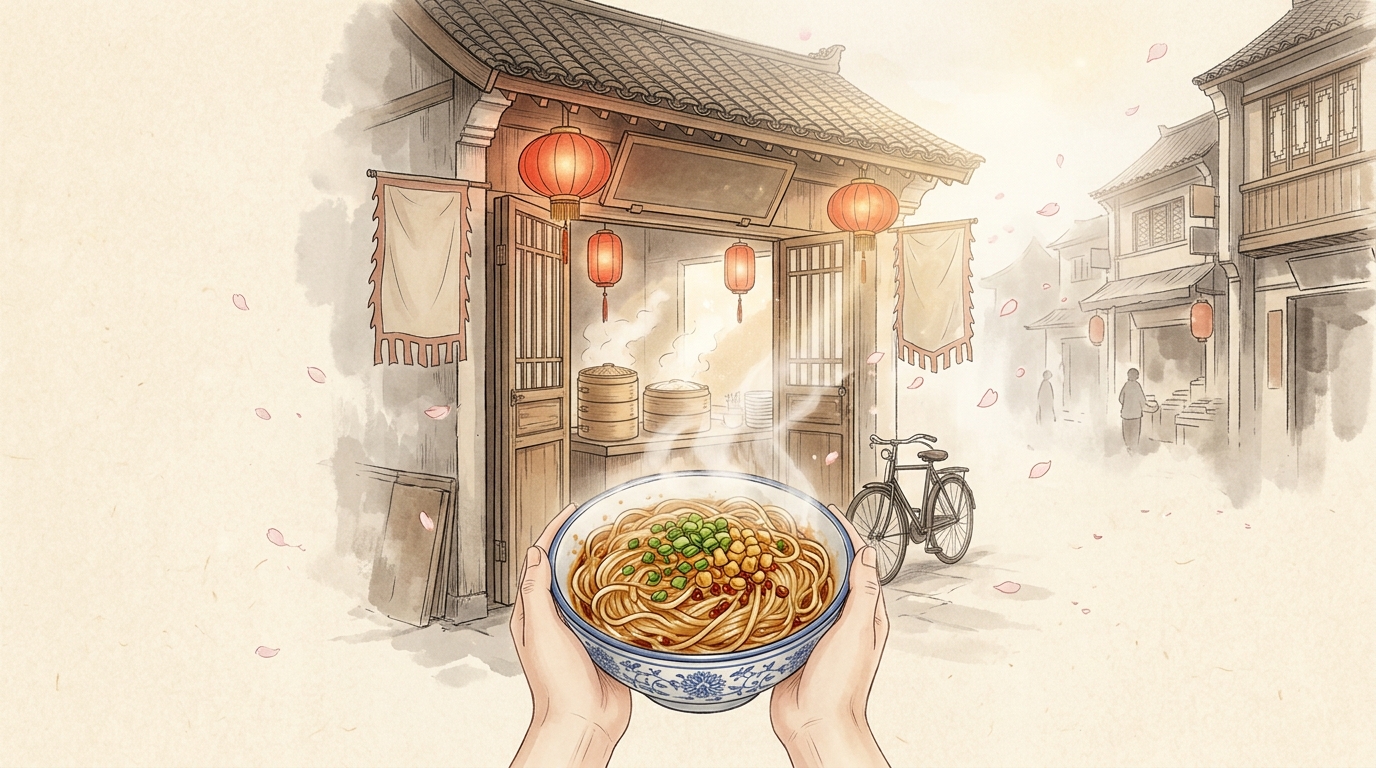
Gruff Voices, Tender Cauldrons: The Moral Economy of the Wharf
First-time visitors to Wuhan sometimes mistake the decibel level of a morning breakfast stall for hostility. Wuhanese dialect is percussive, rapid-fire, and forged on nineteenth-century river wharves where stevedores had to shout over creaking hawsers and steamboat whistles. “What d’you want? Speak up—boiling water coming through!” barks the auntie behind the cauldron. Yet live beside the Yangtze for a single winter, and you quickly discover the city’s defining paradox: beneath the gruff wharf cadence beats a fiercely protective neighborhood chivalry.
Across Wuhan’s tens of thousands of family-run breakfast shops, a five-yuan bowl of Reganmian has quietly evolved into an instrument of everyday mutual aid. Without corporate sponsors or bureaucratic paperwork, independent stallkeepers use steaming cauldrons, sticky-note walls, and laminated doorway notices to weave a safety net that feeds the stomach without bruising human pride.
“Sharp on the tongue yet soft at the core—in the chill before sunrise, Wuhan’s iron cauldrons boil first for those who sweep the frost from its streets.”
Honoring the 4:00 AM Orange Vests: Free Winter Bowls for Street Sweepers
At 4:00 AM in mid-January, when damp river cold penetrates bone and breath hangs white under streetlamps, only two groups of Wuhanese are awake: noodle artisans simmering spiced soy broth behind shuttered storefronts, and sanitation workers (huanweigong) in fluorescent orange vests sweeping fallen plane-tree leaves and frost along empty boulevards. Bound by the shared kinship of pre-dawn labor, stallkeepers know better than anyone how bitterly cold the 6:00 AM shift change feels.
For well over a decade, independent noodle shops across Qiaokou, Jiangxia, Jianghan, and Wuchang districts have maintained quiet winter traditions for their orange-vested neighbors. During freezing cold snaps—and notably from the first to the tenth day of the Lunar New Year, when most restaurants close and migrant street sweepers stay behind to keep the city spotless—shops such as Wusheng West Street’s long-running neighborhood noodle houses keep their fires lit specifically to serve complimentary bowls to sanitation crews. Several neighborhood proprietors profiled by People’s Daily and China National Radio have ladled out more than ten thousand free bowls over consecutive winters.
At first, many street sweepers hesitated at the threshold, worried about tracking dust indoors or taking money from small family businesses. Seasoned Wuhan shopkeepers solved that reluctance with characteristic bluffness—blanching a generous bowl, topping it with extra sesame paste and pickled radish, pressing it directly into gloved hands, and scolding affectionately: “The noodles are already in the pot—if you don’t eat them they’ll clump! Sit inside and drink some hot egg-rice wine!” Today, municipal authorities and local catering associations have expanded this grassroots impulse into hundreds of designated “Love Stations” (Aixin Yizhan), offering free hot water, rest stools, and discounted or complimentary Guozao bowls across the Three Towns.
| Grassroots Charity Model | How It Operates in Practice | Primary Beneficiaries | Cultural & Psychological Design |
|---|---|---|---|
| Sanitation-Worker Winter Bowls | Free steaming bowls during deep winter freezes & Lunar New Year shifts | Dawn street sweepers & outdoor municipal workers | Solidarity among pre-dawn laborers honoring civic caretakers |
| Wall-Posted “Suspended Bowls” | Diners prepay extra bowls posted as sticky notes on a shop’s Charity Wall | Elderly scavengers, stranded travelers, low-income neighbors | Asynchronous stranger-to-stranger kindness with zero awkwardness |
| Dignity “Code-Word” Meals | Doorway sign invites anyone broke to order a neutral ‘Single Set Meal’ free | Job-seekers out of cash, migrants facing sudden emergencies | Protects mianzi (dignity) in a crowded room—nobody knows it’s free |
| Deaf-Run “Silent Stalls” | Numbered placards, hand gestures, table-tap thanks & meticulous craft | Hearing-impaired artisans & neighborhood regulars | Equal dignity earned through culinary excellence rather than pity |
Sticky Notes and Secret Passwords: The Art of Saving Face
Feeding outdoor workers is a public celebration; helping someone who has suddenly hit rock bottom requires far greater delicacy. In Chinese social ethics, preserving another person’s mianzi (dignity and social standing) is paramount—a hungry stranger will often walk past an open charity handout rather than endure curious stares. Wuhan’s neighborhood noodle stalls have answered that dilemma with two remarkably thoughtful adaptations: Wall-Posted Suspended Noodles and Secret Code-Word Meals.
Borrowing inspiration from the Neapolitan tradition of caffè sospeso (suspended coffee), community noodle shops hang corkboards beside the register covered in pastel sticky notes. Morning commuters scanning QR codes routinely add five or ten yuan to their bill—“Put two bowls on the wall, boss”—leaving behind notes scribbled with brief wishes like “Two liang plus a braised egg—hang in there!” Later in the morning, after the commuter crush subsides, anyone short on funds can peel a note from the wall and hand it to the blanching master, who serves a piping-hot bowl without raising an eyebrow.
Going a step further, a growing relay of Wuhan eateries—including neighborhood shops such as Duoji and Mingji chronicled by municipal journalists—tape modest notices beside their front doors:
“Everyone runs into rough weather away from home. If you are temporarily out of money in Wuhan, just tell the counter you’d like a ‘Reganmian Single Set.’ Eat your fill and head on your way—no payment needed, no questions asked.”
Many of the young proprietors behind these signs recall arriving in the city years earlier as penniless apprentices who were once fed by a kind stallkeeper. Even more moving are the epilogues: shop owners occasionally find a hundred-yuan bill tucked under the condiment tray alongside an anonymous note from a young worker who landed a job weeks after ordering a “Single Set,” paying the quiet grace forward tenfold.
Silent Stalls: Where Boiling Water and Thumbs-Up Speak Volumes
Amid the clamorous symphony of Wuhan’s morning streets, a few beloved neighborhood shops operate in serene quietude: “Silent Noodle Stalls” (Wusheng Mianguan) staffed or owned by deaf and hard-of-hearing couples.
Step up to the counter, and the usual shouted shorthand gives way to gentle visual choreography. Laminated placards along the stainless-steel rail list portion sizes and classic customizations—Standard 2 Liang, Mild Chili Oil, Extra Vinegar, No Scallions. Unhurried by auditory distraction, deaf noodle masters often exhibit extraordinary visual and tactile precision: reading the exact vigor of rolling bubbles, timing the six-second immersion to the heartbeat, shaking every drop of surface water from the bamboo basket, and swirling stone-ground sesame paste in unbroken ribbons.
Regulars in surrounding apartment blocks know the etiquette by heart. They catch the proprietor’s eye with a nod, hold up two fingers, tap the table twice with bent knuckles (the traditional Chinese finger-kowtow of gratitude), or flash a broad thumbs-up as steam rises between them. Lines form outside these silent storefronts every morning not out of charitable obligation, but because the alkaline strands are impeccably springy and the sesame paste honest and rich—proving that in a city built on river currents and straight talk, genuine warmth needs no loud words at all.
- Wuhan Municipal Government Portal: 'A Bowl of Warmth Passed Forward: Inside Wuhan Eateries Offering Code-Word Free Meals'
- China National Radio (CNR): 'Open Every Lunar New Year: Wuhan Noodle Shop Serves Free Hot Bowls to Sanitation Workers'
- People's Daily Online (Hubei): 'Ten Thousand Bowls of Gratitude for the City's Dawn Street Sweepers'
- Changjiang Daily: 'Silence Speaks Volumes: Sign Language, Smiles, and Masterful Reganmian'
❓ Frequently Asked Questions
How do 'Suspended Noodles' (Qiangshang Reganmian) work in Wuhan noodle stalls?
Much like Naples' tradition of caffè sospeso (suspended coffee), customers buy an extra bowl or two when paying for their own breakfast. A colored sticky note or voucher is placed on a designated 'Charity Wall' inside the shop; anyone experiencing financial hardship can peel off a slip and exchange it at the boiling cauldron for a fresh bowl with zero interrogation.
Why do several Wuhan noodle shops post 'secret code-word' signs outside their doors?
Asking publicly for free food in a crowded breakfast shop can feel deeply humiliating. Independent shopkeepers across Wuhan post quiet notices inviting anyone stranded or broke to simply order a 'Single Set Meal'—a neutral phrase indistinguishable from ordinary orders—prompting staff to serve hot noodles and a braised egg discreetly.
What is the ordering ritual at Wuhan's 'Silent Noodle Stalls'?
Operated by deaf or hard-of-hearing couples and artisans, silent stalls use laminated counter cards for portion sizes and spice levels. Regulars flash two fingers for a standard bowl, point to condiment icons, and tap the table or give a warm thumbs-up when receiving their steaming bowl—judging the shop purely on its impeccable noodle bounce.
✦ Cross-Referenced Chapters
Cult Neighborhood Stalls Across Hankou, Wuchang & Hanyang
An insider’s dossier on beloved alley shops—Luo Shi Raw-Blanched Beef, Zhao Shifu Oil-Pie & Reganmian, Changzi, and Xiaoqiu.
Oral Histories of 3:00 AM Noodle Artisans
Intimate portraits of husband-and-wife stallkeepers and third-generation masters tending boiling cauldrons before dawn.
Livelihood Barometer: Forty Years of Bowl Prices
Tracking the price of a 2-liang bowl from grain-coupon dimes in the 1980s to today’s 5-RMB neighborhood benchmark.
Mirror of the Wharf: Directness, Warmth & Nine-Province Openness
How brisk blanching, generous sesame richness, and north-south condiment fusion embody Wuhan’s forthright civic character.