Small Noodle Shop Unit Economics: Inside a 5-RMB Bowl
Cent-by-Cent Ingredient Breakdowns, Six-Second Peak Throughput, and Cross-Selling P&L
Opening the ledger of a neighborhood Wuhan husband-and-wife noodle stall—auditing the exact cost of wet alkaline noodles, stone-ground sesame paste, and greaseproof paper bowls inside a 5-RMB ($0.70) bowl, and showing how morning rush velocity plus poached-egg rice wine combos generate healthy profits.

The Five-Yuan Paradox: Thriving on Razor-Thin Ticket Prices
Visitors arriving in Wuhan from Shanghai, Beijing, or overseas often do a double-take at neighborhood price boards. In an era when trendy urban noodle bars routinely charge 28 to 45 RMB for a bowl, tens of thousands of Wuhan community stalls stubbornly hold their classic plain Reganmian at 5.00 RMB (roughly $0.70 USD)—rising only to 5.50 or 6.00 RMB on prime commercial avenues. With white sesame seed prices climbing and urban rents far from free, how does a five-yuan bowl survive—let alone put children through university and buy apartments for thousands of hardworking stallkeeping families?
“Never mock a two-yuan margin when a boiling cauldron turns over every ten seconds; add an extra spoon of honest sesame to keep a hundred neighbors, add half a ladle of water and lose the whole street.”
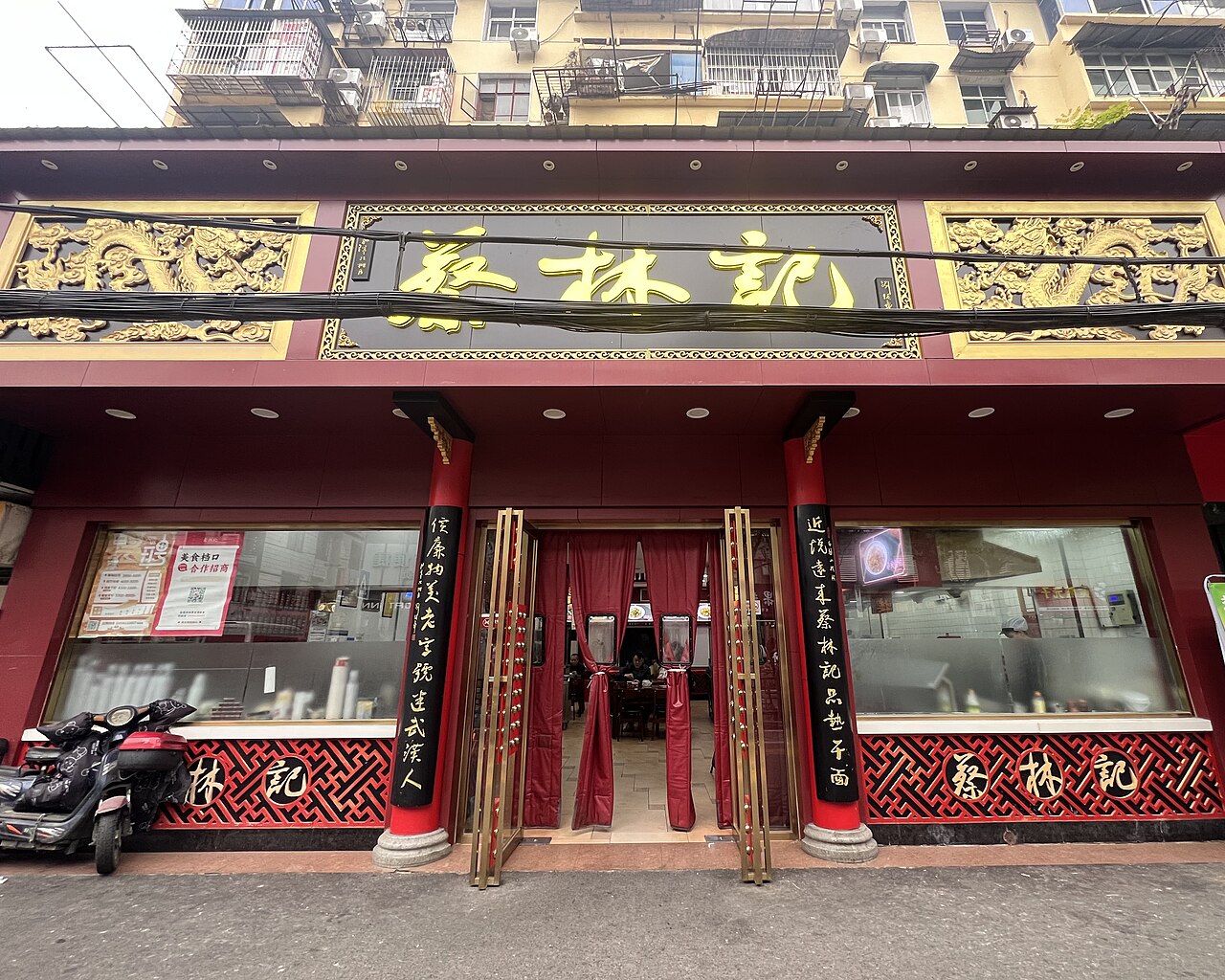
Beneath its humble plastic-stool exterior, the neighborhood Wuhan noodle shop operates one of the sharpest Unit Economics (UE) models in global street food. Its resilience rests on three structural pillars: centralized wet-noodle outsourcing, six-second blanching physics that shatter seating bottlenecks, and a textbook “traffic-anchor plus margin-booster” menu matrix.
Cent-by-Cent Bill of Materials (BOM) for a 5.00-RMB Bowl
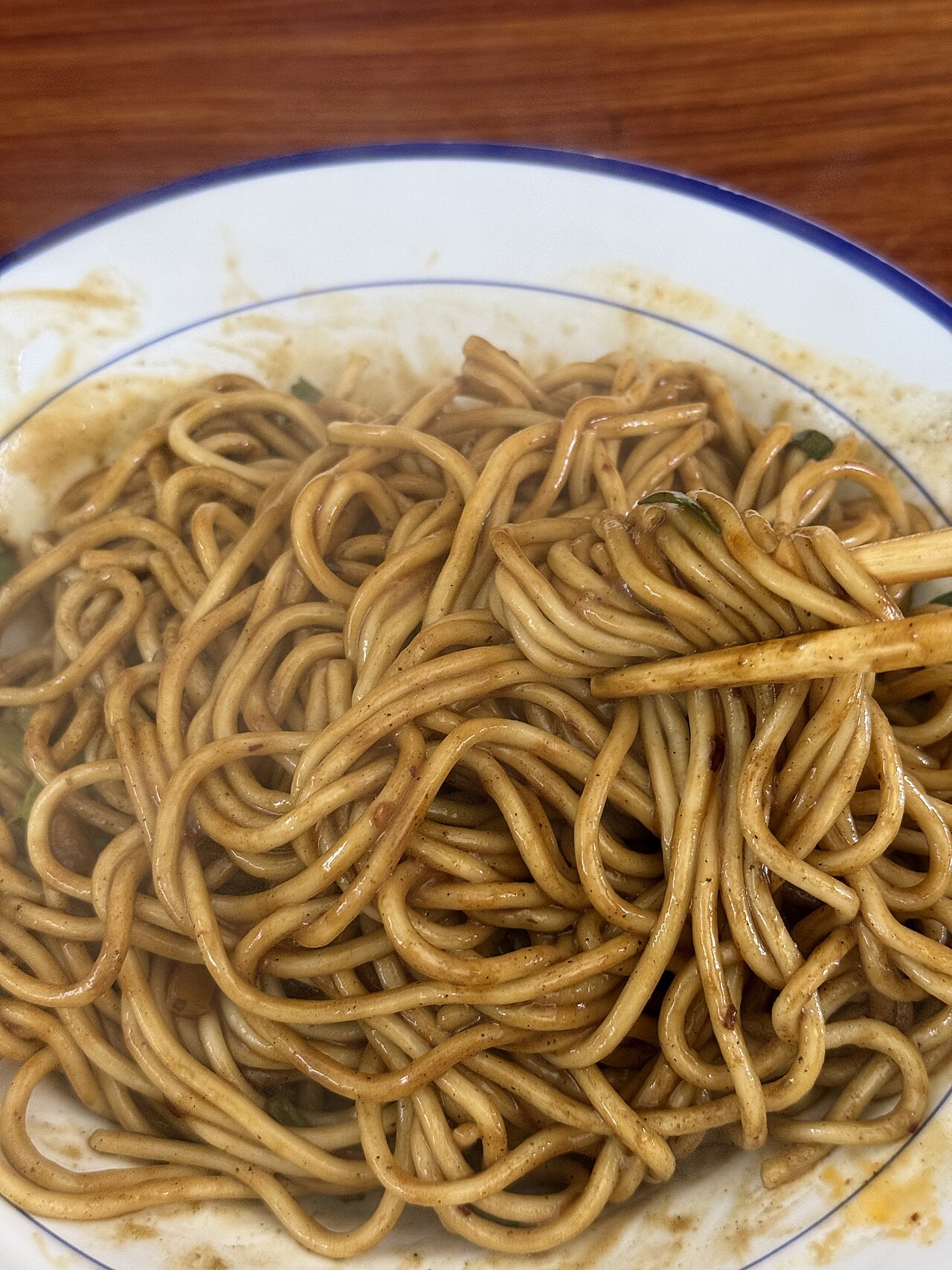
To see where every jiao (dime) goes, let us audit a standard er-liang (approx. 140g parboiled noodle weight, ~230g finished bowl) takeaway plain Reganmian at a thriving neighborhood shop in Hankou, priced at 5.00 RMB using wholesale supplier rates:
| Cost Component | Standard Portion Spec | Wuhan Wholesale Rate | Cost per Bowl (RMB) | % of Price | Operational Quality Note |
|---|---|---|---|---|---|
| 1. Parboiled Alkaline Wet Noodles | ~140g danmian (2-liang raw eq.) | Central plant pre-dawn delivery: ¥2.0–2.4 / 500g | ¥0.56 | 11.2% | Delivered by 4:30 AM; saves 3 hours of in-house dough labor |
| 2. Stone-Ground Sesame Emulsion | ~26g oil-thinned paste | Commercial pure or 80/20 tub: ¥15–18 / 500g | ¥0.92 | 18.4% | Largest single cost; thinned strictly with sesame/soybean oil |
| 3. Ten-Spice Broth & Aromatics | 10 ml spiced soy + vinegar, pepper, garlic water | House-simmered star-anise broth + branded soy | ¥0.20 | 4.0% | Defines the stall’s proprietary signature savoriness |
| 4. Crunchy Pickles & Scallions | 12g radish dices + 12g sour beans + 5g scallions | Huangpi radish & crock cowpeas: ¥4.5–6.0 / 500g | ¥0.20 | 4.0% | Often set out in generous self-serve bowls to build goodwill |
| 5. Greaseproof Bowl & Chopsticks | 750 ml PE-lined paper bowl + bamboo twins | Bulk 10,000-unit case: ¥0.22–0.28 / set | ¥0.25 | 5.0% | Eliminates dishwashing labor and unlocks sidewalk mobility |
| 6. Gas & Water Utilities | Continuous rolling boil in deep-well jet burner | Commercial natural gas & municipal water | ¥0.10 | 2.0% | Fixed boil cost shrinks per bowl as morning volume surges |
| Total Variable Cost / Margin | ~230g Finished Steaming Bowl | Total Direct Cost: ¥2.23 RMB | Gross Profit: ¥2.77 | 55.4% Margin | Dine-in melamine bowls save ¥0.20, pushing gross margin near 60% |
Two insights jump off the ledger. First, sesame paste accounts for over 41% of total ingredient cost (¥0.92 of ¥2.23). That explains why seasoned Wuhan locals judge a shop’s integrity by the richness of the sauce clinging to the bottom of the bowl. Second, Wuhan’s iconic walk-and-eat paper-bowl culture acts as a hidden economic superpower: when 65% of morning commuters cradle their bowls out the door toward the metro or bus stop, a tiny 30-square-meter storefront detaches its revenue ceiling from chair count entirely.
The Golden 210 Minutes: Velocity & Menu Engineering
Even with a 55.4% gross margin, selling 250 bowls of plain noodles alone would yield just ¥692 a day—barely enough after rent and exhausting pre-dawn labor. Profitable shops unlock operating leverage through blanching speed and attachment cross-selling.
1. Six-Second Physics vs. Two-Minute Soup Noodles
Consider a hand-pulled Lanzhou beef noodle shop or a Yunnan rice-noodle stall: stretching dough to order or simmering individual broth pots caps a cook at 35 to 45 bowls per hour. Because Wuhan Reganmian uses 80%-precooked danmian, the stove master plunges two conical bamboo strainers into roaring water simultaneously, counts six seconds, executes three brisk wrist snaps to shed surface water, and drops the strands into waiting bowls while a partner ladles sauce in assembly-line rhythm. At one bowl every 10 to 12 seconds, a two-person window can push 350 to 500+ bowls during the golden rush between 6:15 AM and 9:45 AM.
2. The Three-Tier Profit Ladder
Smart proprietors treat the 5-RMB plain bowl as an untouchable community trust anchor while engineering effortless upgrades:
- Tier 1 — Traffic Magnet: Plain Reganmian (5 RMB, 55% margin) guarantees habitual daily foot traffic five or six mornings a week.
- Tier 2 — High-Margin Beverage & Braised Add-Ons: Rich sesame paste naturally begs for a palate cleanser. Nearly two-thirds of customers add a cup of Poached-Egg Sweet Fermented Rice Wine (Danjiu, 4 RMB), fresh soy milk (2.5 RMB), or a five-spice braised egg / pressed tofu strip (2 RMB) simmering right beside the noodle pot. With one egg (
¥0.50) and a spoonful of Xiaogan fermented glutinous rice (¥0.40), a 4-RMB Danjiu commands a 72%+ gross margin in ten seconds of boiling-water pour. - Tier 3 — Ticket Multiplier: Raw-Blanched Tender Beef or Honeycomb Tripe Reganmian (13–16 RMB). Flash-blanching 50g of marinated local yellow-cattle sirloin right atop the noodles costs roughly
¥4.30in meat, elevating single-bowl gross profit from¥2.77to over ¥7.80 RMB—tripling profit in the exact same ten-second cook cycle.
Monthly P&L Snapshot of a 35 m² Husband-and-Wife Shop
Putting all three tiers together for a well-run 35-square-meter residential-gate shop in inner Wuhan (operated by a couple plus one 4-hour morning rush helper):
- Monthly Gross Revenue (~¥69,000 RMB / ~$9,600 USD):
- 320 plain bowls/day × ¥5.0 = ¥1,600/day
- 60 beef/deluxe bowls/day × ¥13.5 = ¥810/day
- Drinks (Danjiu, soy milk) & braised sides = ¥650/day (adjusted across 30 days including rainy mornings).
- Monthly Operating Expenses (~¥41,800 RMB):
- Food & packaging COGS (~41% blended cost ratio): ¥28,300
- Neighborhood storefront rent: ¥5,500
- Part-time morning helper (06:00–10:00): ¥2,800
- Commercial gas, electricity, water & equipment depreciation: ¥3,200
- Spoilage buffer & neighborhood rounding courtesies: ¥2,000
- Monthly Net Household Take-Home:
¥27,200 RMB ($3,800 USD), or over 300,000 RMB annually.
It is a dignified, resilient livelihood—earned the hard way. Lights flick on at 3:30 AM to simmer ten-spice broth, emulsify vats of stone-ground sesame paste with oil paddles, and chop mountains of green scallions before the city stirs. In Wuhan’s five-yuan bowl, micro-economic efficiency and working-class grit meet in steamy, fragrant equilibrium.
- Field Ledger Audits of Independent Neighborhood Noodle Shops Across Jiang'an, Qiaokou, and Wuchang Districts
- Wuhan Wholesale Grain, Sesame Oil & Food-Grade Paper Packaging Market Price Surveys (2024–2026)
- China Catering Industry Research Institute: Quick-Service Regional Noodle Unit Economics Benchmarks
❓ Frequently Asked Questions
How much gross profit is actually left in a 5-RMB bowl of Reganmian?
At Wuhan wholesale prices, a standard takeaway bowl uses roughly 0.56 RMB of factory-parboiled wet alkaline noodles, 0.92 RMB of oil-emulsified sesame paste, 0.40 RMB of spiced soy broth, garlic water, scallions, and pickled radish/beans, 0.25 RMB for a PE-lined paper bowl and bamboo chopsticks, and 0.10 RMB of gas/water utilities—leaving 2.77 RMB in gross profit (55.4% gross margin).
If each bowl only yields under 3 RMB in gross profit, how do small family shops earn a strong middle-class income?
Two multipliers drive profitability: extreme throughput and high-margin attachments. Because pre-parboiled noodles blanch in just 6 seconds and over 60% of commuters walk away with paper bowls (requiring zero table turnover or dishwashing), a couple can serve 350–500 bowls between 6:00 and 9:30 AM while cross-selling 72%-margin Egg Rice Wine (danjiu) and 14-RMB raw-blanched beef upgrades.
What is the number-one mistake that bankrupts novice Reganmian shop owners?
Attempting to shave 0.30 RMB off per-bowl costs by diluting pure sesame paste with water or cheap starch fillers. Wuhan neighborhood regulars eat Reganmian five times a week; their palates detect inferior paste instantly, destroying repeat foot traffic—the lifeblood of any morning stall.
✦ Cross-Referenced Chapters
Commercial Noodle Shop Batch Formula & SOP
Professional 25kg batch noodle parboiling, master spiced broth formulation, and high-volume breakfast rush workflow.
The Multi-Billion RMB Reganmian Supply Chain Ecosystem
From dedicated wheat mills and automated central wet-noodle factories to tens of thousands of storefronts and live-stream retail.
Livelihood Barometer: Forty Years of Bowl Prices
Tracking the price of a 2-liang bowl from grain-coupon dimes in the 1980s to today’s 5-RMB neighborhood benchmark.
Street Sociology: The Egalitarian Republic of Plastic Stools
Tall stool as table, short stool as seat—an ethnographic look at how sidewalk noodle dining dissolves social hierarchy.