Scallions, Garlic Water & Secret Spiced Braising Broth
The Invisible Twin Liquids and Fresh Allium Chemistry That Unlock Authentic Street Umami
Solving the mystery of why homemade Reganmian often tastes flat compared to Wuhan street stalls: uncovering the exact ten-spice beef-bone braising broth formula, cold-steeped enzymatic garlic water science, and fragrant Xinzhou spring onions.
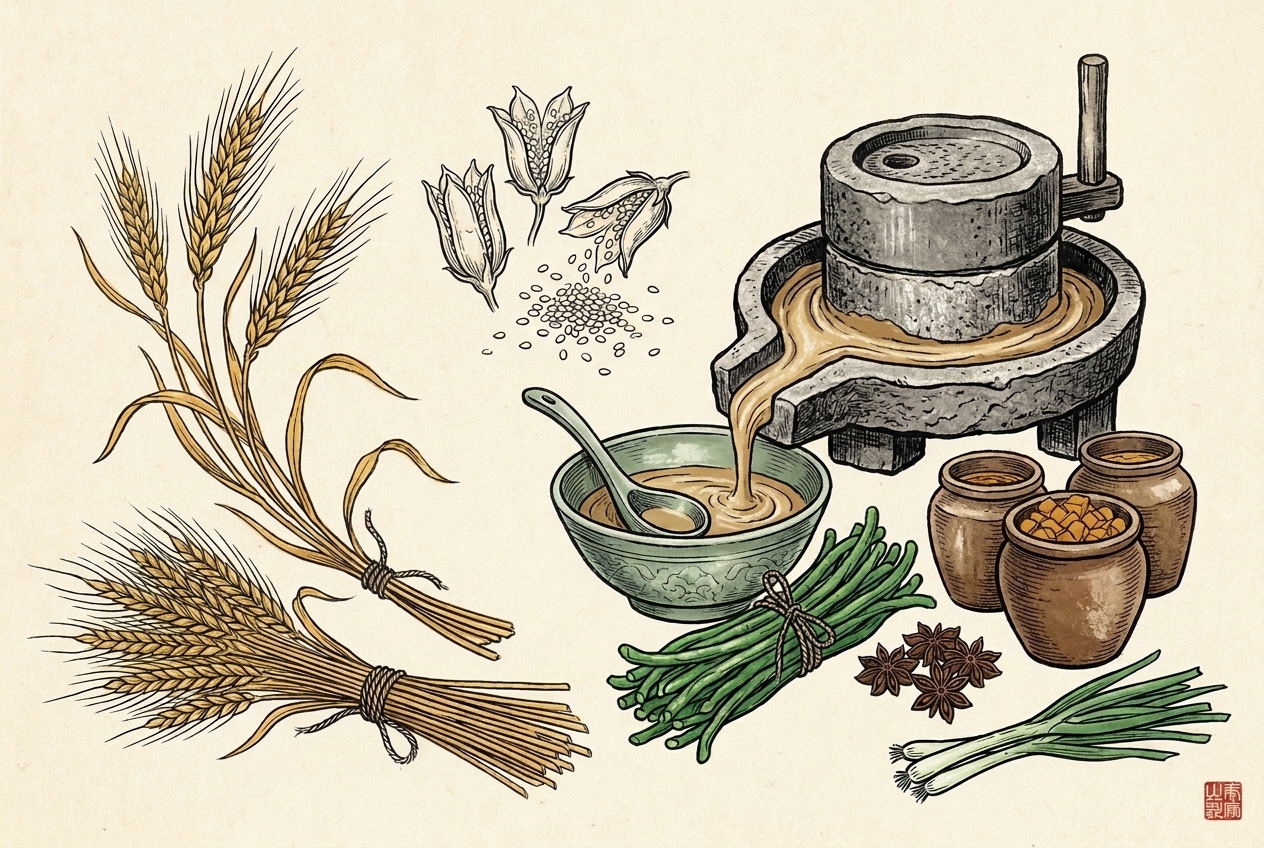
The Missing Link in Almost Every Home Kitchen Attempt
Countless home cooks outside Hubei have experienced the same culinary frustration: they track down genuine alkaline noodles, buy a jar of authentic Wuhan stone-ground sesame paste, thin it lovingly with roasted sesame oil, toss it with soy sauce—and still feel the bowl lacks that electric, multidimensional savoriness of a five-yuan Wuhan sidewalk stall. Without exception, what is missing from those home bowls is the street vendor’s invisible foundation: a ladle of Secret Ten-Spice Braising Broth (Lushui) and a splash of Cold-Steeped Garlic Water (Dasuanshui).
“In plain sight, golden sesame crowns the strands; unseen below, aged spiced broth anchors the root—while garlic spring-water tames the alkali, and emerald scallions summon the morning clouds.” — Liangdao Street noodle master’s verse
Although Reganmian literally means “Hot Dry Noodles,” a completely anhydrous bowl of oil-thinned paste and wheat strands tastes heavy, monochromatic, and faintly chalky. Roughly 30 milliliters of twin aromatic liquids—15g–20g of warm spiced broth plus 12g–15g of raw garlic infusion—act as both an umami amplifier and a colloidal catalyst. As chopsticks fold the bowl, those two tablespoons of seasoned water emulsify with the oil-thinned sesame paste and absorb completely into the thirsty alkaline noodles, leaving the paper bowl bone-dry at the bottom while making every strand sing.
Bone Stock & Botanical Balance: Inside the Ten-Spice Braising Broth
At Wuhan’s premier neighborhood shops—especially stalls that also braise beef shanks and honeycomb tripe—the lushui bucket beside the boiling cauldron is guarded like a family heirloom. Built on a two-hour simmer of blanched beef marrow bones and brisket trimmings (or pork femur and old hen bones in vegetarian-leaning素面 shops), the stock brims with natural gelatin peptides and 5’-ribonucleotides that give the sauce velvety body.
Following classical Chinese herbal hierarchy (Jun-Chen-Zuo-Shi: Monarch, Minister, Assistant, Envoy), 2,500 ml of bone stock is infused with 38 to 42 grams of ten dried spices—deliberately restrained at ~1.6% of liquid weight so herbal bitterness never competes with roasted sesame:
| Botanical Role | Spice Components | Exact Weight (per 2.5 L) | Key Aromatic Function in the Bowl | Preparation Rule |
|---|---|---|---|---|
| Monarch (Core) | Star Anise + Cassia Bark | 8g Star Anise + 6g Cassia | Trans-anethole and cinnamaldehyde build warm, sweet-savory depth | Rinse dust; snap bark into chunks |
| Minister (Lift) | Fennel Seed + Sand Ginger | 5g Fennel + 4g Kaempferia | Camphoraceous, lively lift that cuts through heavy sesame lipids | Dry-toast 10 sec before bagging |
| Assistant (Cleanse) | Angelica + Tsaoko + Chenpi | 4g Baizhi + 4g Tsaoko + 3g Peel | Masks beef tallow musk and neutralizes residual noodle alkali | Crack Tsaoko pod & discard bitter seeds |
| Envoy (Finish) | Bay + Clove + Licorice Root | 3g Bay + 1g Clove + 2g Licorice | Eugenol depth and glycyrrhizin lingering sweet finish (huigan) | Never exceed 1g clove per batch |
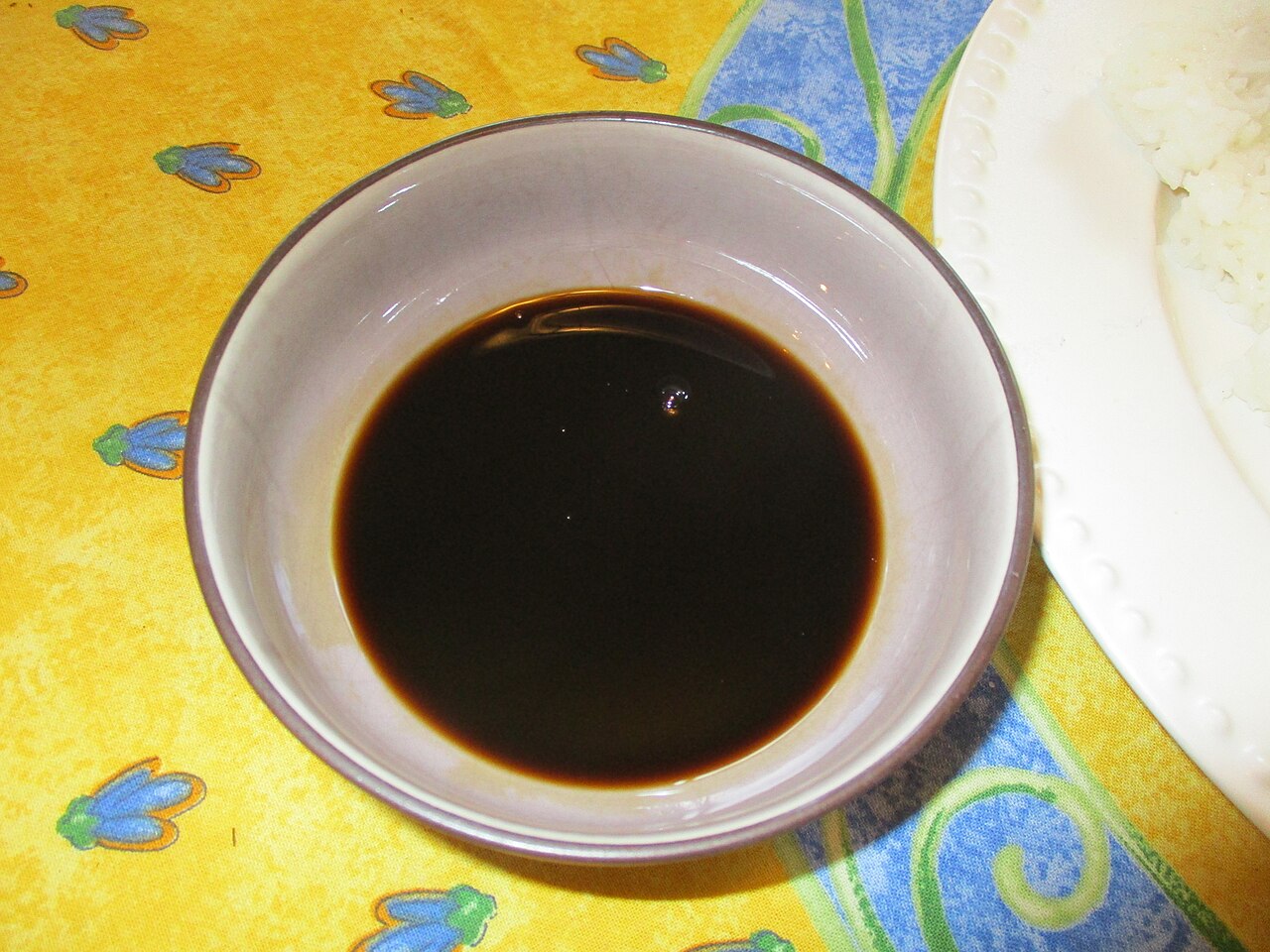
After simmering the spice sachet with ginger and scallions for 90 minutes, the cook seasons the strained stock with brewed light soy sauce (100g), dark soy sauce (20g), yellow rock sugar (30g), salt (35g), and Shaoxing rice wine (40g) for another 30 minutes. Veteran stalls either rely on natural beef-tendon gelatin or whisk in a whisper-thin cornstarch slurry (“glass glaze”) so the broth clings to mid-bowl strands instead of pooling underneath.
Mortar-Crushed Allicin Science: Why Garlic Water Beats Raw Garlic
Rather than scattering chopped raw garlic—which burns the palate in erratic bursts—Wuhan masters serve aqueous garlic infusion. The technique is pure plant biochemistry. Inside an intact garlic clove, odorless alliin sits separated from the enzyme alliinase. Slicing garlic with a knife leaves most cells intact; pounding purple-skinned Hubei garlic in a heavy mortar ruptures cell vacuoles wholesale, allowing alliinase to convert alliin into pungent, antimicrobial allicin over a 10-minute rest in open air.
The paste is then steeped in cooled boiled water (100g garlic paste : 180g–200g water + 2g salt) for at least two hours. Boiling water must never be used: temperatures above 60°C (140°F) denature alliinase instantly, yielding dull, sulfurous cooked-garlic water devoid of bright snap. Three teaspoons of this pale, milky liquid tame alkaline notes (“garlic water conquers a hundred alkalis,” goes the shop proverb) and perfume every strand evenly.
The Final Confetti: Xinzhou Fragrant Scallions
Right before handing the paper bowl across the counter, the vendor showers the peak with finely sliced 2–3 mm rings of Xinzhou spring onions (Xinzhou Xiangcong), a slender, thin-walled local cultivar prized for sweet, grassy aromatics rather than harsh white-bulb pungency. Landing directly atop 85°C noodles and folded inward during tossing, the emerald rings gently wilt on contact—releasing bright green top-notes that crown the bowl’s rich amber depths.
- Wuhan Intangible Cultural Heritage Center, Technical Specifications for Traditional Reganmian Lushui
- Hubei Culinary & Hotel Industry Association, Formulary of Wuhan Breakfast Broths and Sauces
- China Condiment Association, Enzymatic Kinetics of Crushed Garlic and Aqueous Allicin Stability
- Wuhan Municipal Bureau of Agriculture, Geographical Specialty Profile: Xinzhou Fragrant Scallions
❓ Frequently Asked Questions
If Reganmian is a 'dry' noodle, why add spoonfuls of braising broth and garlic water?
Two hundred grams of hot, low-hydration alkaline noodles plus 40 grams of oil-thinned sesame paste are intensely thirsty. Roughly 30 ml of spiced broth and garlic water supply the exact trace aqueous phase needed to micro-emulsify the sesame paste during tossing—every drop is absorbed into a glossy cling, leaving zero soup at the bottom.
Why steep crushed garlic in water instead of tossing raw minced garlic into the bowl?
Raw garlic bits distribute unevenly, burn the tongue, and linger harshly on the breath. Pounding purple garlic ruptures cells to generate fragrant allicin, and steeping it in cooled boiled water yields an aqueous infusion that coats every strand evenly while neutralizing subtle alkaline bitterness.
What happens if too many whole spices are thrown into the braising broth?
Over-spicing turns the bowl medicinal and bitter, clashing with roasted sesame. Wuhan masters cap total dry spices at ~1.6% of stock weight and always crack and remove the inner seeds of black cardamom (tsaoko) so warm sweetness supports—never overshadows—the sesame paste.
✦ Cross-Referenced Chapters
Soul of the Bowl: Stone-Ground Sesame Paste Craft
Low-temperature roasting, stone-mill grinding, and the great culinary debate between 100% pure sesame vs. 80/20 sesame-peanut blends.
Small-Mill Sesame Oil, Blending Fats & Chili Oil
Why oil-thinned sesame paste coats every strand superiorly to water-thinned paste, plus aromatic Wuhan chili oil infusion.
The Ten-Condiment Flavor Matrix & Layering Order
Exact gram ratios and sequencing of light/dark soy, rice vinegar, white pepper, sugar, and spiced sesame salt.
Deluxe Toppings Compendium: Sliced Beef, Tripe & Zha Jiang
Expanding beyond classic plain sesame to blanched tender beef, braised honeycomb tripe, beef tendon, and duck-neck dices.
Commercial Noodle Shop Batch Formula & SOP
Professional 25kg batch noodle parboiling, master spiced broth formulation, and high-volume breakfast rush workflow.
Infographic Atlas: Eight-Layer Bowl Anatomy & Process Diagrams
Architectural cross-sections dissecting all eight flavor strata from bottom spiced soy broth to top scallion confetti.